Tree Roots Damaging Your House, Paving or Drains? What to Do
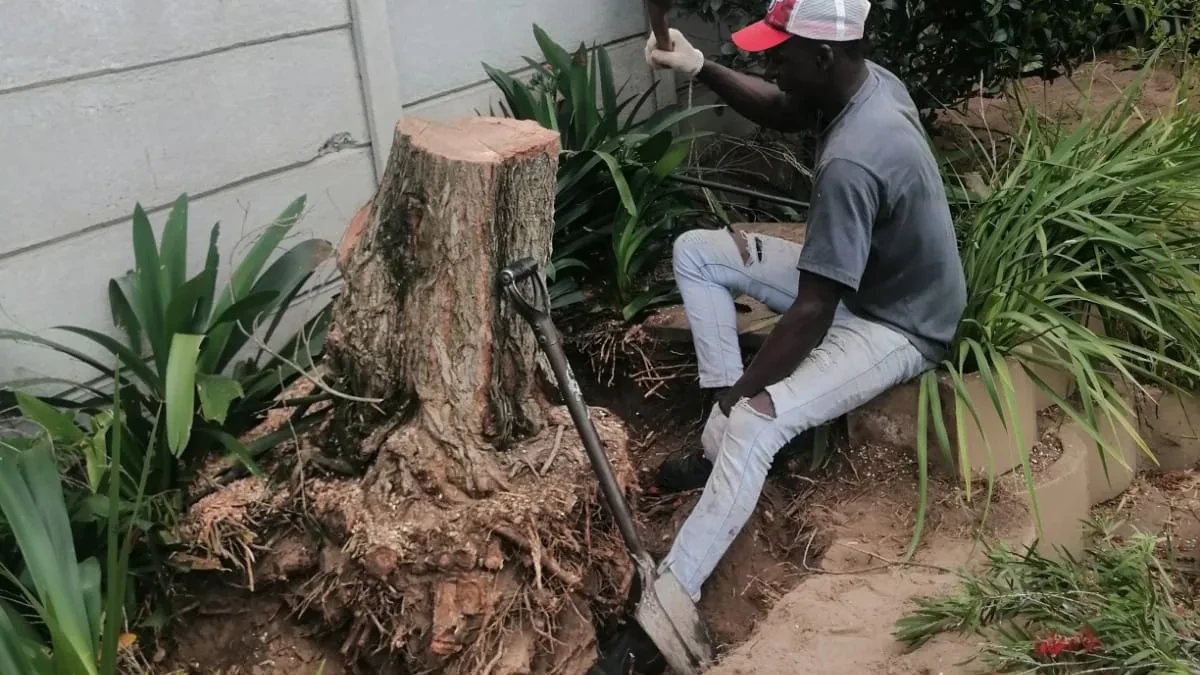
Tree roots damaging a house is a worry that usually starts with something small in a Cape Town garden: paving that has lifted into a ridge, a drain that keeps blocking, a crack running down the boundary wall. Sometimes the tree is the culprit. Often it is only part of the story, and occasionally it is innocent. This guide walks through what roots actually do, how to read the damage, what the law says when the tree is not yours, and when taking the tree out is the honest answer.
Key takeaways
- Most roots are shallow and spread wide, which is why paving, driveways and drains feel them long before a house does.
- Roots get into drains that already leak. A watertight pipe is generally left alone, so the lasting fix is repairing or relining the pipe.
- Roots are not strong enough to push a sound house around. Structural cracking linked to trees is mainly a shrinkable-clay problem, and needs an engineer's diagnosis first.
- Cutting a large root close to the trunk can kill or destabilise the tree, which can turn a paving problem into a falling-tree problem.
- South African law lets you cut back roots crossing onto your property, and the City's policy allows it for City trees at your boundary. Document the damage before you act.
Where a tree's roots actually are
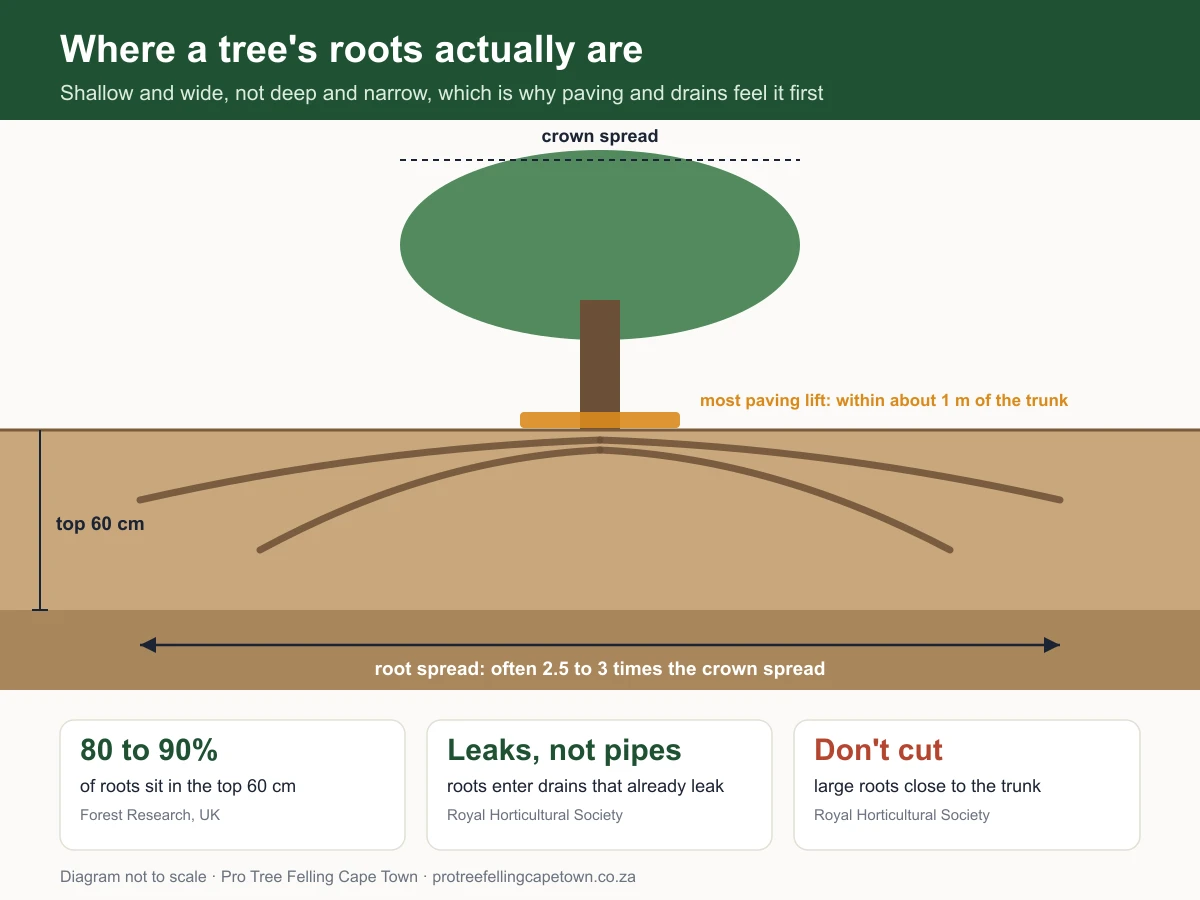
Most people picture roots as a mirror image of the crown, plunging deep under the trunk. They are nothing like that. A Forest Research information note from the UK Forestry Commission puts it plainly: roots rarely go deeper than 2 m, "with 80–90% found within the top 60 cm of the soil profile." They also travel. Cornell's Nina Bassuk, quoted by Ohio State University Extension, gives horizontal spread as "2.5 – 3.0 times crown spread," with most roots outside the drip line.
That shallow, wide shape explains almost everything that follows. The structures sitting in the top half-metre of soil, such as paving, driveways, garden walls on light footings and older drain runs, are the ones that meet roots first.
What roots really damage, and what they rarely do
The Royal Horticultural Society's guidance on trees near buildings is the clearest summary we know of, and it cuts against a lot of garden folklore. Its starting point: "tree roots are not strong enough to physically push buildings around, so finding them close to houses isn't necessarily a problem."
What roots commonly damage
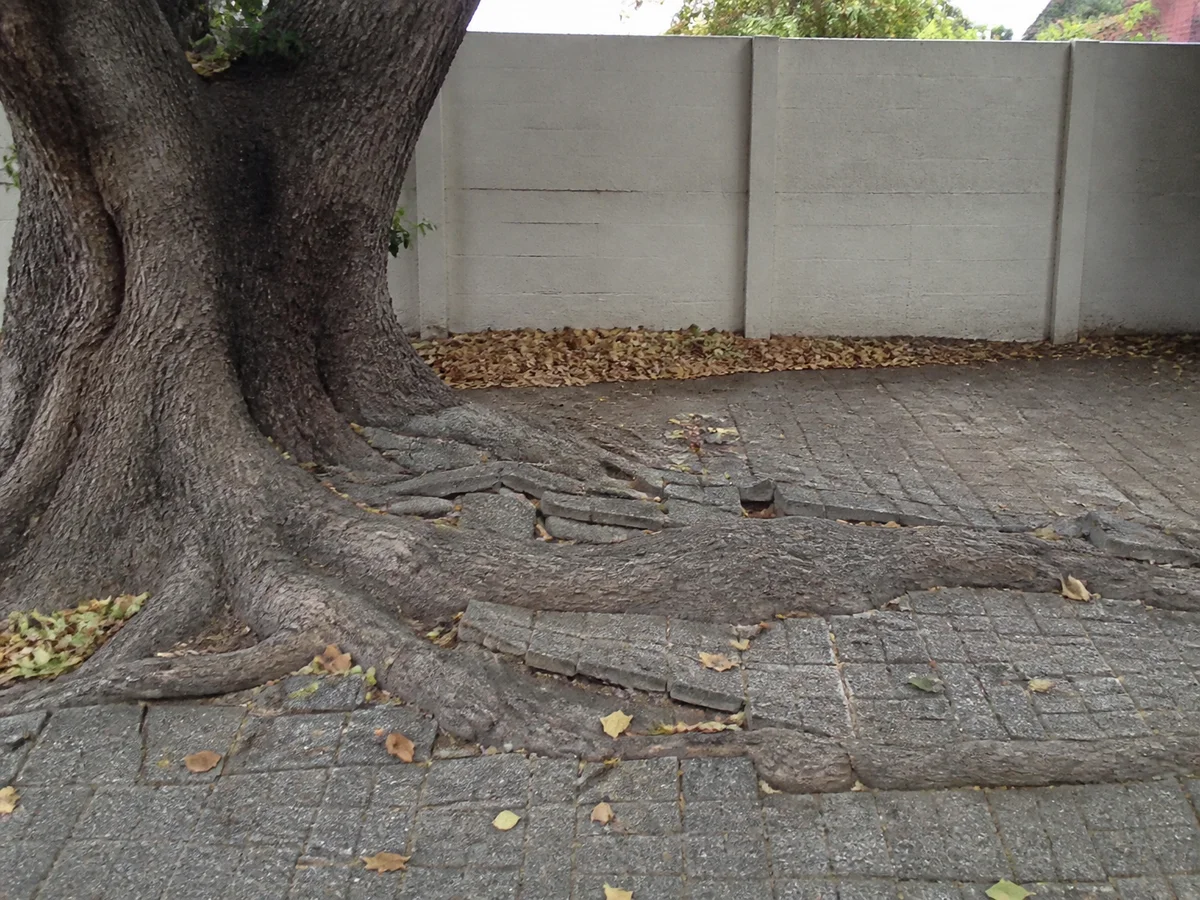
- Paving, driveways and patios. The RHS says most of this lifting happens "within a 1m radius of a tree's trunk", where the trunk flares into its buttress.
- Lightweight structures such as sheds and garages.
- Old drains with poor seals that already leak.
What they rarely do
- Break into sound footings. In the RHS's words, roots "are unlikely to directly penetrate sound footings".
- Lift heavy structures. Expanding roots "are incapable of lifting heavier structures".
- Trouble watertight drains. Roots go where the water is.
The real structural risk is indirect. On shrinkable clay soils, the RHS explains, a thirsty tree can dry out the soil under a foundation during long dry spells, the clay shrinks, and the movement can cause subsidence and cracking. That is a soil problem as much as a tree problem, and it is not something anyone can diagnose by looking at a tree.
How to tell if roots are the cause
Before anyone picks up a saw, it is worth being honest about the evidence. A big tree near a cracked wall is a coincidence until something links the two.
| What you see | Likely link to the tree | Who to call first |
|---|---|---|
| Pavers lifted in a ridge running from the trunk | Strong, especially close to the trunk | A tree crew, then a paving contractor |
| A drain that blocks repeatedly | Possible, mainly through a leak | A plumber with a drain camera |
| Cracked garden wall on a light footing beside the tree | Possible | A tree crew to assess the roots |
| Cracks in the house walls | Unproven until investigated | A structural engineer |
The RHS adds two useful markers. There is "no direct link" between lifted paving and damage to a load-bearing house wall, so one does not prove the other. But if cracks appear in house walls "especially on the same side of the house as the tree roots," the tree becomes a strong suspect. Shallow-rooted species such as Prunus (cherries) are more likely to lift paving.
Roots in your drains
This is the one that sends people looking for a chemical fix, so it is worth being precise. The RHS is clear that "if the drains are watertight, then tree roots will not generally trouble them." Roots find old pipes with poor seals and rigid joints, because water escapes there, and grow in.
Clearing
Cutting the roots out of the pipe clears the blockage, but the leak that let them in is still there.
Root killers
The University of Washington's Miller Library notes copper sulphate is "highly toxic to humans and aquatic life", and that neither it nor mechanical removal is a permanent solution.
The lasting fix
The RHS lists relining leaky drains with a resin liner, or replacing old pipes with polypropylene, which it calls the "most permanent solution".
That is why a repeatedly blocked drain is a plumber's job before it is a tree job. Felling a healthy tree to save a cracked pipe often treats the symptom. Fix the pipe and the roots lose their reason to be there.
Can you just cut the roots?
Sometimes, yes. The RHS describes exactly that approach where damage is localised and some distance from the tree: cut the offending root, fit a barrier so it does not grow back into that area, then repair the paving. The catch is distance. Its warning is direct: "Large roots close to the tree should not be cut as these may kill or destabilise the tree."
Usually reasonable
A single root lifting paving several metres from the trunk, cut cleanly and followed by a repair. A tree crew can also reduce the crown at the same visit through pruning back to the boundary.
Get advice first
Any thick root near the trunk, any root on a tree that already leans, or several roots at once. Losing that anchorage on a big tree beside a house is the outcome you least want.
What about root barriers?
They sound like the neat answer, but the RHS is sceptical: "in practise it is usually not feasible to install tree root barriers to sufficient depth," and roots can grow under the barrier because the trench itself creates good growing conditions. They help locally, not as a guarantee.
If a tree has already lost roots to trenching or building work, read our guide to the signs that a tree has become unsafe before deciding anything.
When it's a neighbour's tree, or the City's
Roots ignore boundary walls, so this comes up constantly. What follows is general information from published South African sources, not legal advice.
A neighbour's tree
Attorneys STBB summarise the position: "you may legally remove the roots encroaching on your property." If that fails, you could ask a court to order the tree's removal and claim for damage.
Courts are usually reluctant to order removal when something less drastic would work. In one often-cited case, Vogel v Crewe (2003), attorneys TMJ note the applicant's case was weak partly because he "did not have conclusive evidence" that the roots caused the damage to his parking area.
A City of Cape Town tree
Trees on City land are City property. The City's Urban Forest Policy says a resident "may trim any part of a City owned tree overhanging his/her boundary line", including "the root structure", and advises consulting Recreation and Parks first. For Special trees, consulting them is required.
Damage from a City tree must be reported to Recreation and Parks, with any claim lodged with the City's Insurance Section.
To report a City tree, log a C3 service request on 0860 103 089 or online. If you are asking the City to remove a tree that is damaging your property, it says you "must provide a quote for damages to prove this before the request is considered." Our council tree and permit rules guide covers the rest of that process.
Check the species first
The National Forests Act notice behind South Africa's protected tree list says "No person may — (a) cut, disturb, damage or destroy any protected tree" without a licence, according to the 2024 government notice.
Allowed is not the same as wise
A right to cut roots at the boundary does not make it safe. If the trunk is close to the wall, those may be the roots holding the tree up, whoever owns it.
Trees to keep away from houses, walls and pools
Prevention is cheaper than any of this, and figs are a well-known risk. SANBI's PlantZAfrica entry for the broom cluster fig says that "as with most figs" it is inadvisable to plant it "near buildings, paving, sewer lines or walls" because of its aggressive root system. For the forest fig, SANBI goes further and suggests planting "at least 5 m" from houses, walls, paths, swimming pools and sewer lines.
Before you plant
Look up the species' mature size and root habit before choosing a spot, give big trees room well beyond their crown, and keep figs and other vigorous rooters well clear of drains, pools and boundary walls. A tree in the right place rarely needs any of the fixes above.
When removal is the right call
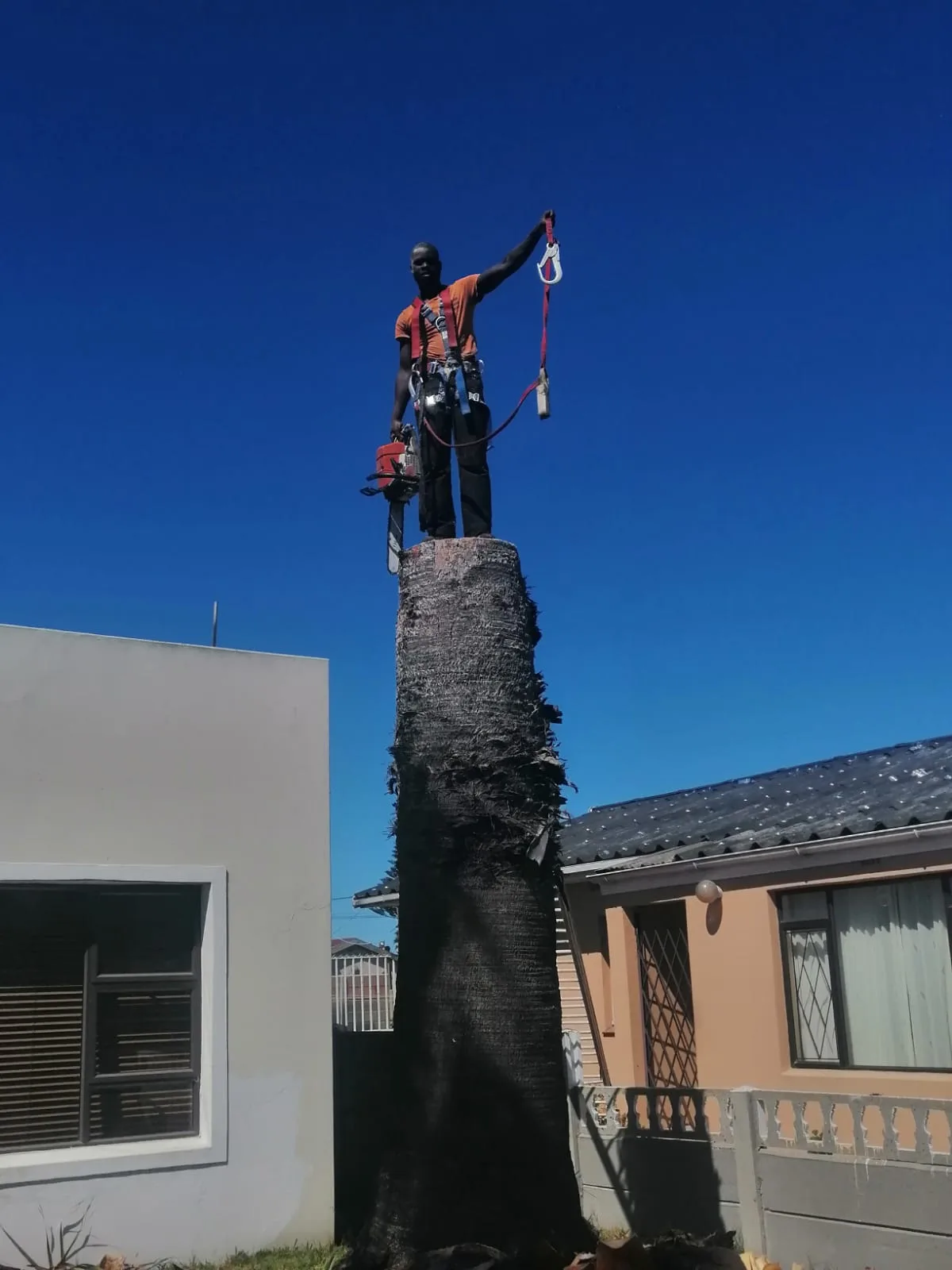
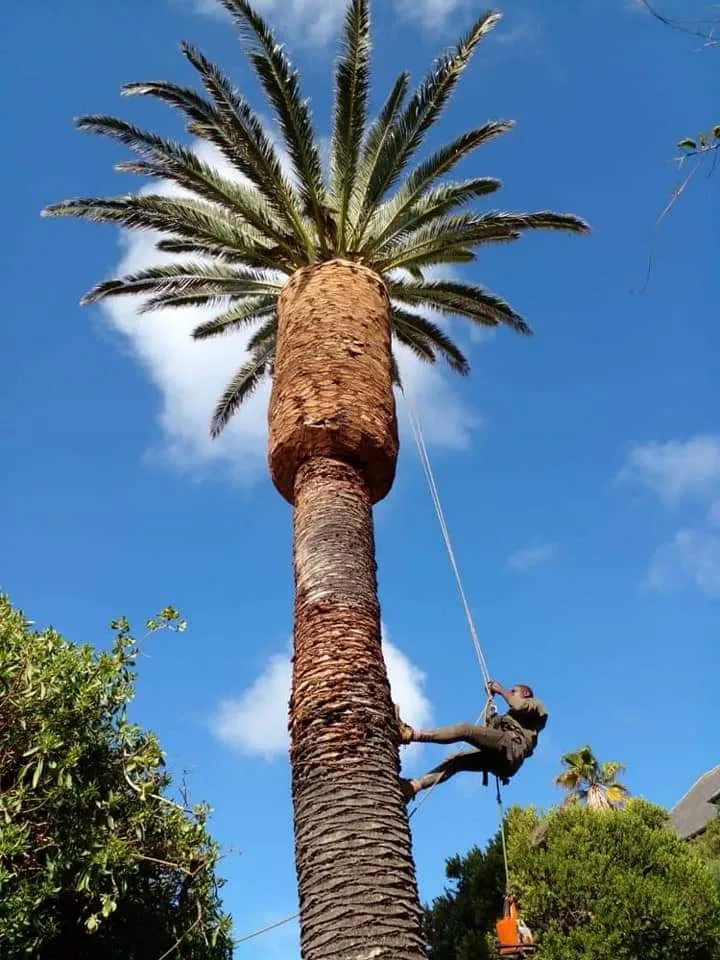
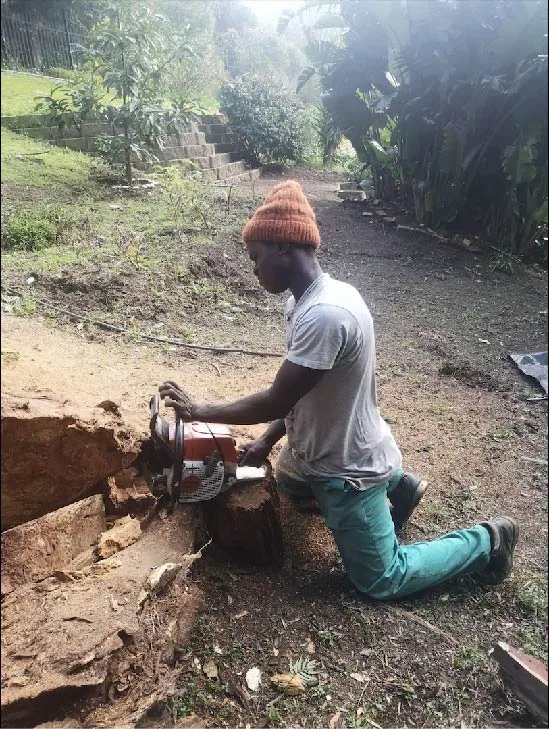
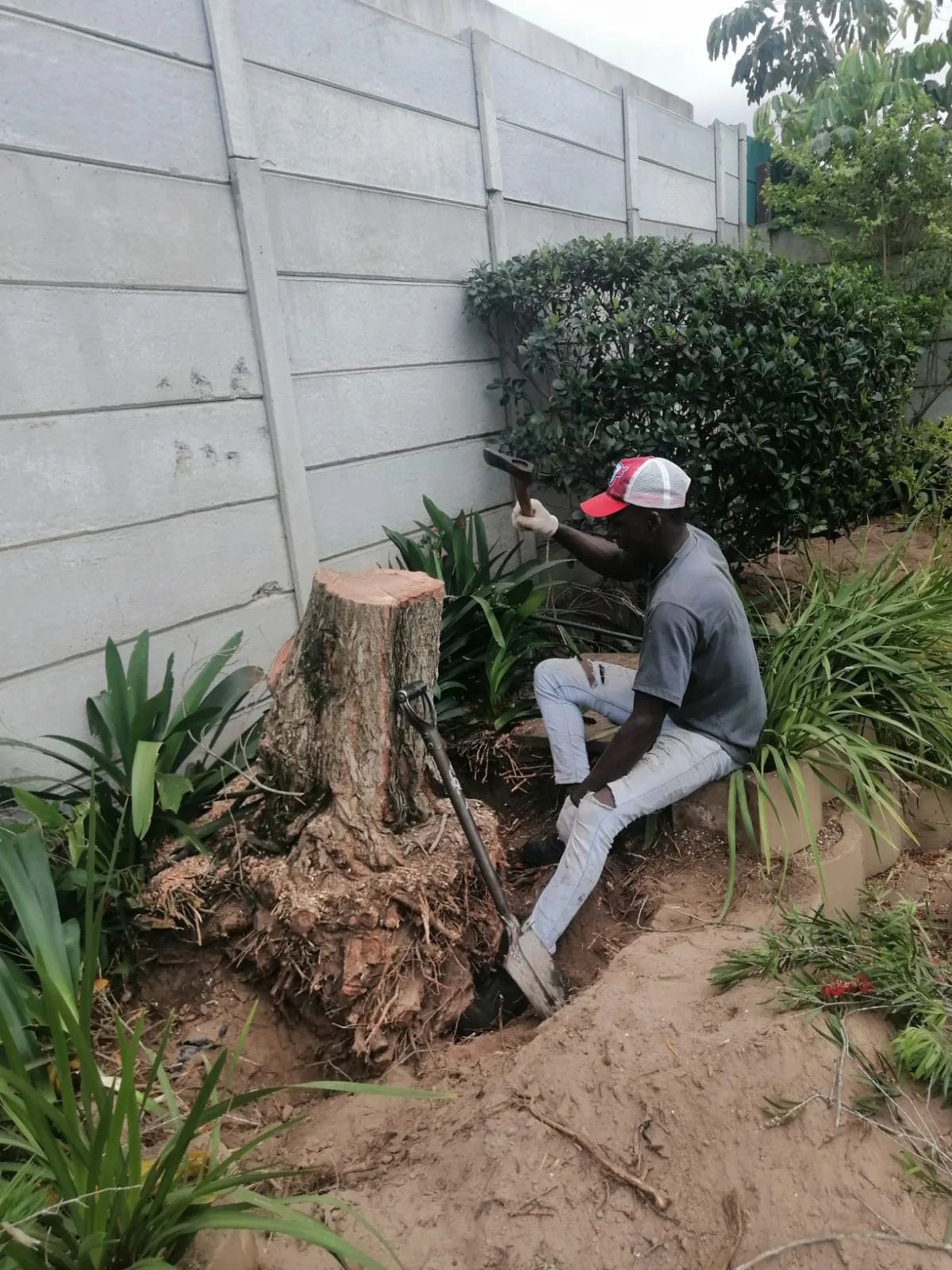
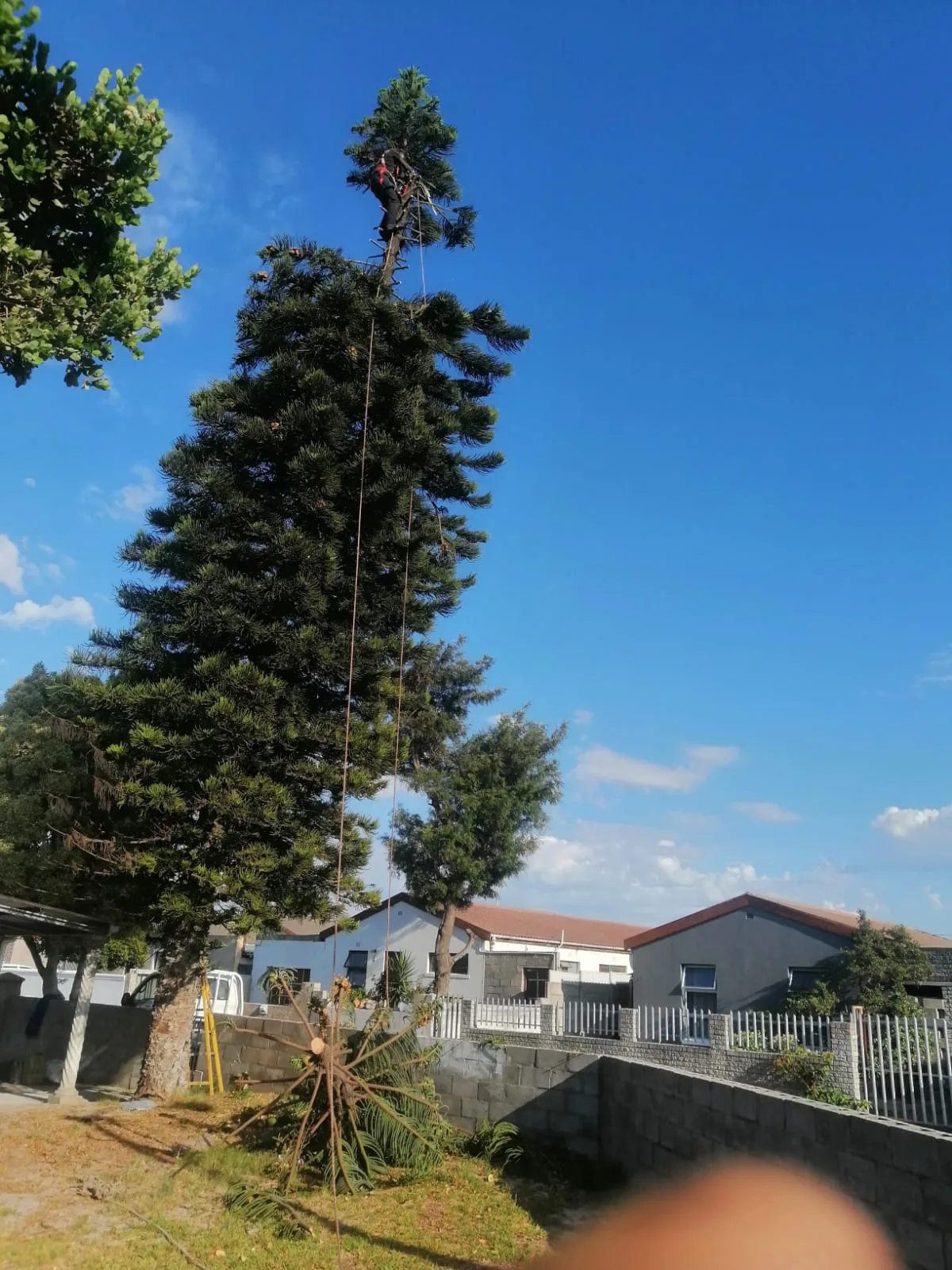
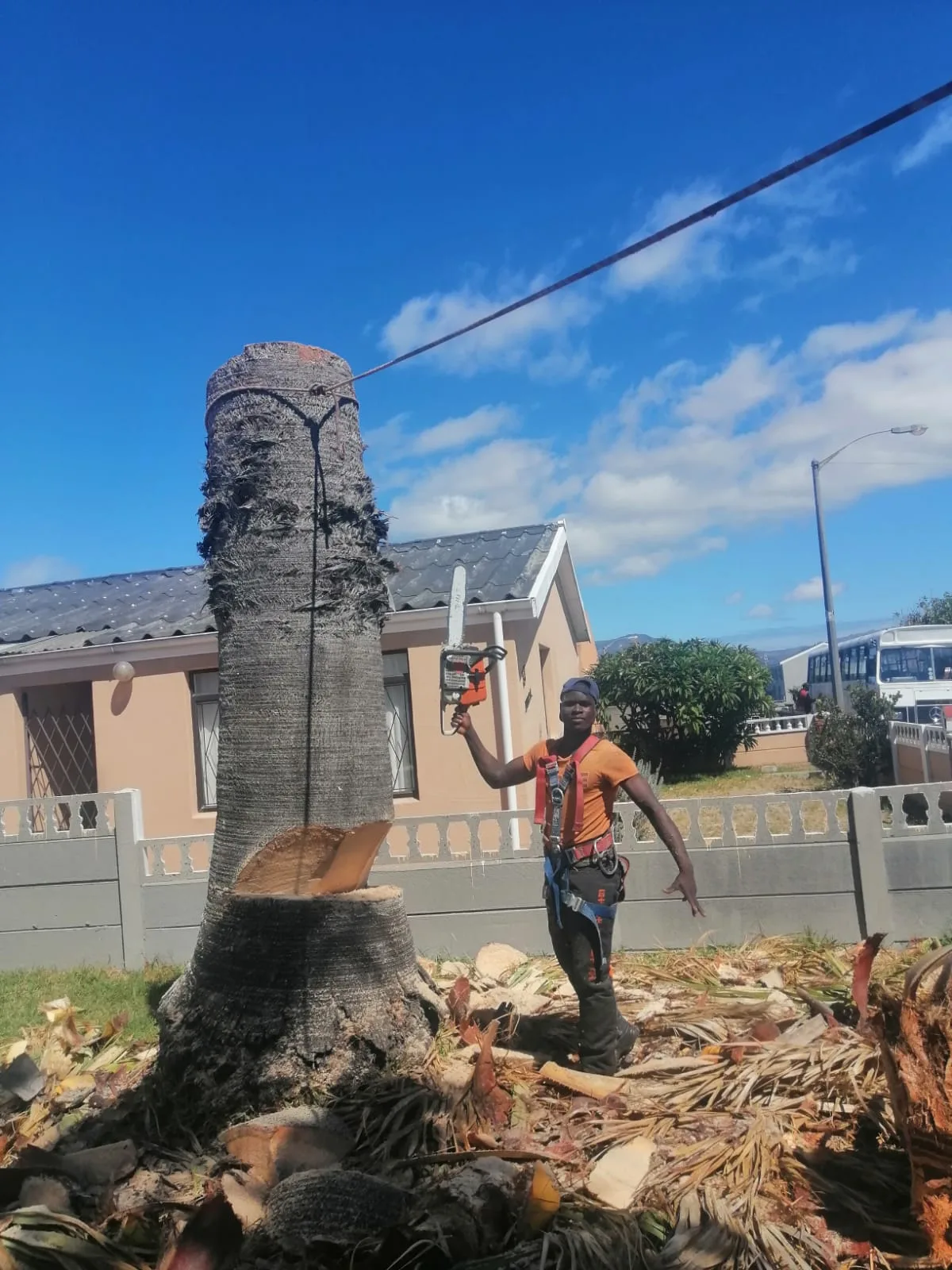
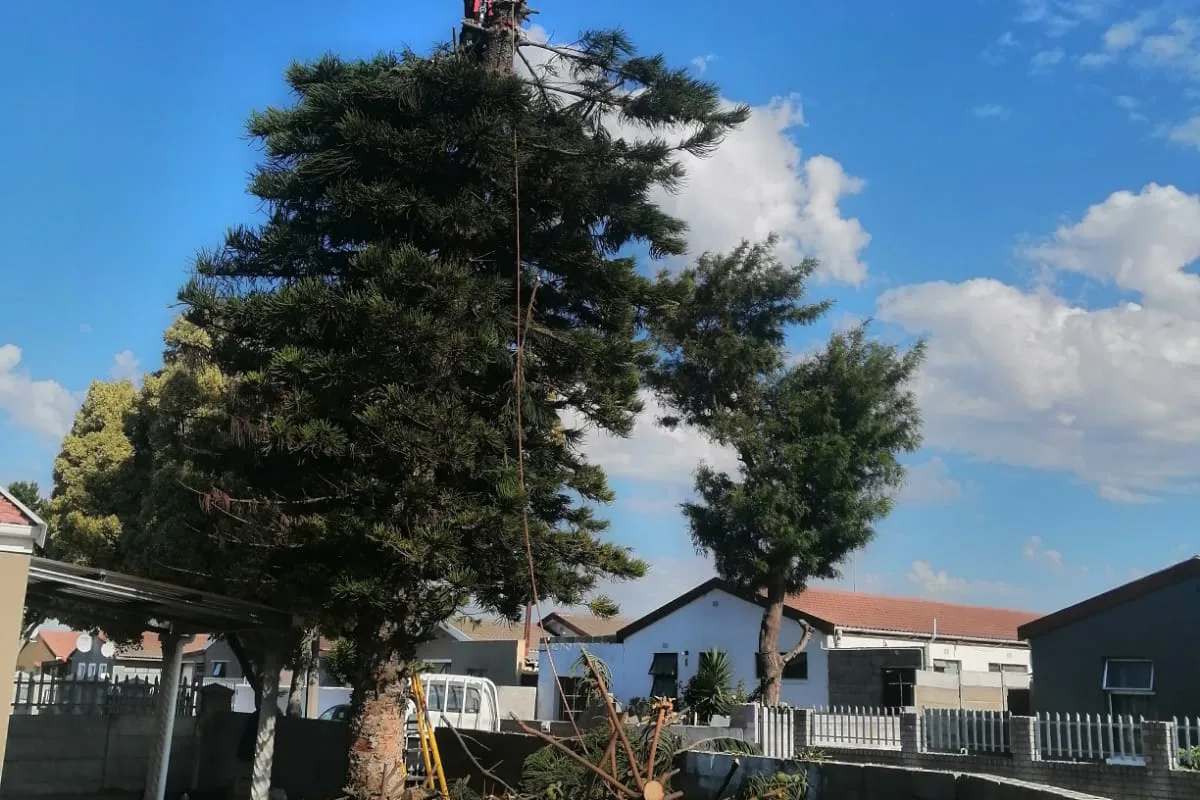
Sometimes the tree genuinely is in the wrong place: a fig against the house, a big tree whose roots are lifting the driveway and blocking a drain at the same time, or a tree that would be left unstable by the root cuts needed to fix the damage. In those cases full tree removal followed by stump grinding is usually cleaner than years of patching. Grinding typically takes the stump 15 to 30 cm below ground so you can re-lay paving over it, and for species prone to stumps that keep sprouting there are extra steps.
Weighing it up?
We can arrange for an experienced local crew to look at the tree, the roots and the damage together, and give you a free on-site quote. You can also check what tree removal costs first. Either way, sort out the drain or the engineer's report before the tree, so you only pay to fix the thing that is actually wrong.
Frequently asked questions
What does tree root damage look like?
Usually lifted or cracked paving near the trunk, a drain that keeps blocking, or a light garden wall that has cracked or tilted. House-wall cracks need an engineer before the tree is blamed.
What should I do if my neighbour's tree damages my property in South Africa?
Photograph the damage, raise it with your neighbour in writing, and get a quote for repairs. You may cut encroaching roots back on your side; a court is the last resort.
Do fig tree roots cause damage?
They can. SANBI warns that most figs may damage buildings, paving, sewer lines and walls with their aggressive roots, so they need plenty of space from all of them.
How do you keep tree roots from damaging concrete?
Plant well away from it in the first place. For an existing tree, a distant root can be cut and a barrier fitted locally, but barriers are not a guarantee and big roots near the trunk should stay.
How do I get rid of tree roots in drain pipes?
Have a plumber clear them, then repair, reline or replace the leaking section. Clearing or root killers on their own are temporary, because the leak keeps attracting roots.
Which trees should not be planted close to a house?
Figs above all, plus any large, fast-growing tree. Check the mature size before planting and give it room well beyond its crown, because roots spread far wider than branches.
Not sure whether your tree, your pipes or your soil is to blame? Tell us what you are seeing and Pro Tree Felling Cape Town will put you in touch with a crew who can give you a straight answer.
Keep reading
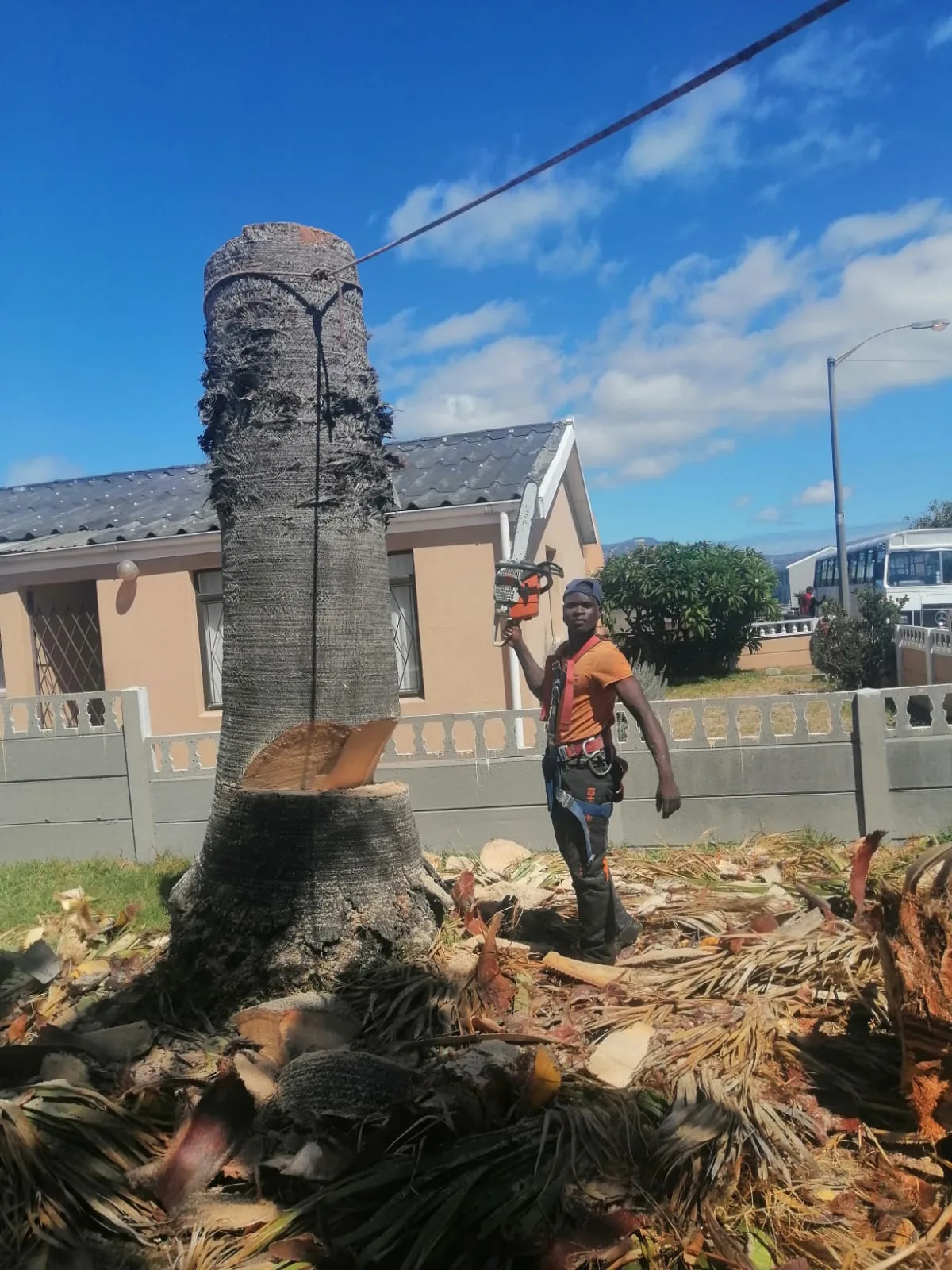
How to Cut Down a Tree Safely (And When to Stop)
Most people searching for how to cut down a tree are really asking a different question: can I do this one myself? Here is the sequence a trained feller works through, what the hinge actually does, and the situations where the honest answer is to put the saw down and phone someone.
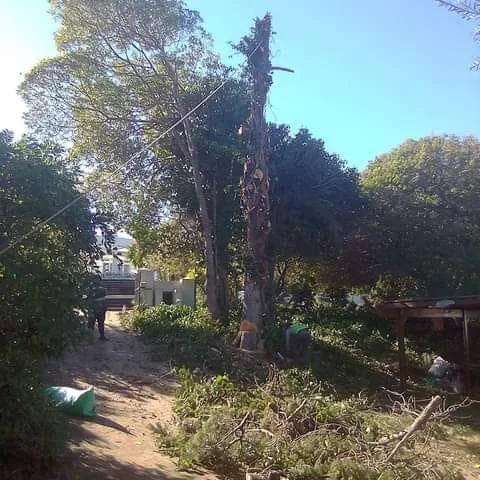
Blue Gum Tree Removal in Cape Town
A mature blue gum in a Cape Town garden sits in an odd legal spot: the species is listed as an invasive, but a big urban trunk is often specifically exempt from the duty to remove it. Here is which gums are actually listed, the tape-measure test that decides it, why cutting one down never finishes the job, and what a safe take-down in a suburb actually involves.
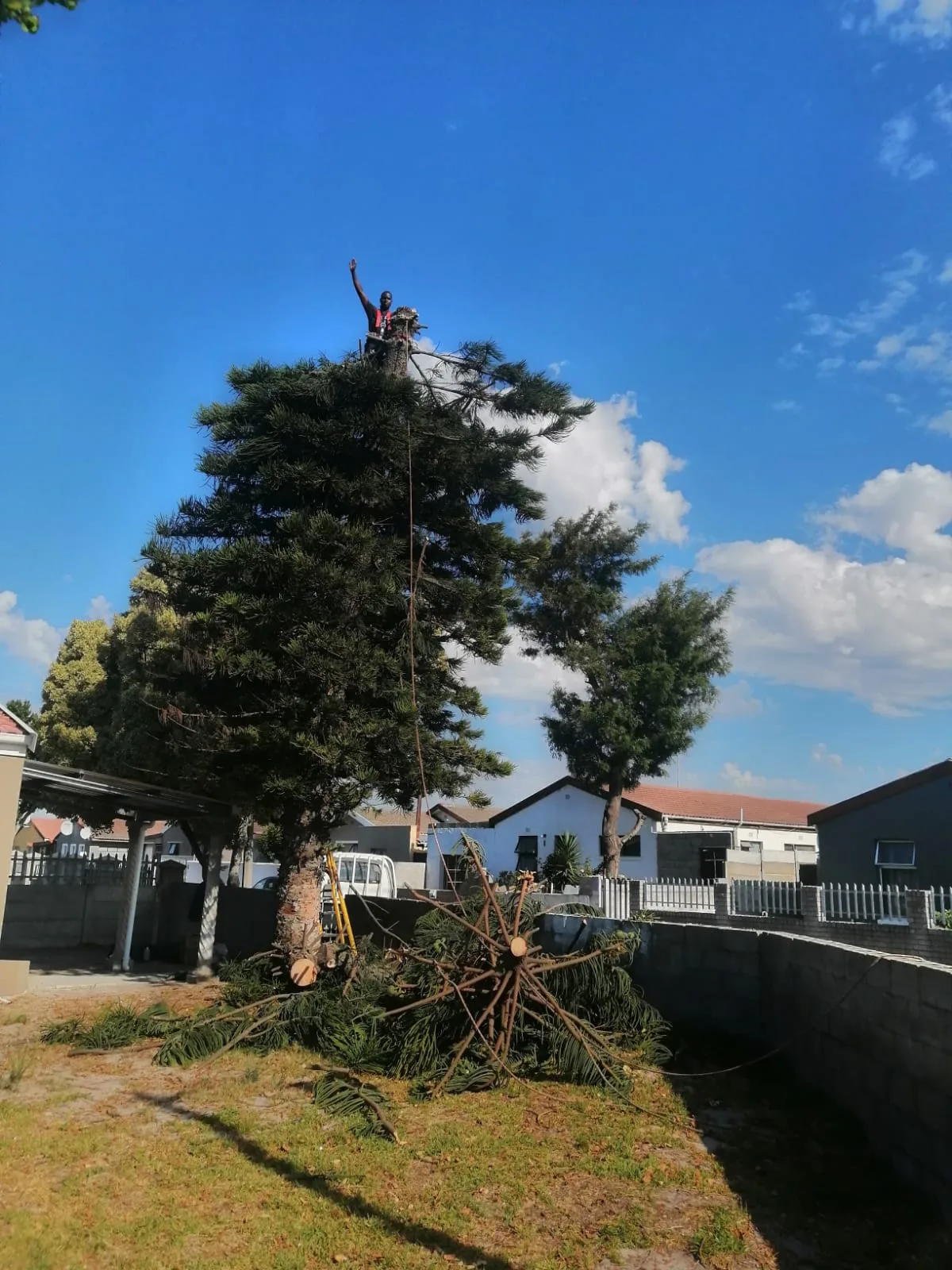
10 Signs a Tree Needs to Be Removed (And When It Doesn't)
Most of the trees people ask us to remove don't need removing. This is the honest diagnostic list — what a lean, a bracket fungus, a hollow trunk, a crack or a cut root really tells you, which signs mean act today, and which ones a prune will settle.