Site & Plot Clearing in Cape Town
Building, landscaping or selling a property? We clear overgrown plots, dense bush, alien vegetation and multiple trees in one go — leaving you a clean, workable site. Free quotes, anywhere in Cape Town.

Clearing a plot is a volume problem, not a tree problem
Almost nothing on an overgrown Cape Town plot is difficult to cut. Wattle and rooikrans are soft, fast timber. The job is what's lying on the ground afterwards — a knee-deep raft of brush and stems to gather, process, carry to a vehicle and take somewhere legal. That's where the days and the money go.
So a plot is priced nothing like a single felling. A tree job is priced on one tree; a plot is priced on how long the crew and the chipper are on the ground and how many loads leave the gate. The first thing we'll ask is how far down you want it taken, because "cleared" means three different jobs.
Slashed and tidy
Undergrowth and scrub cut back and hauled off, the bigger trees left standing. Usually enough before an agent photographs a property, or to stop what's coming over the neighbour's wall.
Cut to ground
Everything woody down and removed — thicket, saplings and mature trees — leaving cut stumps in the soil. The right call if the plot will sit a while yet.
Builder-ready
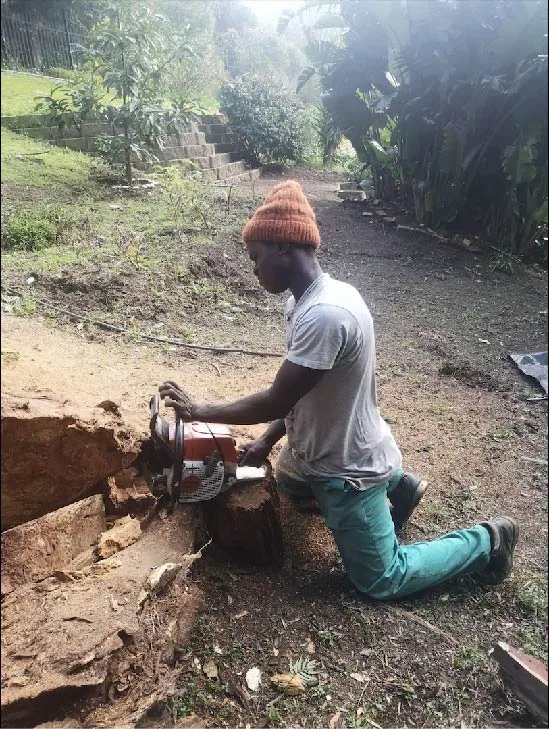
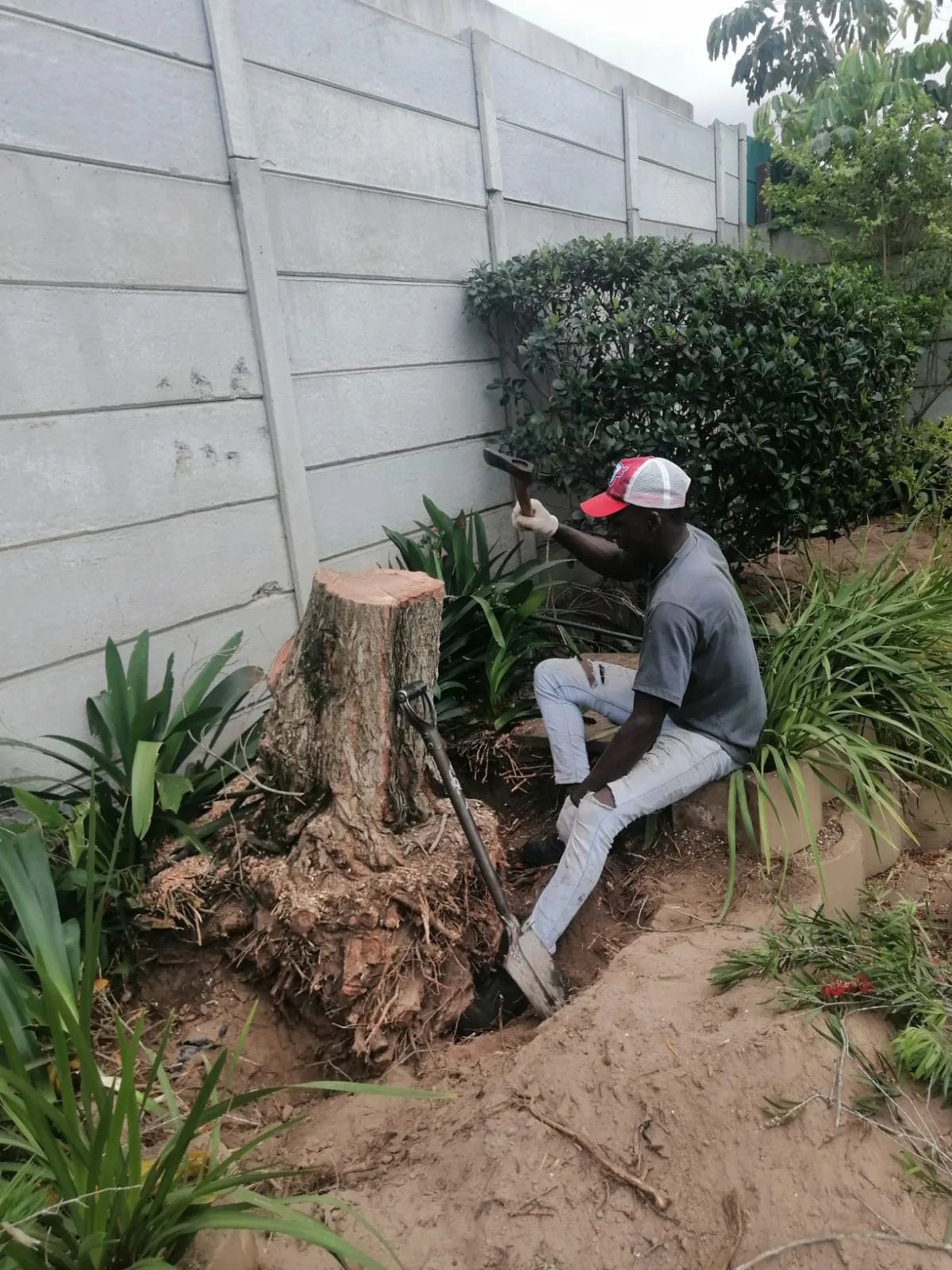
Stumps ground or dug out, root balls lifted, the plot raked over so nothing above ground can catch a machine. What you want if a foundation is going in.
Those cost meaningfully different amounts, and plenty of quotes never say which one they've priced. Ours does. It's the most common reason two clearing quotes on the same plot look thousands of rand apart.
Four kinds of plot, four different jobs
Site clearing covers ground with almost nothing in common beyond being overgrown. Here's what turns up when we walk a plot, and what changes about the work.
A vacant stand before a build
A stand that's stood empty for years, and the architect, surveyor or bank wants it clear before anything gets pegged out. Deadline-driven, and the finish matters — a stump where a footing goes is the next trade's problem. Tell us a foundation is coming and it changes how low we cut.
A property left for years
Deceased estates, owners living overseas, a rental that turned over three times without anyone touching the garden. The house is fine; the garden has gone back to bush and swallowed the paving. There's usually something worth keeping in there, so we walk it with you and mark what stays before a saw starts.
Solid invasive thicket
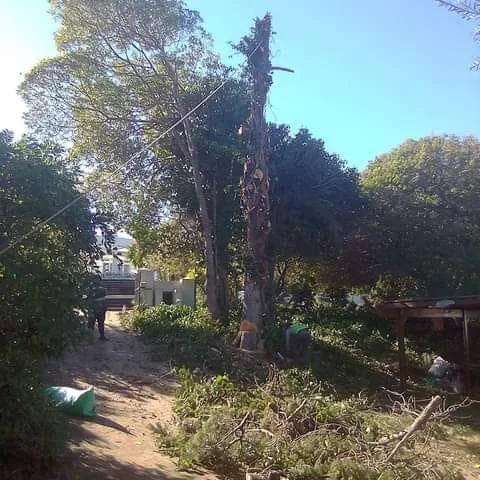
Port Jackson (Acacia saligna), rooikrans (Acacia cyclops), blackwood and Australian myrtle, grown dense enough that you cut your way in rather than walk in. Little of it is big timber, but the stem count and the bulk of the brush make it the heaviest work per square metre we do — and the one that carries a legal obligation.
Smallholdings and estate edges
Bigger ground, and usually a specific brief rather than "clear it all" — a firebreak strip along a boundary, an access road opened wide enough for a vehicle, the veld edge pulled back off the buildings. Measured in metres of edge rather than area, and normally a repeat visit each year.
Most plots are two of those at once. Send a photo from the gate and one from the far corner and we'll tell you roughly what we'd bring.
Alien invasives aren't untidy — they're your legal duty
Port Jackson and rooikrans are both listed Category 1b under the national alien and invasive species regulations made under NEMBA. Category 1b means the species must be controlled, and that duty sits with the person in control of the land. You don't need permission to clear them — the law is asking for it.
Most owners find out at the worst moment. Regulation 29(3) requires a seller to notify the buyer in writing, before the sale agreement is concluded, that listed invasive species are present. Conveyancers ask for that as routine, which is why plenty of our clearing calls open with "we're transferring in six weeks".
Not every wattle is treated alike, either — blackwood sits in Category 2 on the same list, with plantation exemptions attached. A quote that lumps every alien on the plot together hasn't looked properly.
Why one cut never finishes it
Two things bring an acacia thicket straight back. Port Jackson resprouts hard from an untreated stump, turning one stem into a ring of twenty fed by an established root system. And the seedbank underneath is enormous — sampling in the Western Cape has found Australian acacia seed densities from around 1 000 to over 17 000 seeds per square metre. Clearing the standing trees removes the seed factory, not the seed. Honest pricing on a dense stand therefore includes stump treatment and at least one follow-up pass, quoted separately so you can see the real total.
The long version — telling the two apart, what the regulations say word for word, and why they behave differently once cut — is in our guide to Port Jackson and rooikrans on Cape Town land.
Dry alien growth against a fence is a fire problem
This is why a lot of clearing gets booked rather than left another year. A closed alien stand carries far more fuel per hectare than the fynbos it replaced, and comparative burn trials on Cape vegetation found invasive aliens slower to ignite than fynbos but burning at the highest intensity of the groups tested. Dense, dry, and sitting where properties meet open veld.
We're a tree crew, not a fire authority, and we won't quote you regulations we haven't read. What we can say is that the fuel is the part you control. Pulling growth back off a boundary line, opening an access road, and taking out dead standing material are finite jobs — and far easier to book in winter than in a windy February.
If your property backs onto veld or a green belt, say so at the quote stage. It usually changes the order we work in: boundary strip first, interior afterwards.
What plot clearing costs — and what actually drives it
We publish prices where we honestly can: a small garden tree felled and taken away is typically R1,200 to R2,500. Plot clearing isn't like that, and anyone quoting a plot over the phone is guessing. Two plots the same size on the same street can be a day apart in work.
So there's no per-square-metre or per-load rate on this page. What we can give you is what we weigh up while walking your ground, so you can read your own plot before we arrive.
| What we look at | Why it moves the number |
|---|---|
| Size of the plot | The floor under the job — on its own, it tells you little. |
| Density of growth | Scattered saplings clear fast. A closed thicket is a different job on identical square metres. |
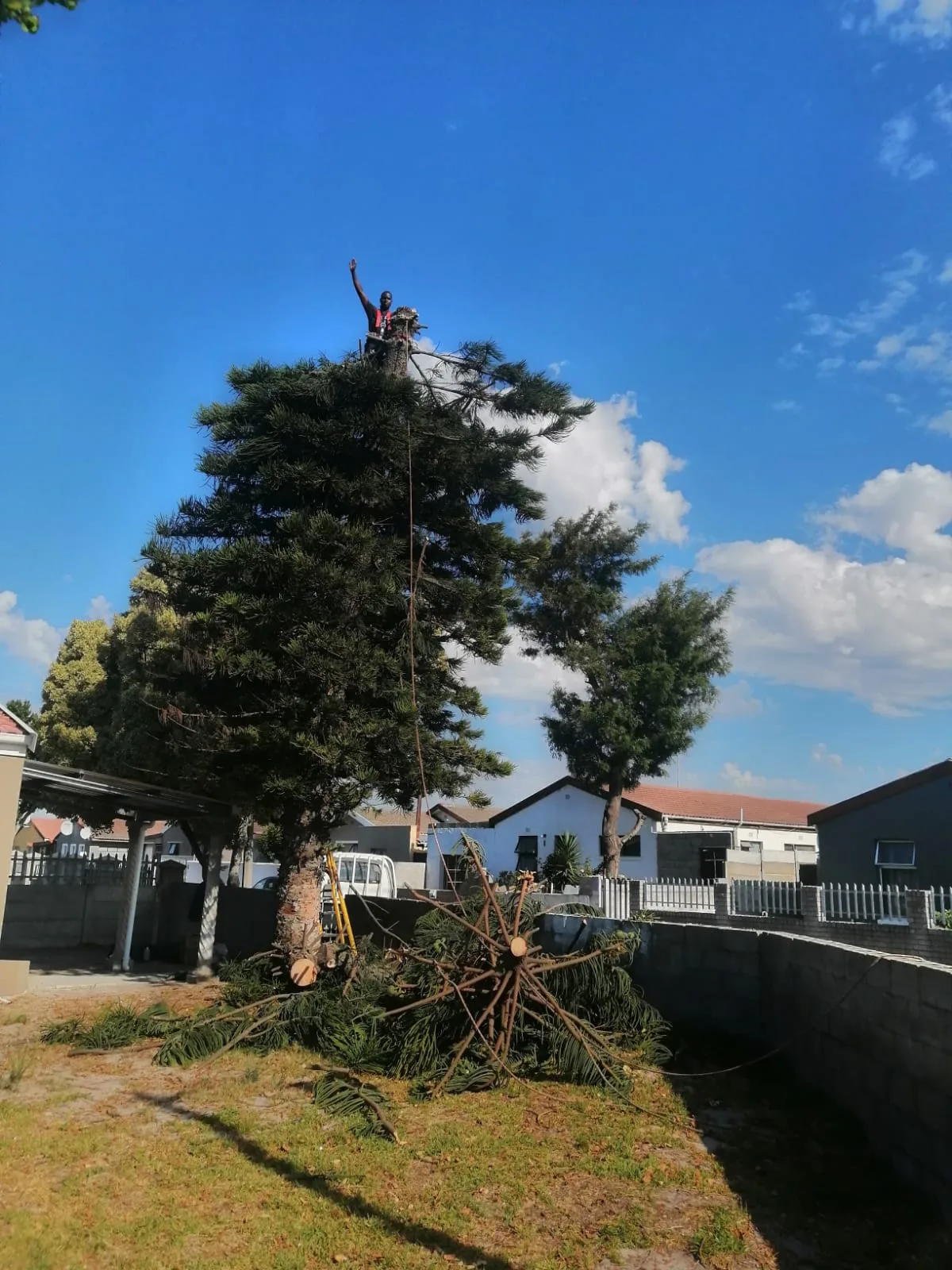
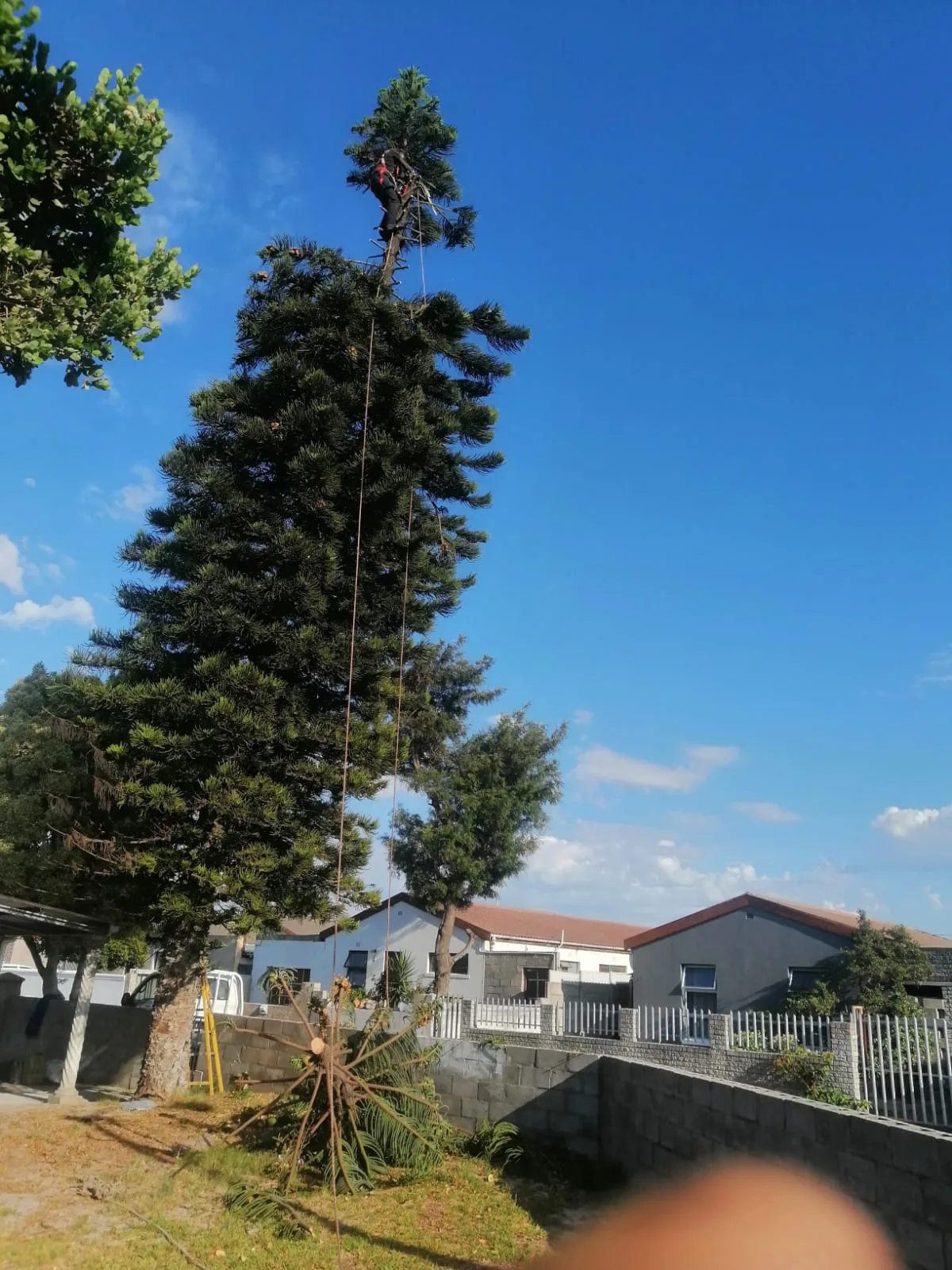
| Tree size within it | Brushcutter work, chainsaw work and roping a mature tree down beside a wall are three different rates of progress. |
| Slope and ground | Soft sand, rock or a steep bank all mean material is carried rather than dragged. |
| Access | Whether the truck and chipper get onto the plot, or every branch goes out through a 900 mm side gate. Usually the biggest single swing. |
| Loads and distance | Green waste leaves by the load, and the round trip to a licensed disposal site is part of every one. |
| Stumps in or out | Cut-and-clear is one price. Stumps ground out and the plot raked level is another. |
| Follow-up passes | Much cheaper than the initial clear. Ask for them itemised, not bundled or ignored. |
Every plot gets a free walk-over first, then one fixed written price covering the clearing and the disposal together. No call-out fee and no day rate.
Tell us roughly how big the plot is and how thick it's got. We'll come and look, and price the whole thing in writing.
Get my clearing quoteWhere all of it actually goes
A dense quarter-hectare produces an amount of green waste that surprises people every time. Where there's room for a chipper, branches go through it on site — that collapses the bulk, cuts the number of trips, and the chip can stay as mulch if you want it. Where a chipper can't reach, everything is cut to length and carried out by hand, which is slower and shows in the price.
What leaves the plot goes to a licensed disposal site. Burning isn't the easy answer people assume: open burning is tightly restricted across Cape Town, and heat is precisely what wakes acacia seed up. Seed-bearing material also never gets tipped on a verge or an open piece of ground — moving it around is how these thickets spread, and spreading a listed invasive is itself a restricted activity under the regulations.
If there's shot hole borer on the plot
Polyphagous shot hole borer changes the disposal rules completely. The City of Cape Town's position is that infested wood must be chipped on site and not removed from the property — so nobody takes logs home for the braai and nothing gets sold on as firewood. We check for it while we walk the plot; the signs and the host species are in our guide to the shot hole borer beetle in Cape Town.
One happier note: rooikrans is good braai wood and there's steady demand for it in the Cape. On a plot with a mature stand the usable timber is worth raising while we're quoting — it can offset part of the bill. The distinction that matters is seed: clean, seasoned stemwood is one thing, seed-bearing brush and pods are another, and those stay on site and get dealt with rather than carted around the Peninsula.
What we hand back, and what we don't do
When we walk off a cleared plot: the vegetation you agreed to lose is gone, the trees are down and hauled away, stumps are ground out or left in depending on what you asked for, and the ground is raked so you can see it. Boundary lines are visible again, and nothing organic is left in a heap in the corner for you to deal with later.
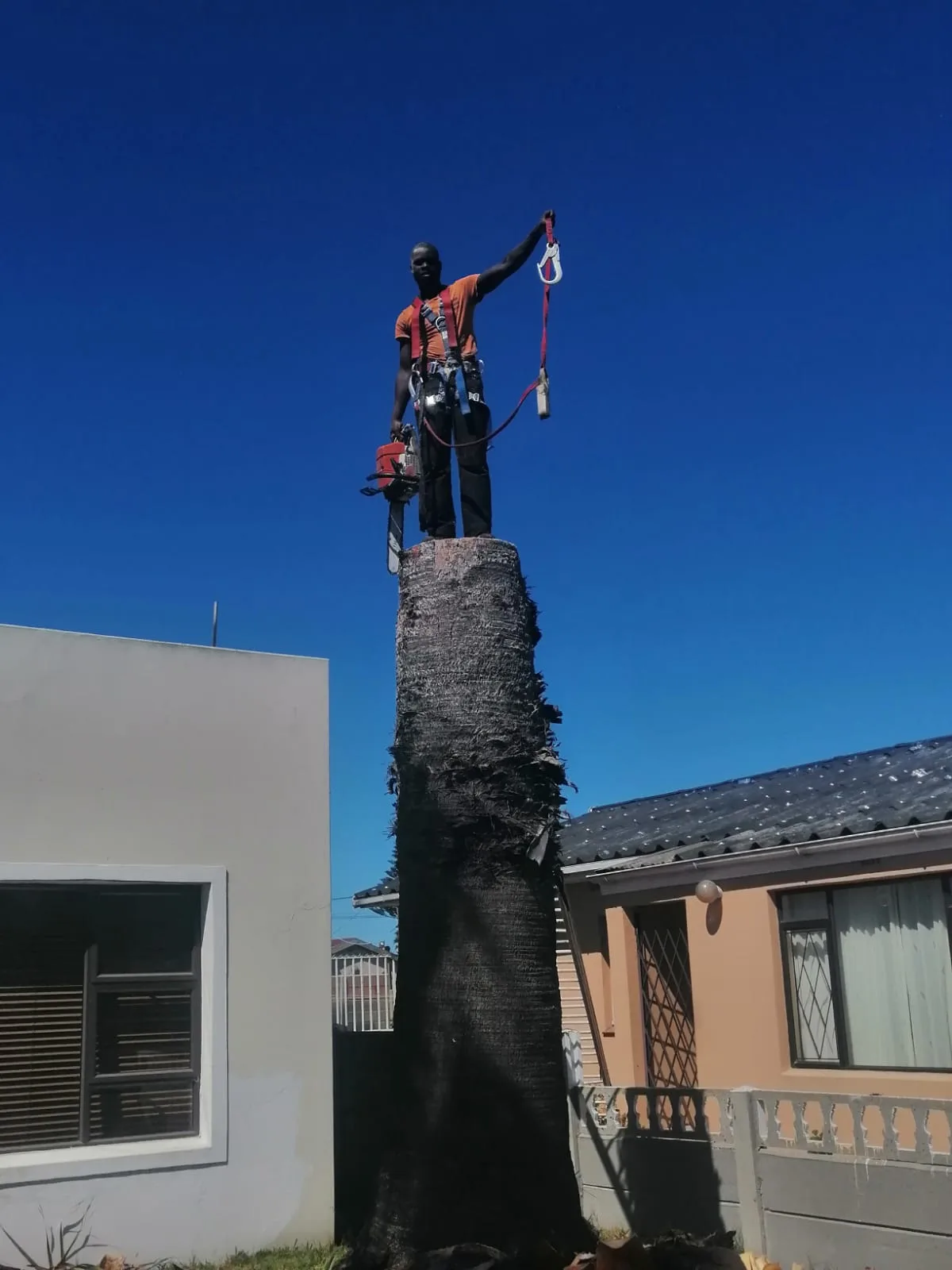
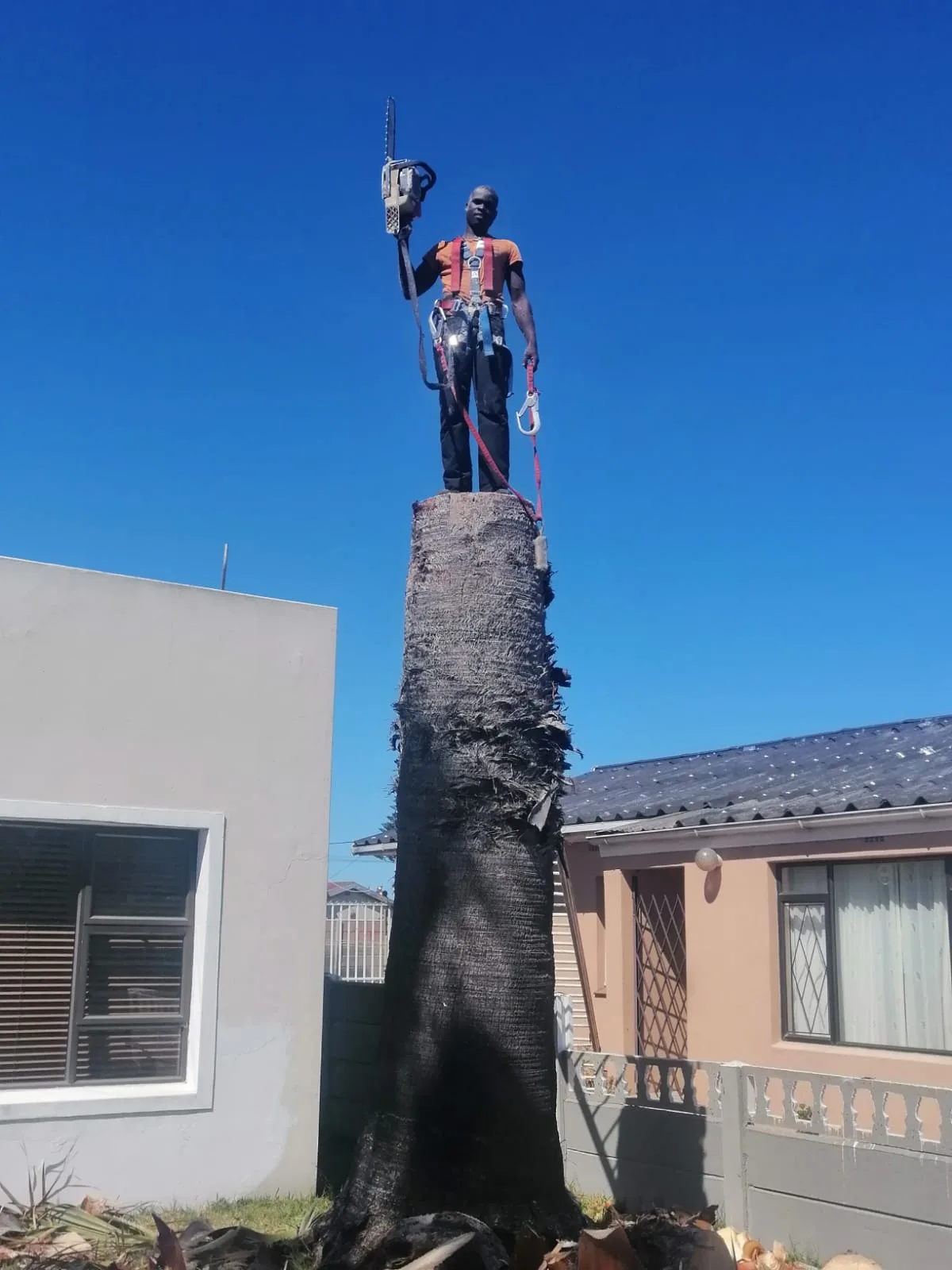
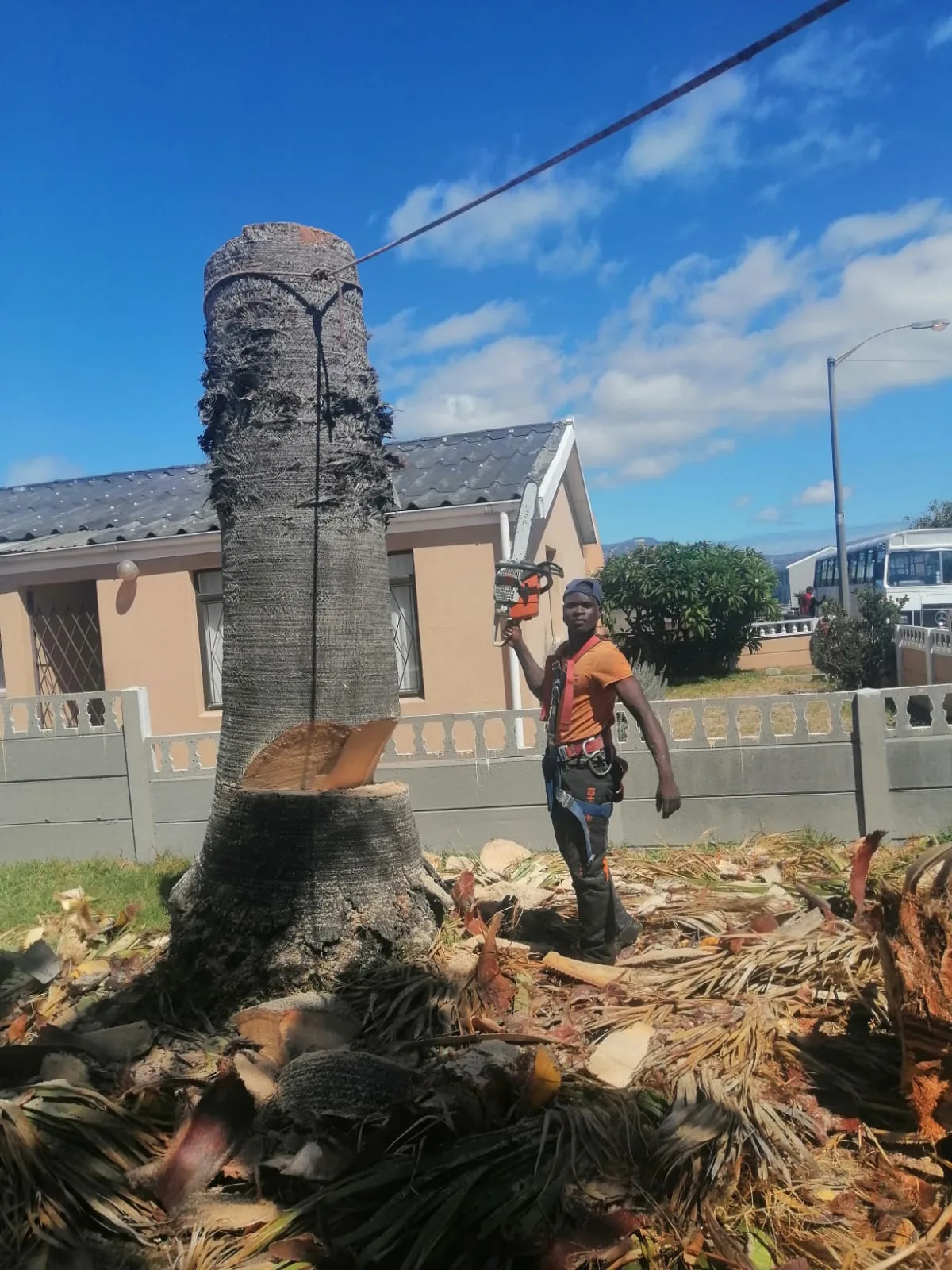
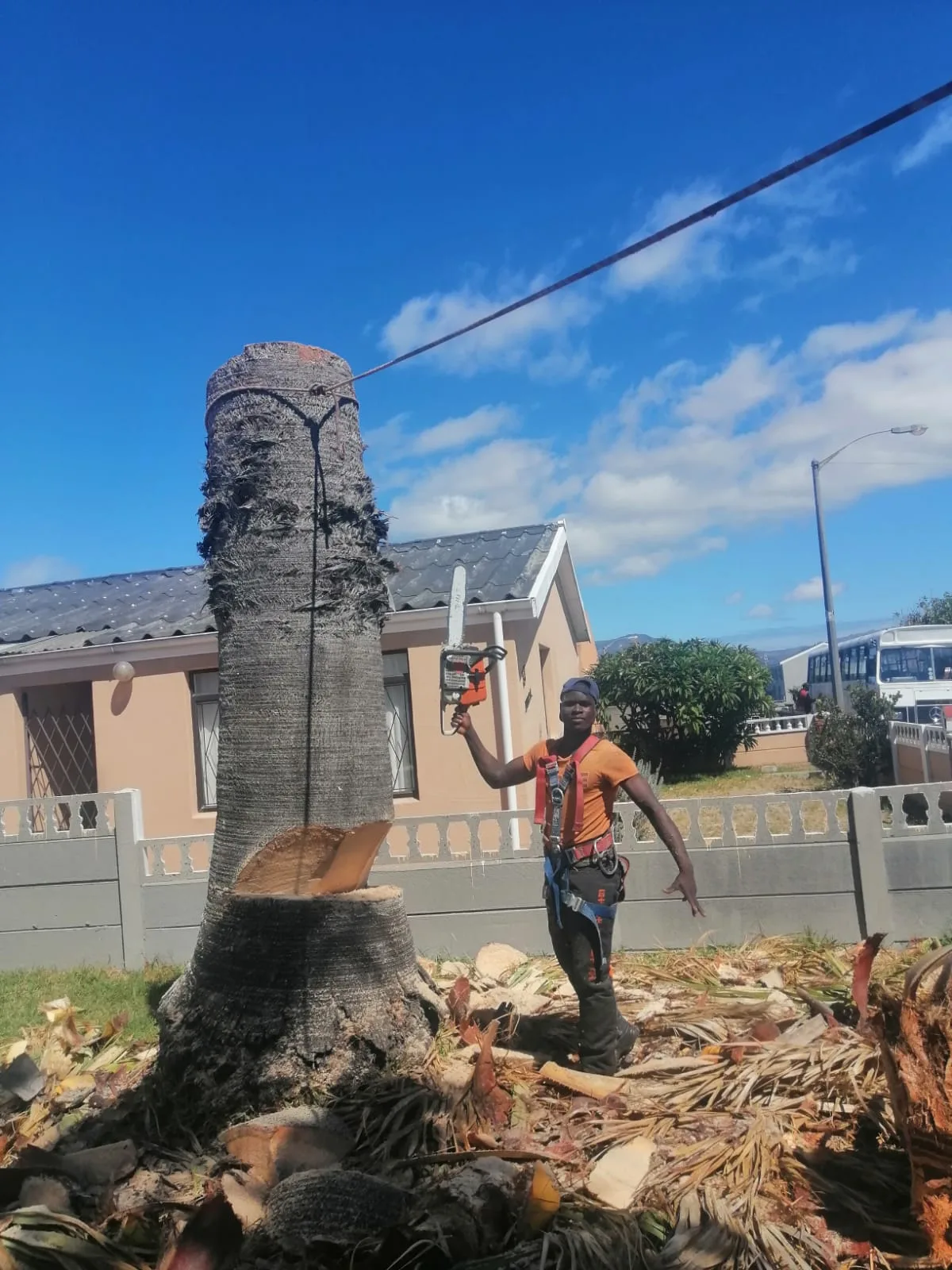
What we are not is an earthworks or demolition outfit. We don't level, terrace or compact ground, and we don't take away builder's rubble, old foundations or a collapsed structure. If any of that is on your plot it's a separate contractor, and we'll say so rather than quietly leaving it out of the quote. Trees and vegetation are what we do properly, and felling the big timber safely is the part of a clearing job that most needs people who do it every day.
One thing we won't clear with everything else is a protected tree. A number of indigenous species are declared protected under section 12 of the National Forests Act 84 of 1998 — the current list is Government Notice 4496, Government Gazette 50291 of 13 March 2024 — and under section 15(1) those need a licence wherever they grow, including in the middle of a plot you're about to build on. We identify what's standing before anything comes down. The rules are in our guide to when a Cape Town felling needs a permit.
If you've got a plot that's got away from you — a vacant stand, an inherited property, or a boundary disappearing under wattle — we'll walk it for free and give you one written number. Have a look at the rest of what our Cape Town tree crew takes on, or call 084 966 4252 and describe the plot to us.
Our site clearing process
Survey the plot
We walk the site, identify what stays and what goes, flag any protected trees, and quote the full clearing job.
Fell and clear vegetation
Trees come down, bush and alien vegetation is cut back, and brush is gathered — clearing the plot down to the level you need.
Process and remove
Everything is chipped, cut and loaded out. We can grind stumps too so the ground is ready for a foundation or fresh landscaping.
Hand over a clean site
We leave the plot cleared, raked and ready for the builders, landscapers or the next owner to move in.
Every site clearing job is quoted up front in writing, and cleaned up afterwards.
Get my free quoteGet a free site clearing quote
Fill this in and we'll come and look, then give you one fixed written price. No call-out fee.
Site & Plot Clearing FAQs
Common questions about this service in Cape Town.
Site Clearing across Cape Town
We provide site & plot clearing right across the city — including Camps Bay, Sea Point, Constantia, Newlands, Durbanville and Table View. Not on the list? We cover the whole of greater Cape Town.
Other tree services we offer
All across greater Cape Town.

Tree Felling
Safe, controlled felling of large and awkward trees anywhere in Cape Town.
Learn more
Tree Removal
Complete tree removal — felled, cleared, hauled away and the site left tidy.
Learn more
Stump Removal & Grinding
Grind out unsightly stumps below ground level so you can pave, build or replant.
Learn more
Tree Pruning & Trimming
Shape, thin and lift your trees for health, light and a tidy garden.
Learn more