Stump Removal & Grinding in Cape Town
A leftover stump trips people up, sprouts new shoots, and gets in the way of paving and planting. We grind stumps well below ground level — or dig out the whole root ball — so the space is yours again. Free quotes, Cape Town wide.
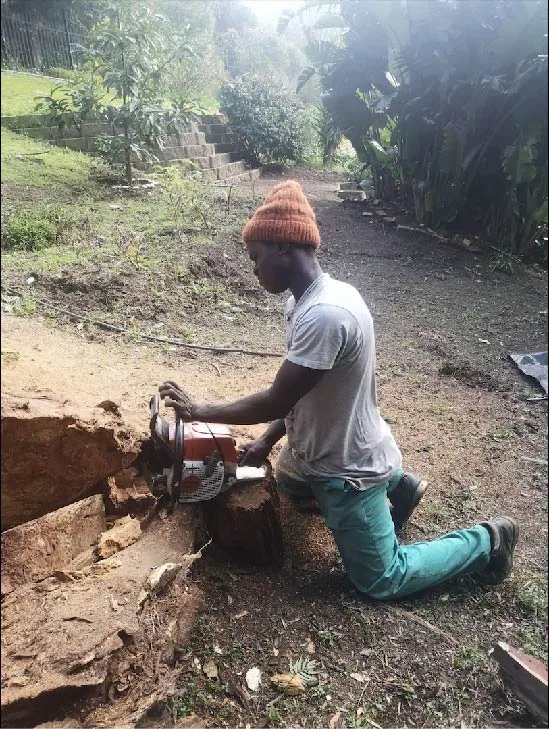
The stump is the part people regret leaving
When a tree comes down, the stump is the easy thing to postpone. It's low, it's out of the way, and taking it out feels like an extra expense on a day that has already cost you money. Most of the stump grinding we do in Cape Town is on stumps somebody left behind a year or three ago, once it became clear the garden wasn't going to swallow it. Here's what actually goes wrong, roughly in the order people phone us about it.
It disappears into the lawn
Grass grows over a low stump within a season and it becomes an invisible ankle trap — for kids running across the lawn, and for whoever cuts the grass. It's also what wrecks a mower blade or a brushcutter head, usually more than once, because nobody remembers exactly where it is.
It sprouts
A cut stump is not a dead stump. Plenty of species keep a live root system going and push out a ring of shoots around the cut face, or send suckers up through the lawn a metre away. You end up mowing the same tree for years instead of having removed it.
It rots, and things move in
Decaying wood in contact with soil is exactly what termites and wood-boring beetles are looking for. A rotting stump a few metres from a wooden deck, a fence line or roof timbers is an invitation you don't want to leave standing.
You can't build over it
This is the one that forces the job. You can't lay paving, pour a slab, level a lawn or set a fence post over a stump and expect it to hold. Wood rots, the ground above it drops, and the new paving dips in the exact spot you paid someone to make flat.
Grind it, dig it out, or kill it slowly?
There are three honest ways to deal with a stump, and they suit very different situations. Anyone who tells you one of them is always right is selling you their machine.
Grinding — the default, and the right call most of the time
A grinder chews the stump and the top of the root crown into chips, working from the surface down. Typical practice is around 150–300 mm below ground level — shallower under a lawn, deeper if paving or turf is going over it. Be clear about what you get: a hole full of woodchip and soil, not clean bare earth, and the lateral roots running away from the stump stay in the ground to rot down on their own. For a garden that's completely fine.
Digging the root ball out — when something structural is going in
Full excavation means levering the whole root ball out and carting it away. It's slower, messier, and leaves a real hole needing proper backfill and compaction. It's genuinely necessary when a foundation, a pool shell, a retaining wall or a driveway slab is going over the spot — a builder needs undisturbed soil, not a pocket of buried timber. For a lawn or a flower bed it's overkill.
Chemical treatment — slow, and it doesn't remove anything
Herbicide painted onto a fresh cut kills the living roots so the stump can't re-sprout. What it doesn't do is get rid of the stump — the wood is still there, still in the way, decaying over months or years. It's the sensible option when a machine genuinely can't reach, or when you don't need the space back and only want the regrowth stopped. If you'd rather do it yourself, the methods that actually work are in our guide to killing a tree stump for good.
On most Cape Town properties the answer is grinding. We'll tell you at the quote stage if yours is one of the jobs where it isn't, and what the alternative costs, rather than grinding it anyway and letting your builder find the problem later.
Species changes the stump more than people expect
Two stumps the same width can be completely different jobs depending on what tree they came off. Tell us the species when you ask for a quote — it changes the method, the time on site and what you should expect afterwards.
Gums, wattles and the other invasives
Eucalyptus and the wattles are why "the tree grew back" is such a common complaint. Cut them and leave the stump alive and they sucker hard, both from the cut face and from roots running well out into the garden. Grinding the crown out is what stops it. Where a stump has to stand for a while before we can get to it, the cut face wants treating — the same problem we deal with on Port Jackson and rooikrans clearing across the Cape.
Pines
Good news and bad news. A cut pine doesn't re-sprout, so regrowth isn't the worry. What it leaves is a wide, resinous root plate and a stump much broader at ground level than the trunk suggested. Resin gums up teeth, and the flare means more material to grind than the tape measure implies.
Palms
A palm has no taproot. It sits on a dense, fibrous root ball packed with soil and grit — stringy stuff that grinds differently to timber and blunts teeth on the sand it holds. The upside: it won't regrow once the growing point is gone, and the root ball is often small enough in footprint to lift out rather than grind.
Oaks and other big shade trees
An old oak sends wide, shallow lateral roots far past the trunk — under lawn, under paving, sometimes under a boundary wall. Grinding takes out the stump and crown, and we can chase major surface roots where they're causing trouble, but know up front that the full root system of a mature oak does not come out of a suburban garden. What's under the paving stays there unless the paving comes up.
What stump grinding costs in Cape Town
Most stumps land somewhere between R800 and R4,500 as an add-on once the tree is already down, and that band is wide for a reason: a pine stump on an open lawn and a same-width oak stump behind a 700 mm side gate are not the same job and shouldn't cost the same. So treat the range as a sanity check rather than a quote. What follows is exactly what we measure when we price one, so you can test any quote you're given — ours or anyone else's.
| What we look at | Why it moves the price |
|---|---|
| Diameter at ground level | Measured across the flare where it meets the soil, not the trunk higher up. Time on the machine rises steeply with width. |
| How many stumps | Travel and setup is the same for one or six, so a row of stumps always works out cheaper each than a single one on its own. |
| Access width to the stump | The biggest single factor. If the machine can't reach it, the method changes and so does the price. See the next section. |
| How deep it has to go | Lawn needs less than paving, paving less than anything structural. Every extra hundred millimetres is another pass. |
| What's in the soil | Stones, builder's rubble, buried concrete and old wire blunt teeth fast. Made-up ground next to a wall or driveway is where this bites. |
| Chips away or backfilled | Raking the chips back in is included. Loading and hauling them off site is extra volume on the truck, and it's priced as such. |
| Services underground | Irrigation lines, pool plumbing, electrical to a gate motor. If we have to work carefully around them, it's slower. |
Every stump is quoted on site, at one fixed written price, before anything starts. If you want a feel for the numbers on tree work generally before we come out, our Cape Town tree felling price guide sets out what the wider job costs.
Send us a photo of the stump with something for scale next to it and we'll tell you what we'd need to see on site.
Get my stump quoteMeasure your narrowest gate
This decides more stump jobs than anything else, and it's the one thing almost nobody gets asked over the phone. A stump grinder is a wheeled or tracked machine that has to be walked to the stump. If the route from the street to the back garden has a 600 mm gate, a flight of steps, a raised threshold or a sharp turn between the house and the boundary wall, the machine that would have done the job in an hour simply can't get there.
So before you book anyone, walk the route and measure the narrowest point — the gate opening itself, not the gap between the pillars. Note any steps, and whether there's a hard surface or soft lawn to cross. Tell us those three things and we'll know what we're bringing.
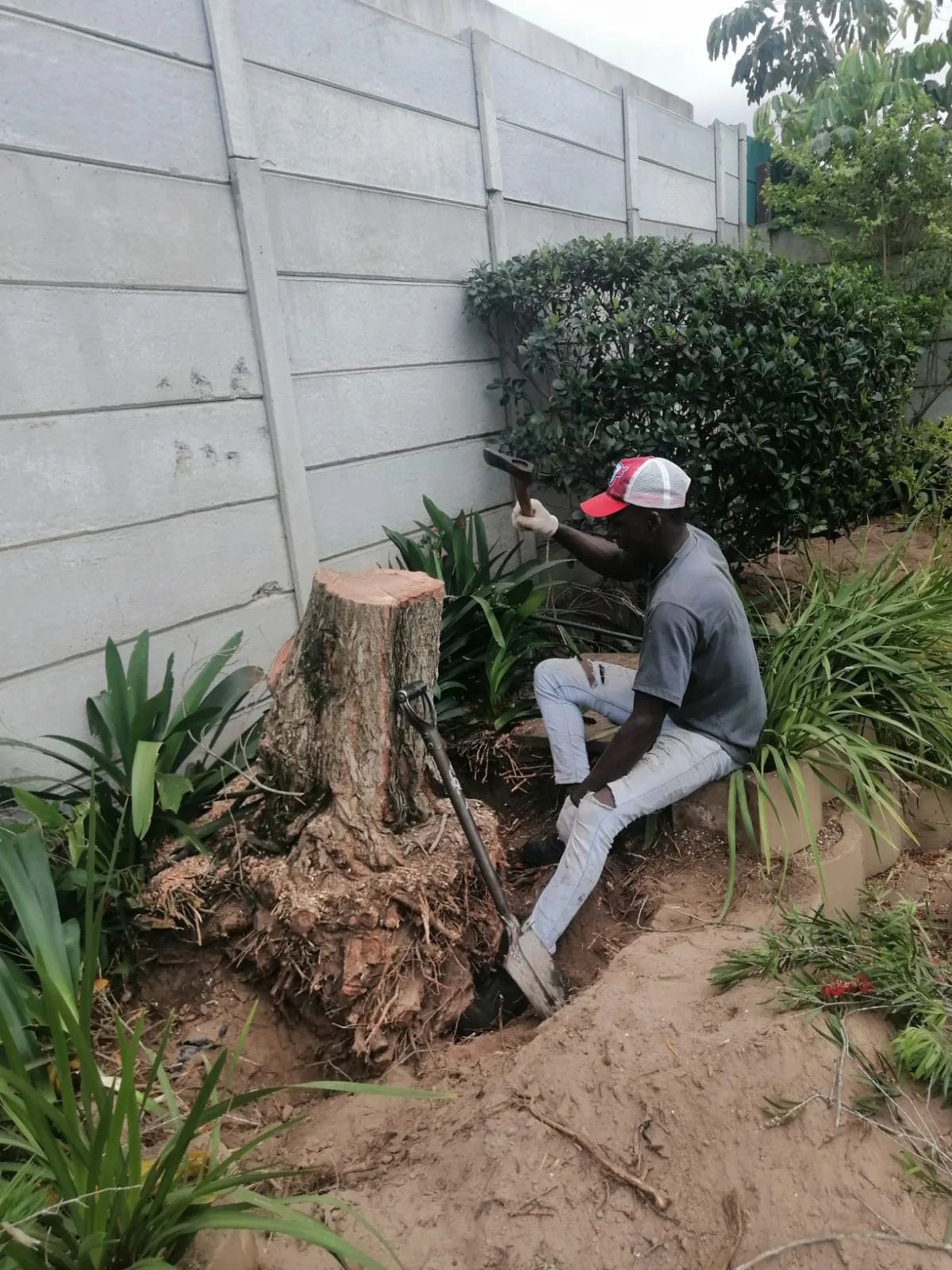
When a machine genuinely can't reach, there are two honest options and we'll talk you through both. The first is hand work: levering and cutting the root ball out with picks, bars and a saw. It works, and it's what we use tight against a boundary wall where a grinder would hit brickwork, but it's slow and costs more in labour than grinding costs in machine time. The second is to cut the stump flush and treat the cut so it can't re-sprout, then leave it to rot down. Cheaper and quicker, and a sensible answer in a shrub bed — but not a solution if you're paving or building over the spot.
What we won't do is quote you for grinding, arrive, find the gate is too narrow and renegotiate on your driveway. That's why we come and look first.
What you're left with, and what to do with it
Grinding produces a surprising volume of material — a mix of woodchip and soil that mounds up above the surrounding level. That's normal, and it's why the finished job can look higher than the lawn on the day. Standard practice is to rake the mix back into the hollow and level it off; if you'd rather the chips were gone, say so at the quote stage and we'll load them out.
Then expect the spot to sink over the following months. The chips settle and rot down, so a hollow that was flat when we left usually dishes a little. A barrow of soil fixes it once it's stopped moving — worth knowing in advance rather than wondering what went wrong.
Don't plant straight into fresh grindings. Woodchip is very high in carbon, and the micro-organisms breaking it down pull nitrogen out of the surrounding soil while they work, so new plants in that mix go yellow and sulk. To plant in the same spot, dig the bulk of the chips out and backfill with decent topsoil or compost — or spread the chips as surface mulch on a bed elsewhere, where they'll do good rather than harm.
For turf, take the chips out, backfill with topsoil and let it settle and firm before you lay. For paving the same, with proper compaction — and tell your paver where the stump was so the base gets built accordingly. If you're clearing a whole property rather than one stump, that's usually part of a site and plot clearing job and gets quoted as one piece of work.
Roots under paving, walls and drains
A fair number of our calls aren't really about the stump — they're about what the roots have already done. Lifted paving, a cracked boundary wall, a drain that keeps blocking. Worth being straight about which of those we can help with.
Surface roots in open ground we can deal with — where a root runs through a lawn or a bed and is causing trouble, it can be ground out or cut back while we're on site. Roots under paving or a slab are different: we can't reach them without the paving coming up, and grinding blind under a hard surface risks the very services and structure you're trying to protect. Once the paving is lifted, we can come back and clear what's underneath.
Roots in a wall footing are the ones to be careful about. If a root has grown into or under the footing, it may now be part of what the wall is sitting on, and cutting it can make the movement worse rather than better. That's a conversation for a builder or an engineer, not something to attack with a grinder — and we'll say so on site if that's what we're looking at.
Roots in drains aren't ours either. Roots get into cracked or badly jointed pipework because that's where the water is — the root is the symptom, the failed pipe is the cause. A plumber with a camera clears the blockage and tells you what the pipe actually looks like. Taking the stump out stops it getting worse; it doesn't repair the pipe.
We'd rather say that up front than take the job and leave you with the same problem. If you're not sure which of these you've got, ask when we come out — the quote is free, and our Cape Town tree crew would rather point you at the right trade than sell you the wrong service. Call 084 966 4252 or use the form above and we'll come and look.
Our stump grinding process
Inspect the stump and roots
We check the size, species and how close the stump is to walls, pipes and paving so we pick the right method.
Grind or dig out
Most stumps are ground out below surface level with a grinder; larger ones we lever and dig the root ball out by hand where access is tight.
Backfill the hole
We rake the grindings back into the hollow (great mulch) or clear them out and level with soil — your choice, ready to plant or pave over.
Clean down the area
We sweep up the chips and leave the spot flat and tidy, with no tripping hazard and no regrowth.
Every stump grinding job is quoted up front in writing, and cleaned up afterwards.
Get my free quoteStump Grinding jobs in Cape Town
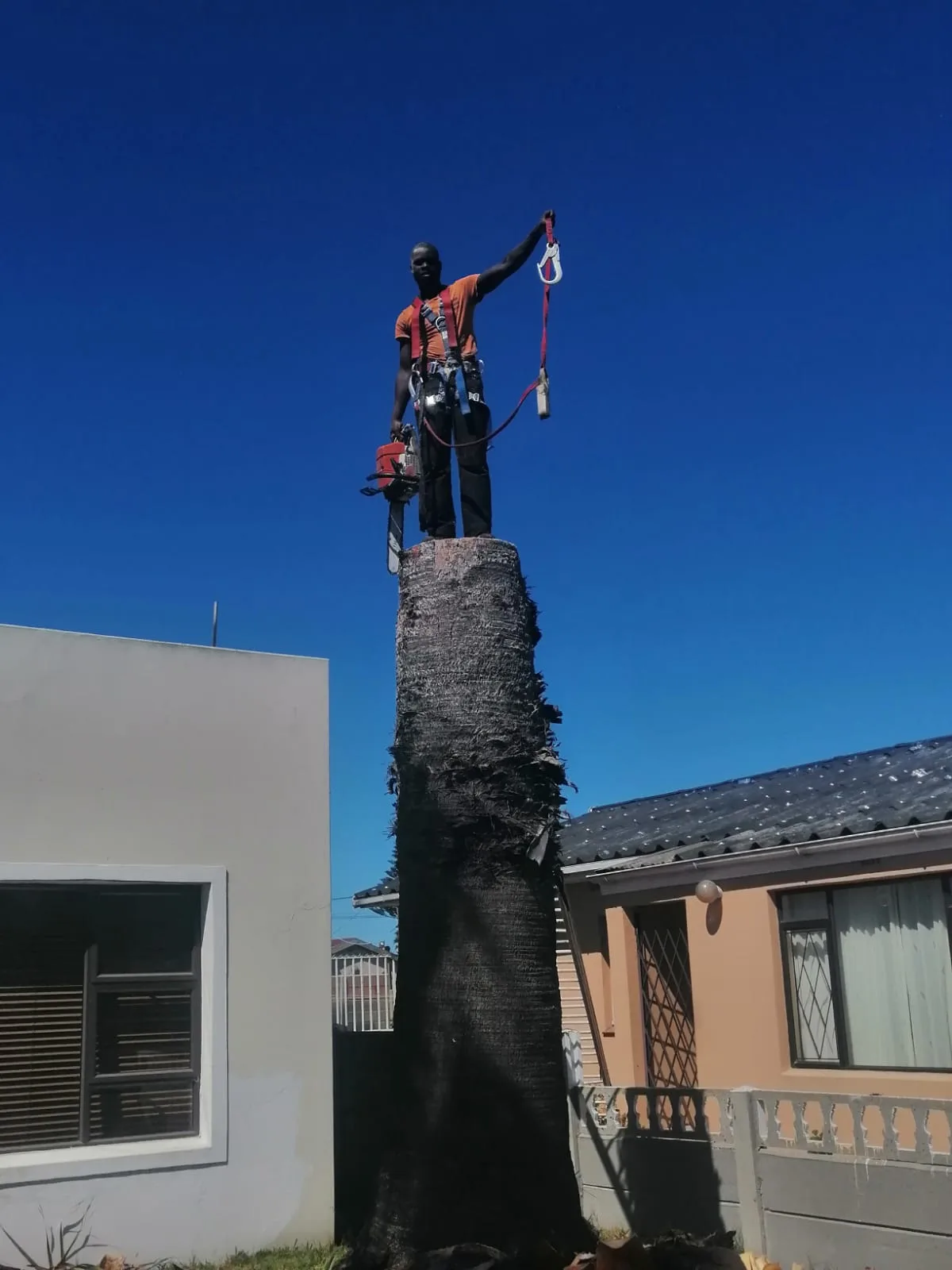
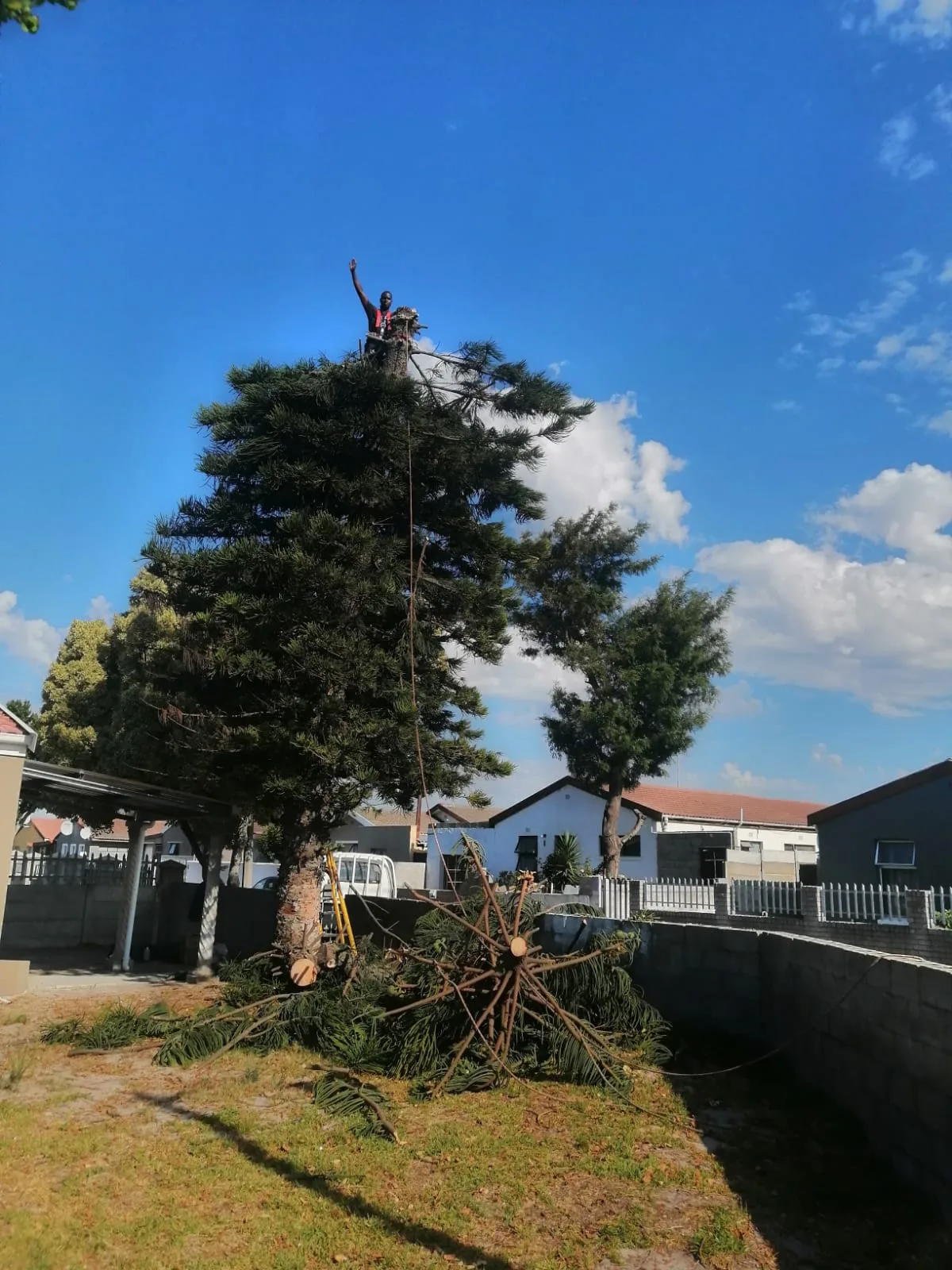
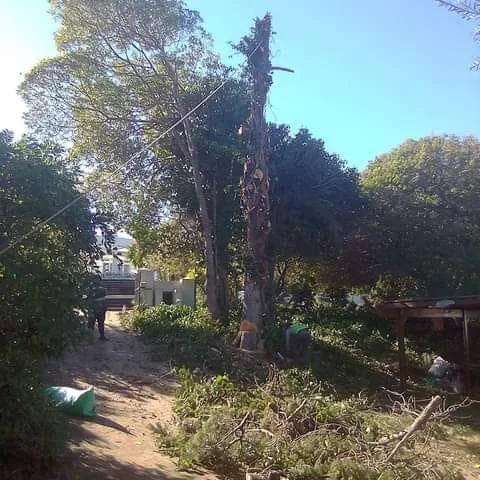
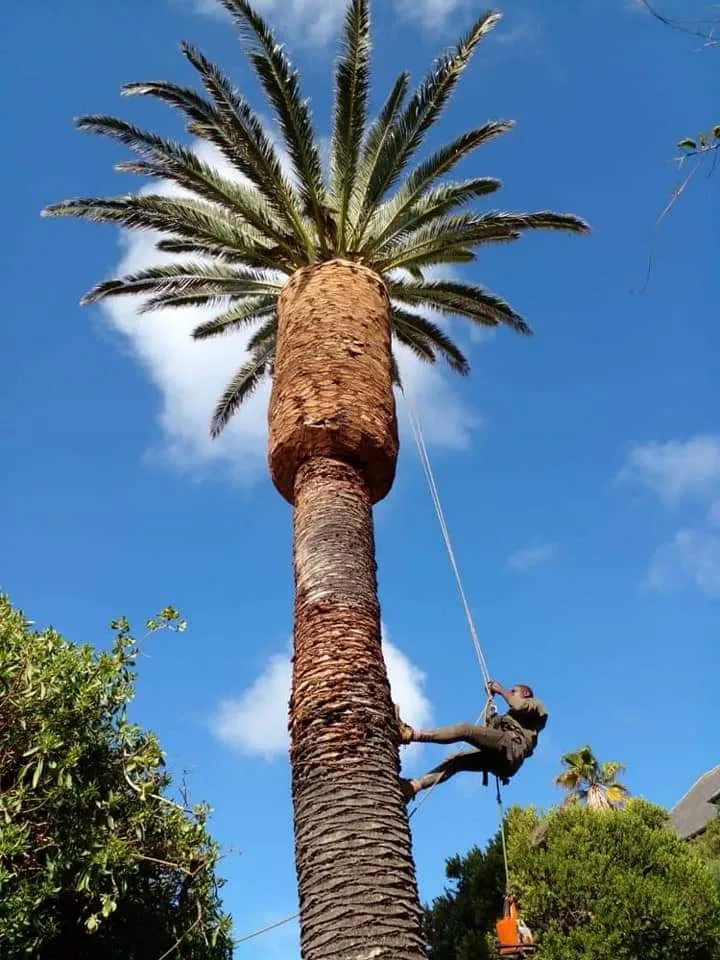
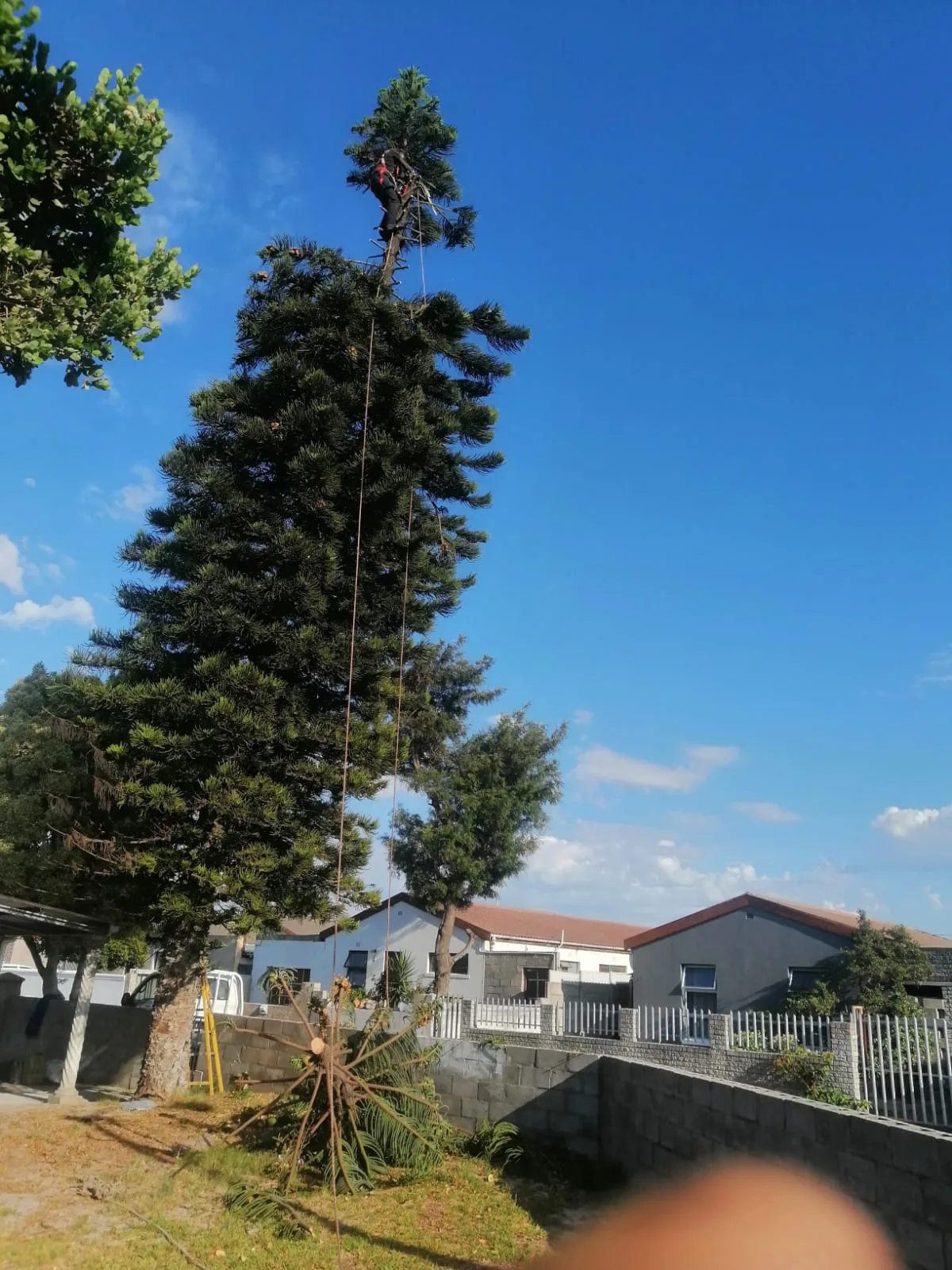
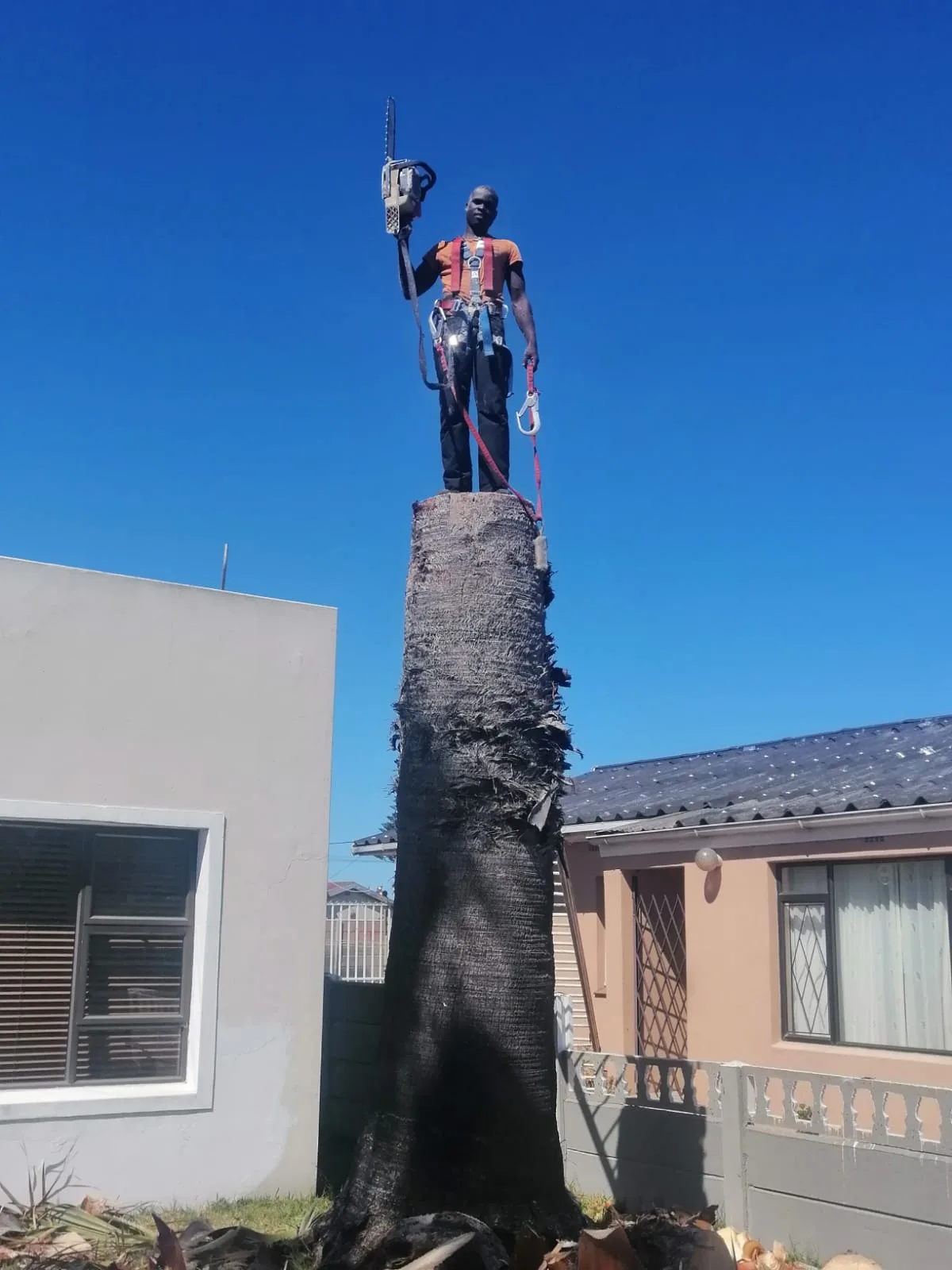
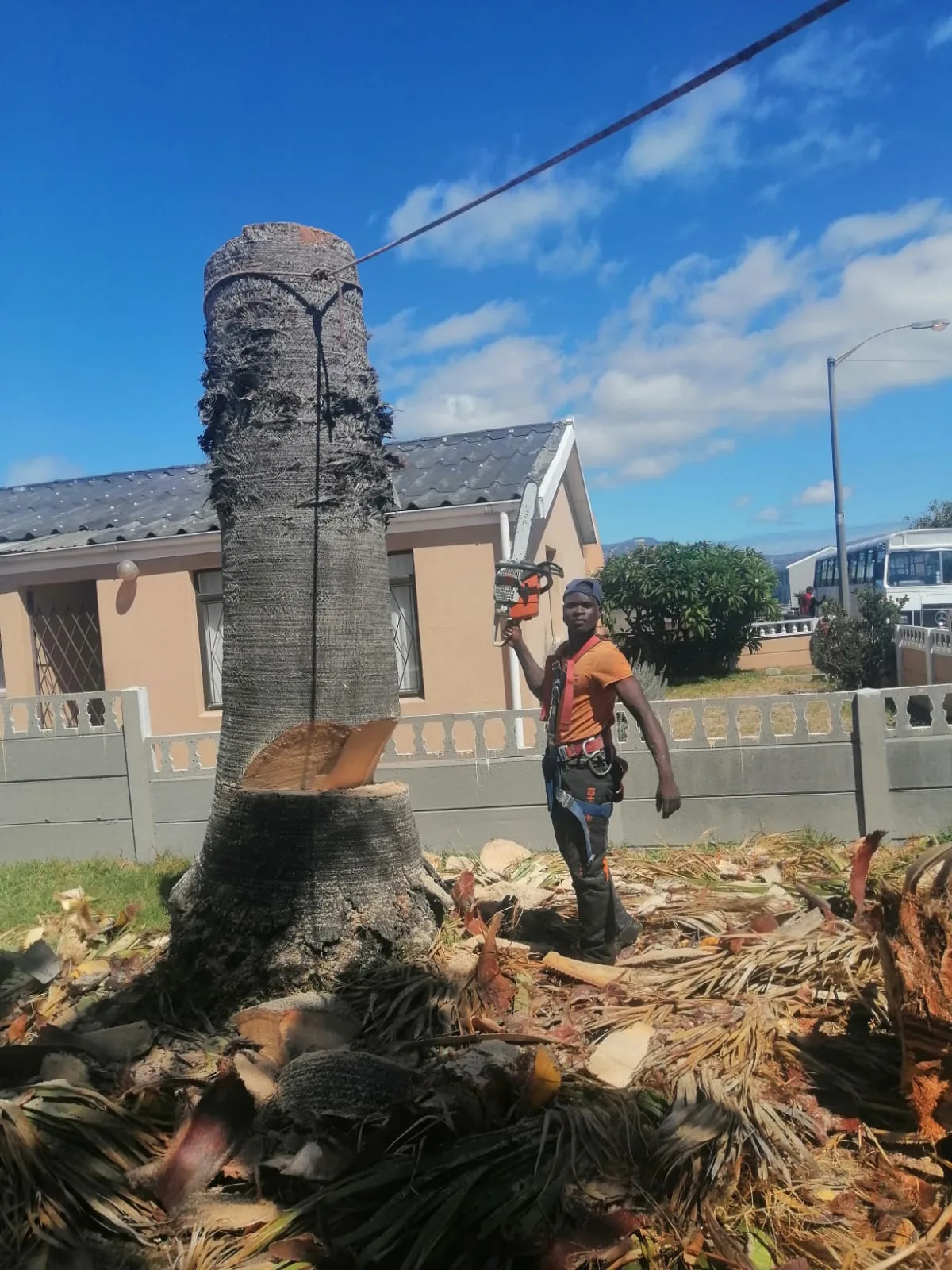
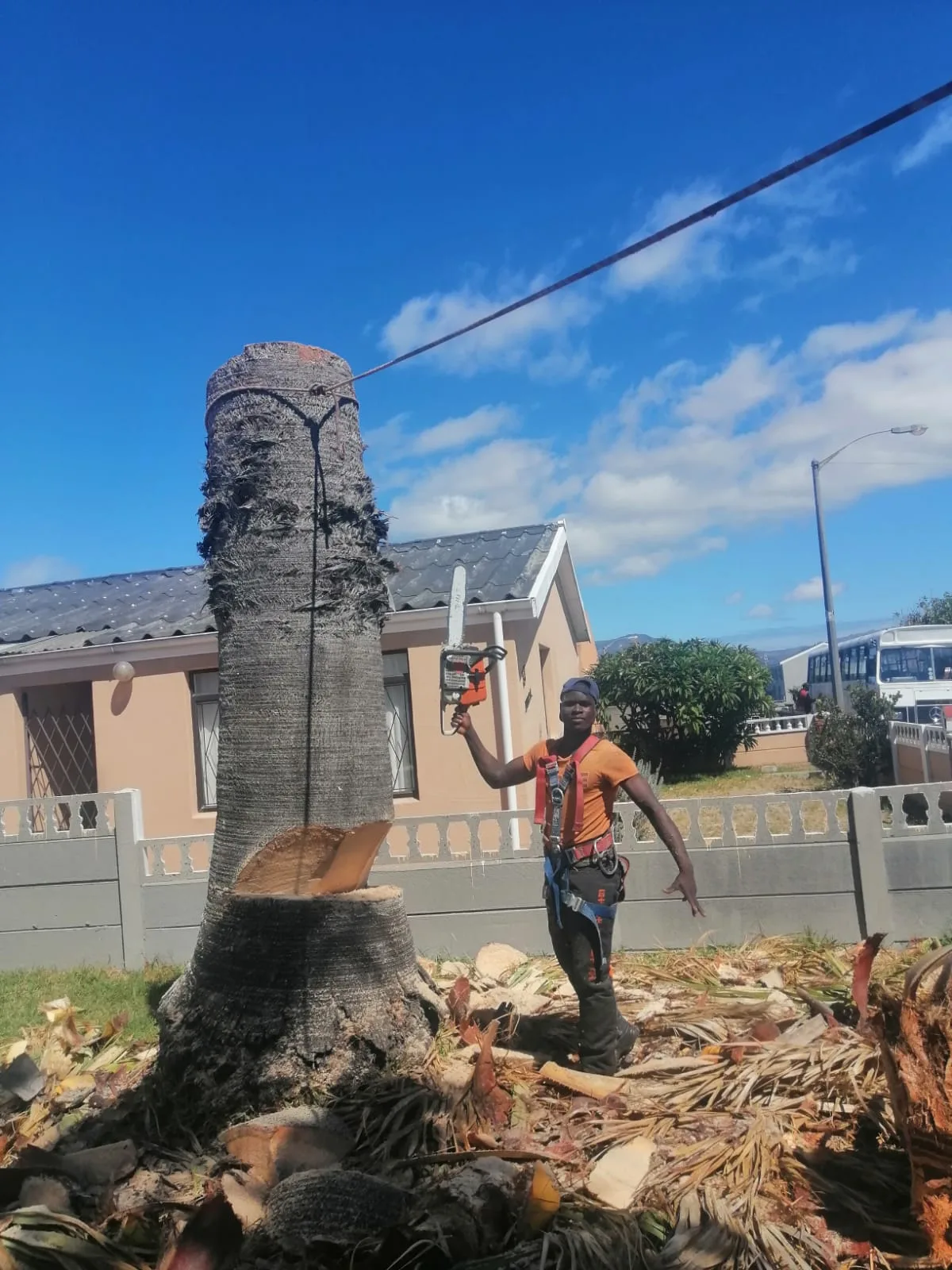
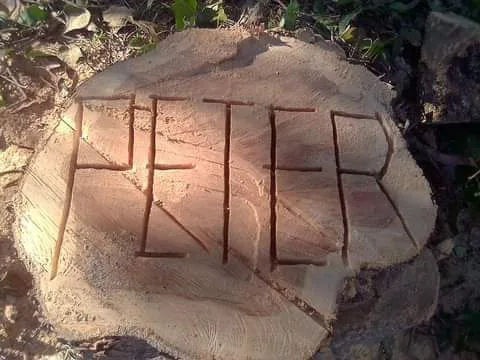
These are our crew on real jobs — no stock photography. More of them are in the job photo gallery.
Get a free stump grinding quote
Fill this in and we'll come and look, then give you one fixed written price. No call-out fee.
Stump Removal & Grinding FAQs
Common questions about this service in Cape Town.
Stump Grinding across Cape Town
We provide stump removal & grinding right across the city — including Camps Bay, Sea Point, Constantia, Newlands, Durbanville and Table View. Not on the list? We cover the whole of greater Cape Town.
Other tree services we offer
All across greater Cape Town.
Tree Felling
Safe, controlled felling of large and awkward trees anywhere in Cape Town.
Learn more
Tree Removal
Complete tree removal — felled, cleared, hauled away and the site left tidy.
Learn more
Tree Pruning & Trimming
Shape, thin and lift your trees for health, light and a tidy garden.
Learn more
Palm Tree Removal & Cleaning
Remove, trim or clean tall palms — our specialty across the Cape.
Learn more