Port Jackson & Rooikrans: What Cape Town Landowners Must Do
If you own a plot anywhere from Hout Bay to Kommetjie, along the Cape Flats, or on any of the smallholdings out past Noordhoek, there's a fair chance a decent slice of your "bush" is Port Jackson or rooikrans. Both are Australian wattles, both were brought here deliberately in the 1800s, and both are now listed invasive species that South African law says must be controlled. That last part catches people out. This isn't a tidiness question or an environmental nice-to-have. It's an obligation that sits on the landowner.
Key takeaways
- Both Acacia saligna (Port Jackson) and Acacia cyclops (rooikrans) are listed Category 1b on the 2020 national invasive species list, with no regional exemption for either.
- Category 1b means the species must be controlled. It is not a species you need a permit to remove — the duty runs the other way.
- When you sell the property, the seller must tell the buyer in writing about listed invasive species on it. That's the point at which most people discover this exists.
- Port Jackson coppices hard from a cut stump. Rooikrans generally doesn't, if you cut low enough. They need different treatment.
- The seedbank is the real enemy. Acacia seed densities in the Western Cape have been measured in the thousands to tens of thousands of seeds per square metre.
- Any honest clearing quote includes follow-up visits. A one-off cut on a dense stand is money thrown at a problem that grows back.
Which one have you got?
People use "Port Jackson" as a catch-all for any scrubby wattle, but the two species look quite different once you know what to look for, and they behave differently when you cut them. Neither has true leaves. What look like leaves are phyllodes, flattened leaf stalks that do the work of leaves, and their shape is the giveaway.
| Port Jackson (Acacia saligna) | Rooikrans (Acacia cyclops) | |
|---|---|---|
| Shape | Spreading small tree to about 8 m, short trunk, distinctly weeping habit | Dense rounded shrub or small tree, mostly 1–6 m, often multi-stemmed |
| Phyllodes | Long, narrow and drooping, blue-green, hanging like willow leaves | Short, stiff and leathery, dark green, roughly 40–95 mm long with several obvious veins |
| Flowers | Bright yellow balls in showy clusters, late winter into spring | Paler yellow balls, scattered over a long season |
| Seeds | Dark oblong seeds in flat pods | The clincher — a glossy black seed ringed by a thick orange-red stalk. That red ring is where "rooikrans" comes from |
| Where you'll see it | Sand flats, roadsides, disturbed ground, riverbanks, old fields | Coastal dunes and the strip behind them, in dense thickets |
| After you cut it | Coppices vigorously — treat the stump | Usually dies if cut below the lowest branch |
There's a third clue on Port Jackson that's hard to miss once you've seen it: knobbly brown galls the size of a fist, sometimes covering a whole tree. Those aren't a disease you need to worry about. They're the work of a biocontrol fungus released deliberately in the 1980s, and they're on our side.
Why they matter more than they look
A stand of rooikrans behind a dune looks like nothing much. What it's doing is three things at once.
Water
Invasive alien plants across South Africa were estimated to cut river flows by about 1 444 million m³ a year, roughly 2.9% of the country's natural runoff, with wattles the single biggest contributor. In a province that has already run its dams down to Day Zero levels, that's not an abstraction.
Fire
Comparative burn trials on Cape vegetation found invasive aliens were slower to ignite than fynbos but burnt at the highest intensity of the groups tested. Dense alien stands hold far more fuel per hectare than the fynbos they replaced, and they sit right where houses meet veld.
Fynbos
Both species fix nitrogen, which enriches the poor sandy soils that fynbos is adapted to and quietly changes what can grow there. Then they shade everything out. Cape Flats Sand Fynbos is among the most threatened vegetation types in the country, and Port Jackson is a large part of why.
The flow figures come from Le Maitre and colleagues in Water SA, and the burn behaviour from a flammability study on Cape Floristic Region species published in PeerJ.
What the law actually says
Here's the part worth reading slowly, because there's a lot of loose talk about it. Invasive species in South Africa are listed under the National Environmental Management: Biodiversity Act (NEMBA). The current national list was published in Government Notice 1003, Government Gazette 43726, dated 18 September 2020. In List 1 of that notice, entry 15 is Acacia saligna — "Port Jackson, Port Jackson willow" — Category 1b. Entry 3 is Acacia cyclops, listed under its other common name "red eye", also Category 1b. Neither carries a regional variation or an exemption in that notice. You can read the gazette yourself if you want to check.
That's worth spelling out because it isn't true of every wattle. Black wattle and Australian blackwood, for instance, sit in Category 2 on the same list with plantation exemptions attached, and some species are listed differently province by province. Port Jackson and rooikrans are not among those. They're 1b, everywhere.
| Category | What it means in the regulations |
|---|---|
| 1a | Must be combated or eradicated immediately. Reserved for species still rare enough to wipe out. |
| 1b (both acacias) | Species "which must be controlled". The person in control of the land must control them, and must allow an authorised official onto the property to inspect or assist. |
| 2 | Permitted only in a specified area under permit. Outside that area, a Category 2 species is treated as 1b. |
| 3 | Existing plants may stay under conditions, but no new planting or trade. In a riparian area, a Category 3 plant is treated as 1b. |
Those definitions are set out in regulations 2 to 5 of the Alien and Invasive Species Regulations. On top of the control duty, two other obligations catch landowners out:
Telling the authorities
Section 73(2) of the Act says the owner of land on which a listed invasive species occurs must notify the relevant competent authority in writing, take steps to control and eradicate it, and prevent it spreading. It's drafted very broadly. We're a tree crew rather than lawyers, and we can't tell you how it's applied to a small suburban erf in practice — but it is what the section says.
Selling the property
Regulation 29(3) requires that "the seller of any immovable property must, prior to the conclusion of the relevant sale agreement, notify the purchaser of that property in writing of the presence of listed invasive species on that property." Conveyancers now routinely ask for this declaration, which is how a great many owners first hear about any of it.
One thing you don't need: a permit to remove them. Protected indigenous trees work the opposite way round, where cutting without a licence is the offence. With a listed invasive, clearing it is the thing the law is asking for. Treat everything above as general information rather than legal advice — if there's real money or a dispute riding on it, get a proper opinion.
Why cutting alone doesn't work
This is where most well-meaning clearing attempts fall over. Somebody spends a weekend and a hired chainsaw flattening the back half of the plot, it looks magnificent for a month, and by the following spring there's a thicket where there used to be trees. Two separate mechanisms are at play.
Coppicing
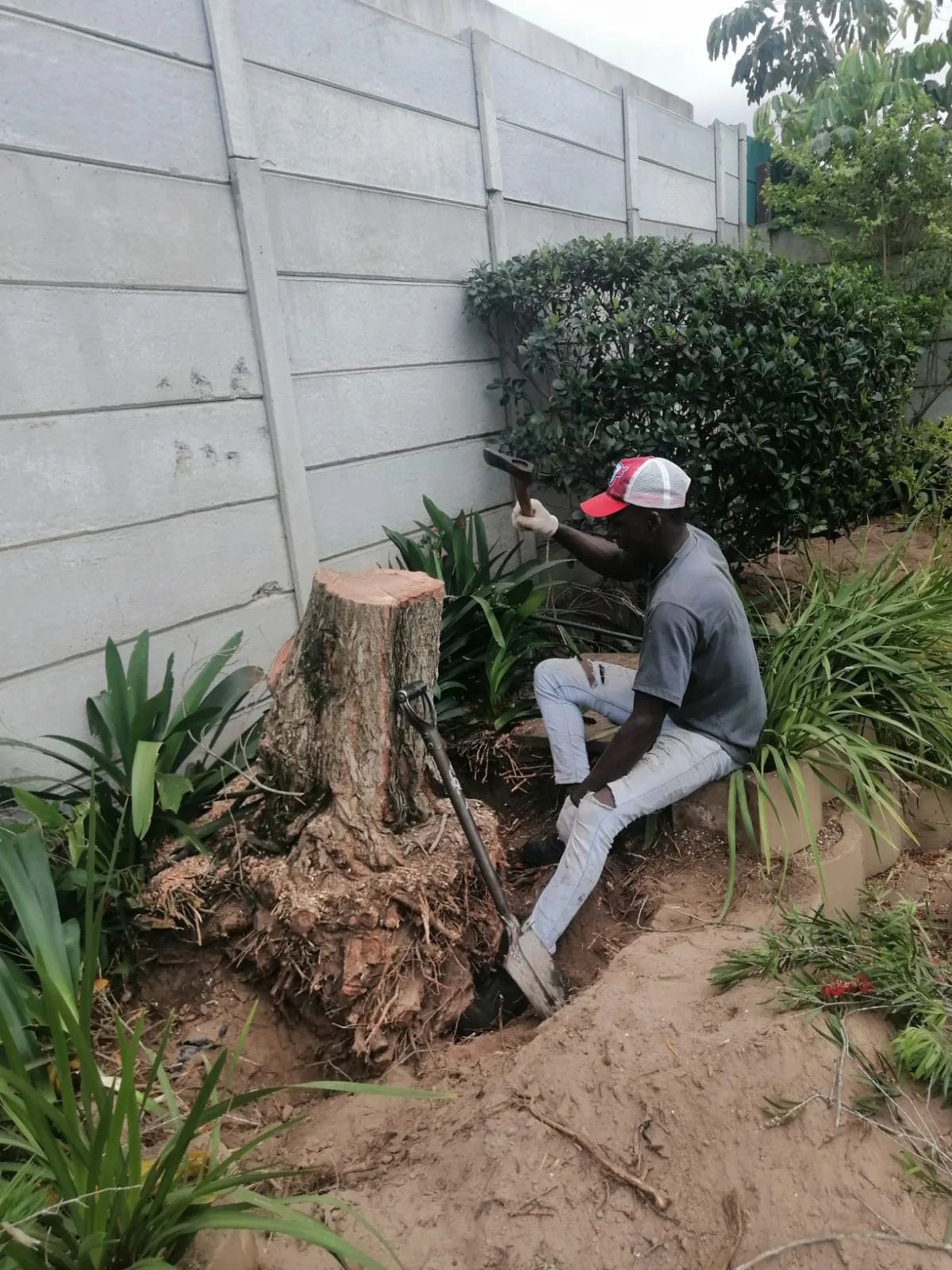
Port Jackson resprouts strongly from a cut stump. Cut it and walk away and you've turned one stem into a ring of twenty, all fed by an established root system, growing faster than the original. Standard clearing practice in South African invasive control programmes reflects this: fell the tree and treat the cut stump with herbicide, then come back and foliar-spray any coppice growth before it reaches head height. Rooikrans is more forgiving. Cut low, below the lowest branch, and it usually just dies. The practical upshot is that a quote which treats both species identically hasn't been thought about.
The seedbank
The harder problem is underground and invisible. Australian acacias evolved with fire and store enormous banks of hard-coated seed in the soil, dormant until heat or scarification wakes them. Sampling in the Western Cape has found Australian acacia seedbanks ranging from around 1 000 to over 17 000 seeds per square metre. Clear the standing trees and you've removed the seed factory, not the seed. The first summer after clearing, and especially after any fire, that bank germinates in a carpet.
The follow-up is the job
Clearing a dense stand is not one visit. Plan on the initial clear, then a follow-up at roughly six to twelve months to deal with coppice and the first flush of seedlings, then lighter passes after that for a few years while the bank runs down. Seedlings pull out by hand when they're small and need a spray or a saw when they're not. Getting the follow-ups right is the difference between clearing a plot once and clearing it forever.
There is help you didn't ask for. A gall-forming rust fungus, Uromycladium tepperianum, was released against Port Jackson in South Africa in 1987 and spread nationwide. Long-term monitoring recorded tree densities at monitored sites falling by roughly 87% to 98% over the period 1991 to 2005. Seed-feeding weevils and a flower-galling midge have been released against these acacias too. None of this is something a landowner does, and none of it clears your plot on any useful timescale. It's the slow background pressure that makes your own clearing more likely to stick.
How a plot actually gets cleared
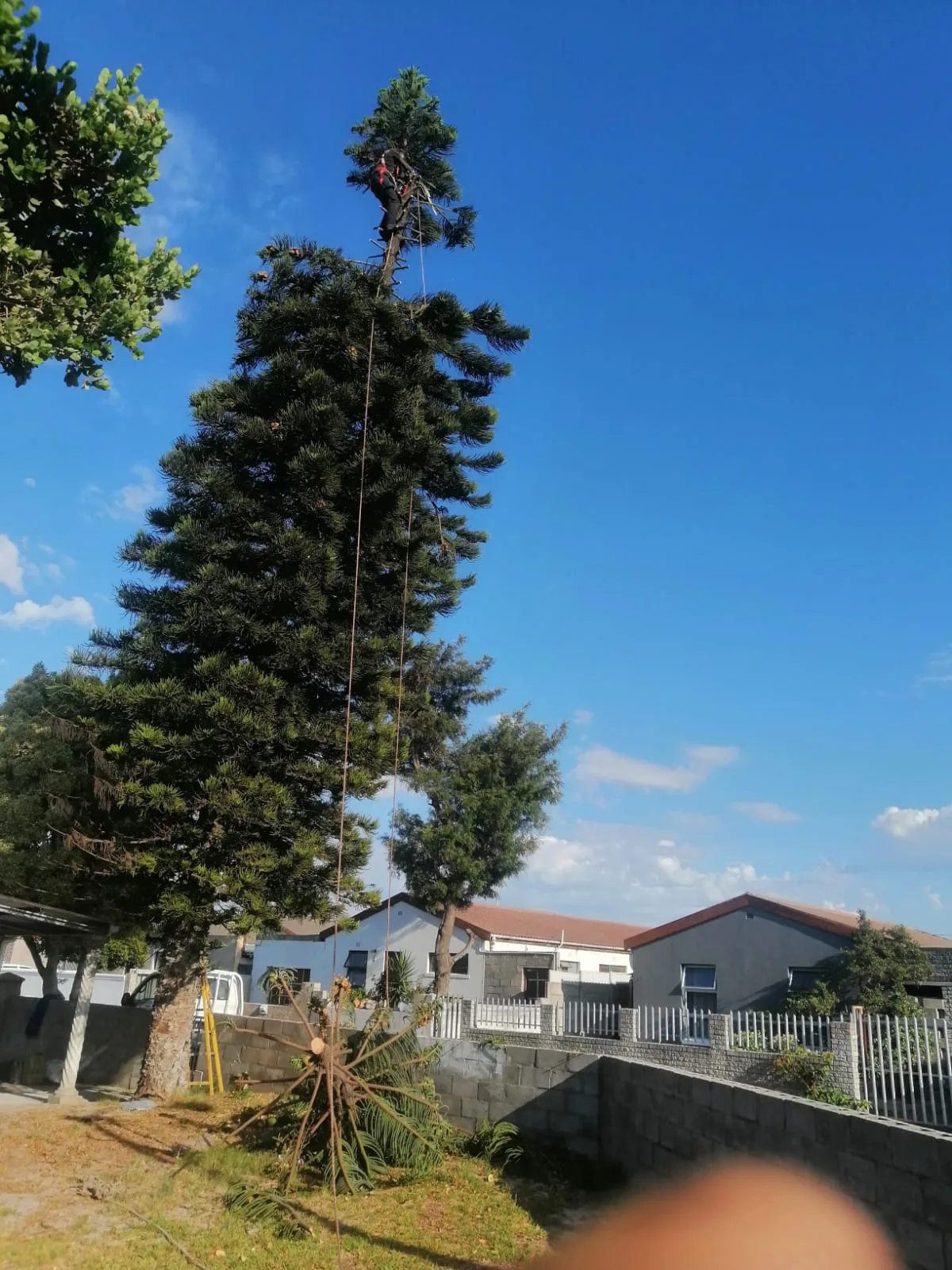
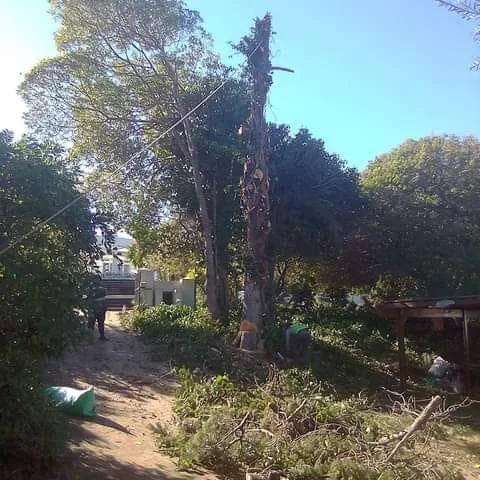
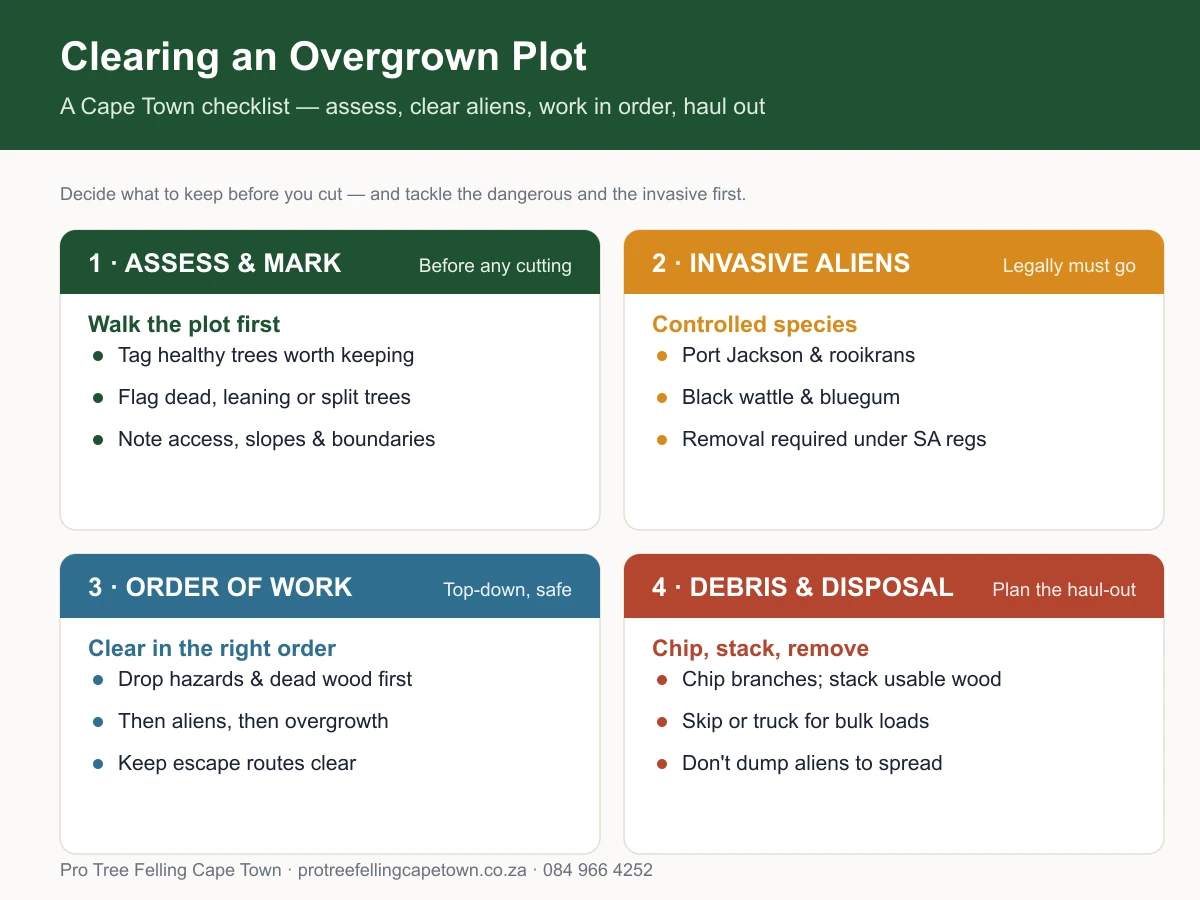
On an overgrown erf or smallholding the sequence matters more than the muscle. We walk the plot first and mark what stays, because there are usually a few worth keeping and occasionally a protected indigenous tree hiding in the middle of the mess. Dangerous material comes down first: dead stems, leaners, anything over a boundary wall or a neighbour's roof. Then the aliens, then the general overgrowth.
Disposal is the half of the job nobody budgets for. Acacia brush is bulky, and a dense quarter-hectare produces an amount of green waste that surprises people every time. Branches get chipped where a chipper can reach, stems get cut to length, and the lot gets loaded and hauled. One thing not to do is dump acacia cuttings on a verge or an open piece of ground. Seed-bearing material moved around is exactly how these thickets spread in the first place, and spreading a listed invasive is itself a restricted activity under the regulations.
Rooikrans has one redeeming feature: it's excellent braai wood and there's a real market for it in the Cape. On a plot with a good stand of mature rooikrans the usable timber can take some of the sting out of the bill, which is worth raising at quoting stage rather than after the fact. It's especially worth asking about on the smallholdings out in Noordhoek and along the coast, where the stands tend to be old and thick.
How plot clearing is priced
Clearing isn't priced per tree, the way a single felling is. It's priced off how long the crew and machines will be on site plus how many loads have to leave, so a quote is really an estimate of those two things. Nobody can do that off a phone call and a street view, which is why it's always a site walk first. These are the factors that actually move the number:
| Factor | Why it moves the price |
|---|---|
| Density of the stand | Scattered saplings clear fast. A closed thicket you have to cut your way into is a different job on the same square metres. |
| Stem size | Brushcutter work versus chainsaw work versus felling mature trees around structures. |
| Access and slope | Whether a bakkie and chipper get to the material or every branch is carried out by hand. This is usually the biggest single swing. |
| Volume to haul | Green waste is charged by the load. Chipping on site cuts the number of trips where there's room to do it. |
| Stump treatment | Herbicide on cut Port Jackson stumps adds time. Skipping it costs more later. |
| Ground finish | Cut-and-clear is one price. Stumps ground out and the plot raked level for a builder is another. |
| Follow-ups | Quoted separately and much cheaper than the initial clear. Ask for them to be itemised so you can see the real cost of the whole thing. |
We quote plot and site clearing as a fixed written price after walking the ground, with the waste removal included rather than added afterwards. Access is worth thinking about before you call: a plot on the slopes above Hout Bay is rarely flat and rarely easy to get a vehicle onto, and that shows up in the price more than the number of trees does.
Frequently asked questions
Do I need a permit to remove Port Jackson or rooikrans?
No. Both are Category 1b listed invasives, which means the regulations require them to be controlled. Permits apply to protected indigenous trees, which is the opposite situation.
Am I legally obliged to clear them from my property?
The regulations place a control duty on the person in control of the land, and section 73(2) of NEMBA sets out the owner's duty to notify, control and prevent spread. How that's enforced on a given property isn't something we can advise on.
Does this affect selling my house?
Yes. Regulation 29(3) requires the seller to notify the buyer in writing, before the sale agreement is concluded, of listed invasive species on the property. Most conveyancers now include a clause for it.
Will it grow back after clearing?
Port Jackson will resprout from an untreated stump, and both species will come up from seed already in the soil. Treated stumps plus scheduled follow-up visits are what stop it, not a bigger chainsaw on day one.
Can I just burn the cleared material?
Open burning is tightly restricted across Cape Town, especially through fire season, and heat is exactly what triggers acacia seed to germinate. Chipping and hauling out is the safer route on a suburban plot.
Is rooikrans worth anything as firewood?
It's some of the better braai wood going and there's steady demand for it in the Cape. On a plot carrying mature stems it's worth discussing upfront, because it can offset part of the clearing cost.
The honest summary: these two aren't going to be eradicated from the Cape in our lifetimes, but a plot can absolutely be cleared and kept clear. It takes identifying what you've got, treating the coppicing species properly, hauling the material away instead of spreading it, and coming back a few times while the seedbank empties. If you'd like someone to walk the plot with you and give you a straight number for the clear plus the follow-ups, you can book a free site walk and quote.
Keep reading
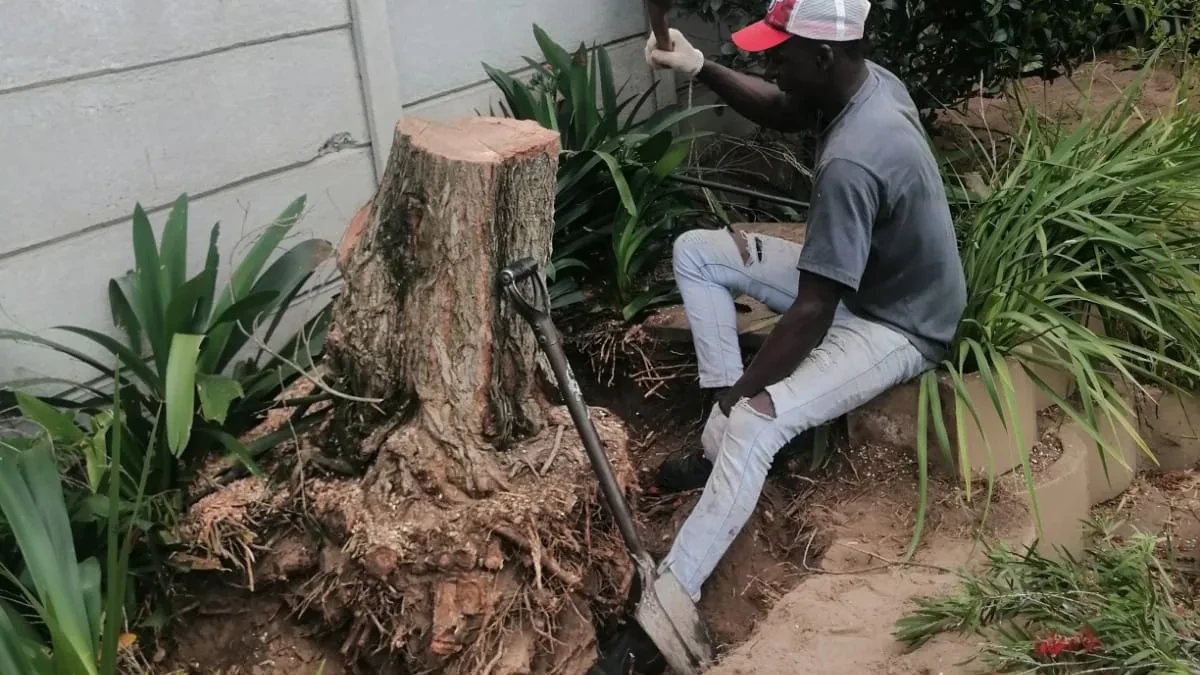
Tree Roots Damaging Your House, Paving or Drains? What to Do
Lifted paving, a blocked drain or a crack in the boundary wall, and a big tree nearby. Here is what tree roots actually do to a property, what they almost never do, what the law says when the tree is your neighbour's or the City's, and how to decide between cutting a root, fixing a pipe and taking the tree out.
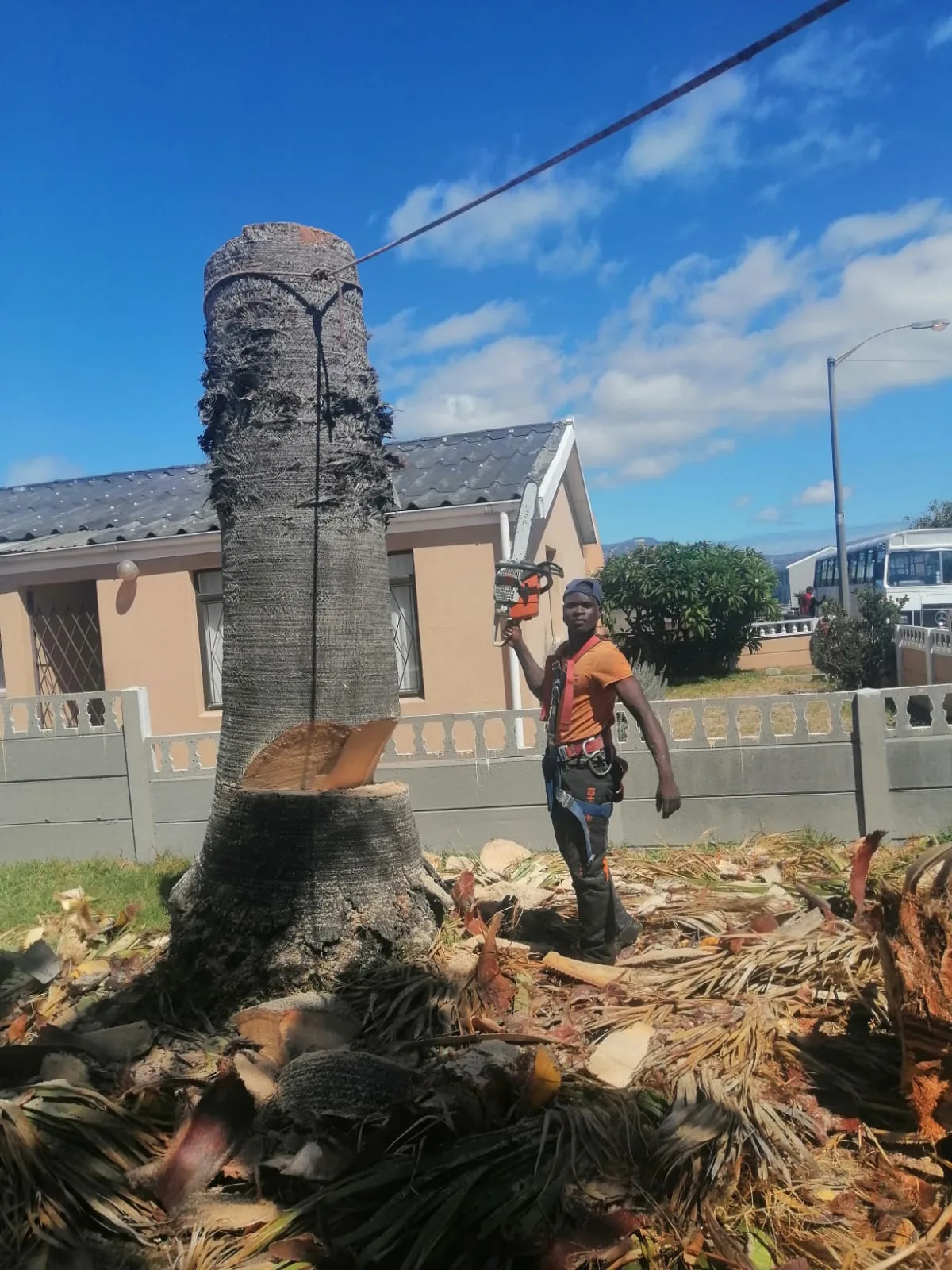
How to Cut Down a Tree Safely (And When to Stop)
Most people searching for how to cut down a tree are really asking a different question: can I do this one myself? Here is the sequence a trained feller works through, what the hinge actually does, and the situations where the honest answer is to put the saw down and phone someone.
Blue Gum Tree Removal in Cape Town
A mature blue gum in a Cape Town garden sits in an odd legal spot: the species is listed as an invasive, but a big urban trunk is often specifically exempt from the duty to remove it. Here is which gums are actually listed, the tape-measure test that decides it, why cutting one down never finishes the job, and what a safe take-down in a suburb actually involves.