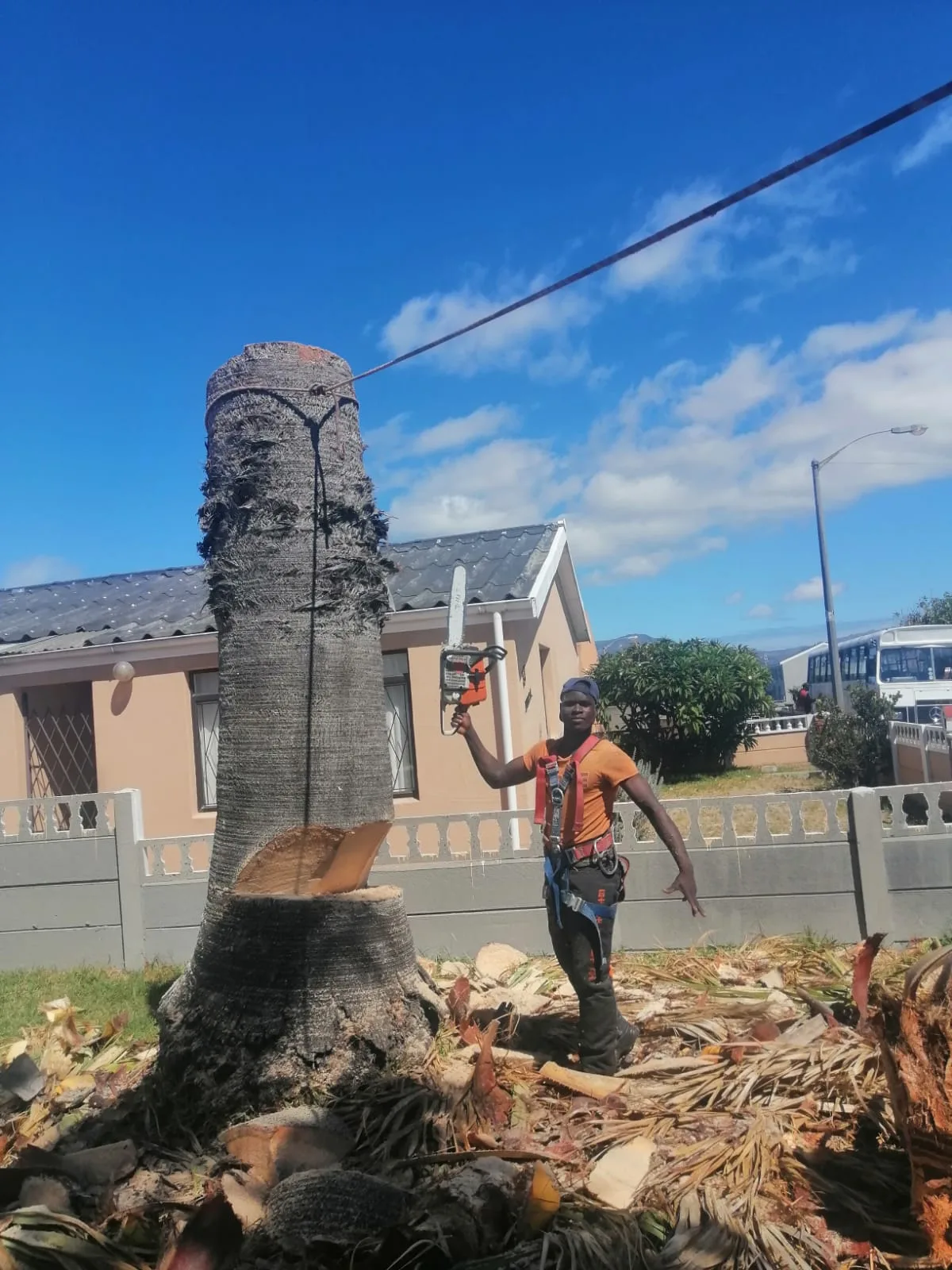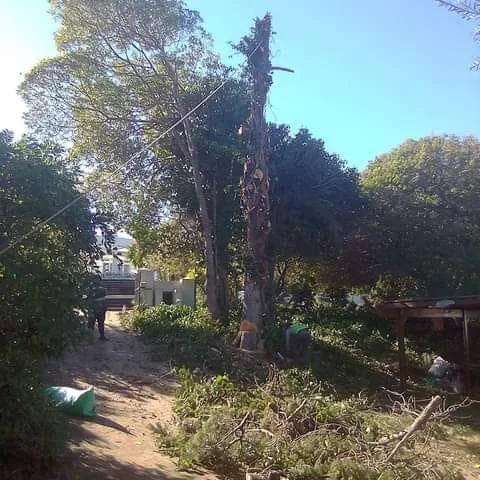
Blue gum tree removal in Cape Town runs into a question almost nobody expects. Most people phone us assuming a gum is an alien, aliens are illegal, and therefore the tree has to go. The law is more interesting than that. Some gums are listed and some are not. The listing changes depending on where the tree is standing. And there is a size threshold in the regulations that lets a lot of big old suburban gums off the hook entirely. Here is what actually applies to the tree in your garden.
Key takeaways
- Six Eucalyptus species are listed under the national invasive species list. The textbook "blue gum", Eucalyptus globulus, is not one of them.
- For the listed six, Cape Town sits in the Fynbos biome, so the default is Category 1b — control and remove where possible.
- But a listed gum in an urban area is not listed if its trunk was already more than 400 mm across at a metre off the ground when the notice was published.
- That exemption falls away if the tree stands in a riparian area, a protected area or a listed ecosystem.
- Felling a gum does not kill it. It coppices readily from stumps of all sizes and ages, so the stump is part of the job, not an optional extra.
Which trees are actually "blue gums"
In South African usage "blue gum" is a catch-all for almost any large eucalypt. That is why the legal position confuses people: they check whether "blue gum" is listed rather than which species is actually in the garden. Strictly, the Tasmanian blue gum is Eucalyptus globulus — and it is not on the national list at all. The six that are:
| Species | Common name |
|---|---|
| Eucalyptus camaldulensis | River red gum |
| Eucalyptus cladocalyx | Sugar gum |
| Eucalyptus conferruminata | Spider gum |
| Eucalyptus diversicolor | Karri |
| Eucalyptus grandis | Saligna gum, rose gum |
| Eucalyptus tereticornis | Forest red gum |
Those six, together with their hybrids, varieties and selections, are the ones named in the national Alien and Invasive Species List published in Government Gazette No. 43726 on 18 September 2020. Several look alike once they are thirty metres up, so get the identification right before anyone quotes you — it changes what the law asks of you.
The 400 mm rule that decides most Cape Town cases
For the listed six, the gazette sets the category by where the tree is growing. Cape Town's suburbs sit in the Fynbos biome, where those gums are Category 1b — the class that must be controlled and, wherever possible, removed. That is the headline, and it is where most advice stops. The gazette then carves out several exceptions, and one of them is written squarely for urban trees.
Still Category 1b, whatever the size
A listed gum growing in a riparian area, in a protected area declared under the Protected Areas Act, or within a listed ecosystem or one identified for conservation. Size buys you nothing here — the exemptions all specifically exclude these places. If your boundary runs along a river, a stream or a wetland margin, you are in this column.
Not listed — the urban exemption
The gazette states the species is "not listed in urban areas for trees with a diameter of more than 400 mm at 1000 mm height at the time of publishing of this Notice", except in the areas in the column alongside. A big old suburban gum that was already that size in September 2020 is therefore usually outside the removal duty.
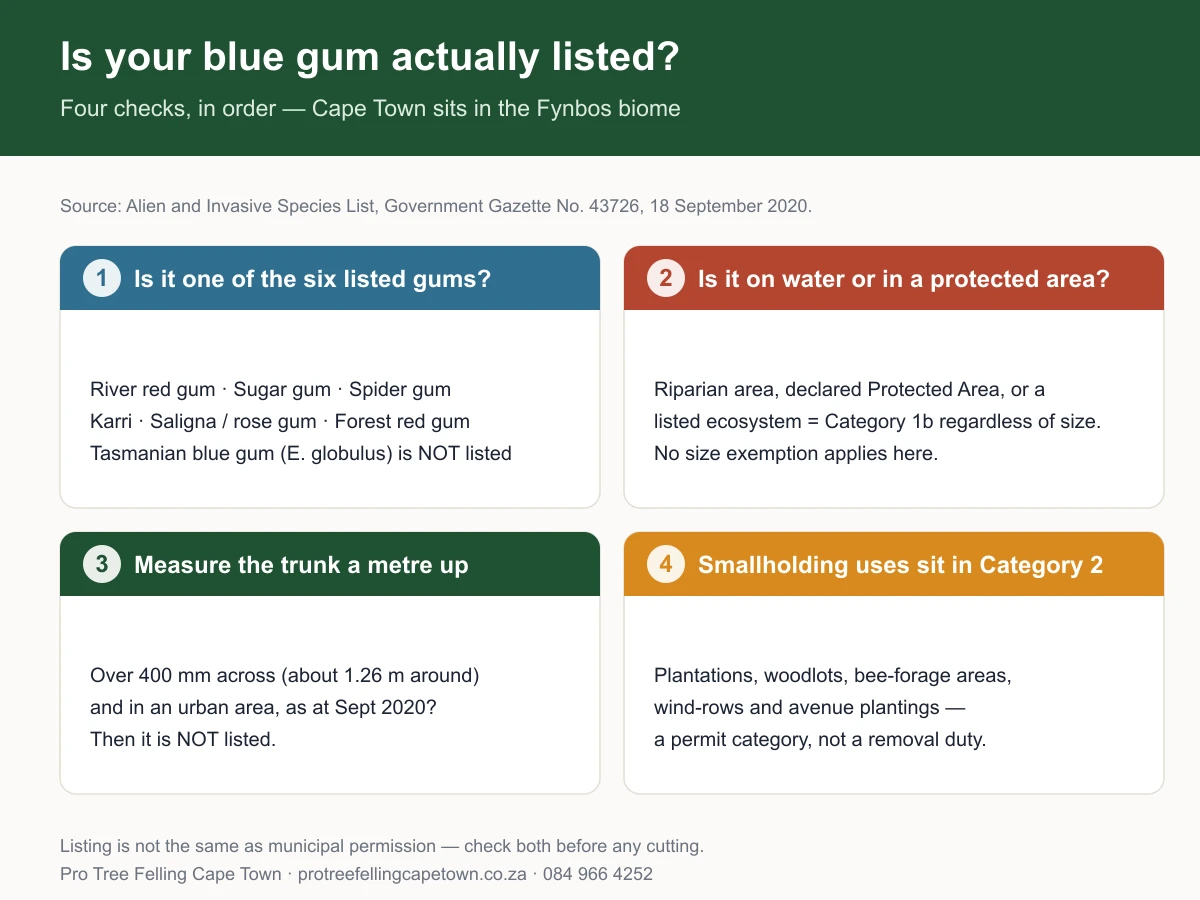
Four hundred millimetres of diameter is easier to check than it sounds, and you do not need callipers. Run a tape around the trunk a metre off the ground. If the circumference comes in over roughly 1.26 metres, the trunk is wider than 400 mm. Most mature gums in the older suburbs clear that comfortably; a self-seeded one that came up after 2020 will not, and it is also not covered by a threshold that was fixed at the date the notice was published.
There are two other carve-outs worth knowing. Plantations, woodlots, bee-forage areas, wind-rows and the lining of avenues sit in Category 2, which is a permit category rather than a removal duty — relevant if you are on a smallholding rather than a suburban plot. And none of this removes the general position that CapeNature states plainly: "All landowners have a responsibility and legal liability in relation to the control of invasive vegetation."
Being exempt from the invasive-species duty is also not the same thing as being free to fell. Whether the City wants a permit is a separate question with its own answer, and we have written up the City's permit process in full rather than repeating it here.
Why a gum in a garden causes trouble anyway
Plenty of owners reach us having decided the tree must go for reasons that have nothing to do with the gazette. Those reasons are usually sound.
They drink, and they do it near water
The Agricultural Research Council describes river red gum as "highly invasive in riverine situations, where dense stands damage river banks, choke water courses and evaporate excessive amounts of water". The national Working for Water programme exists partly because invasive plants "can divert enormous amounts of water from more productive uses".
The roots go wide, not down
The US Forest Service records that bluegum eucalyptus "generally does not form a taproot" and instead "produces roots throughout the soil profile". That habit is what puts them into drains, paving and boundary walls rather than straight down out of the way.
They get very large, very fast
The same Forest Service record notes Californian stands with trees over 61 metres tall. A gum planted as a windbreak two generations ago is now a structure, and it is standing over a house that was built long after it.
Limb drop in the wind
Gums shed limbs, and Cape Town supplies the wind to make it happen. A south-easter that merely rearranges the garden furniture will bring a heavy branch out of a mature gum, and those branches fall a long way before they land on anything.
Cutting it down does not kill it
This is the part that surprises people most, and it is the reason a gum job is priced differently from felling, say, a dead pine. Eucalypts regenerate hard from the stump. The US Forest Service puts it without qualification: "Bluegum eucalyptus coppices readily from stumps of all sizes and ages." The buds that produce those shoots sit on the bark side of the cambium, and most eucalypts also carry a lignotuber — a woody swelling at the base holding dormant buds and stored carbohydrate.
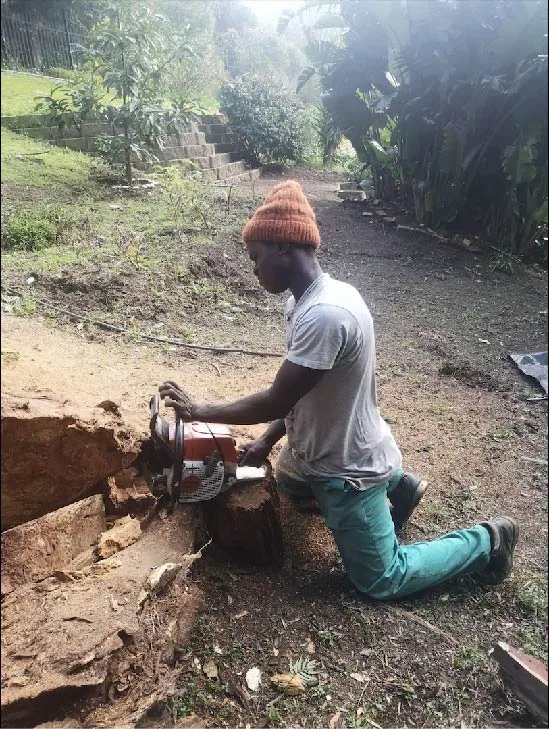
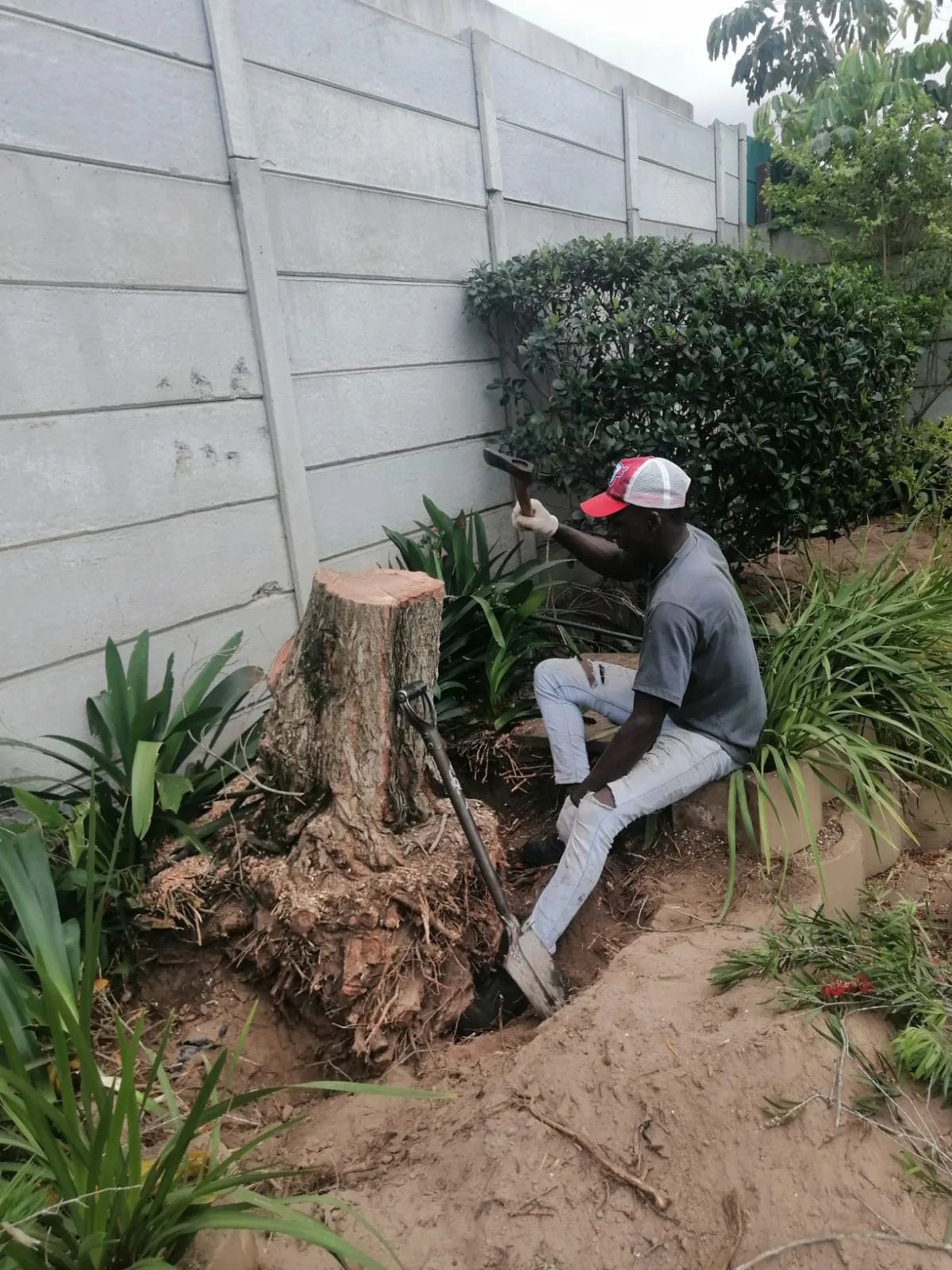
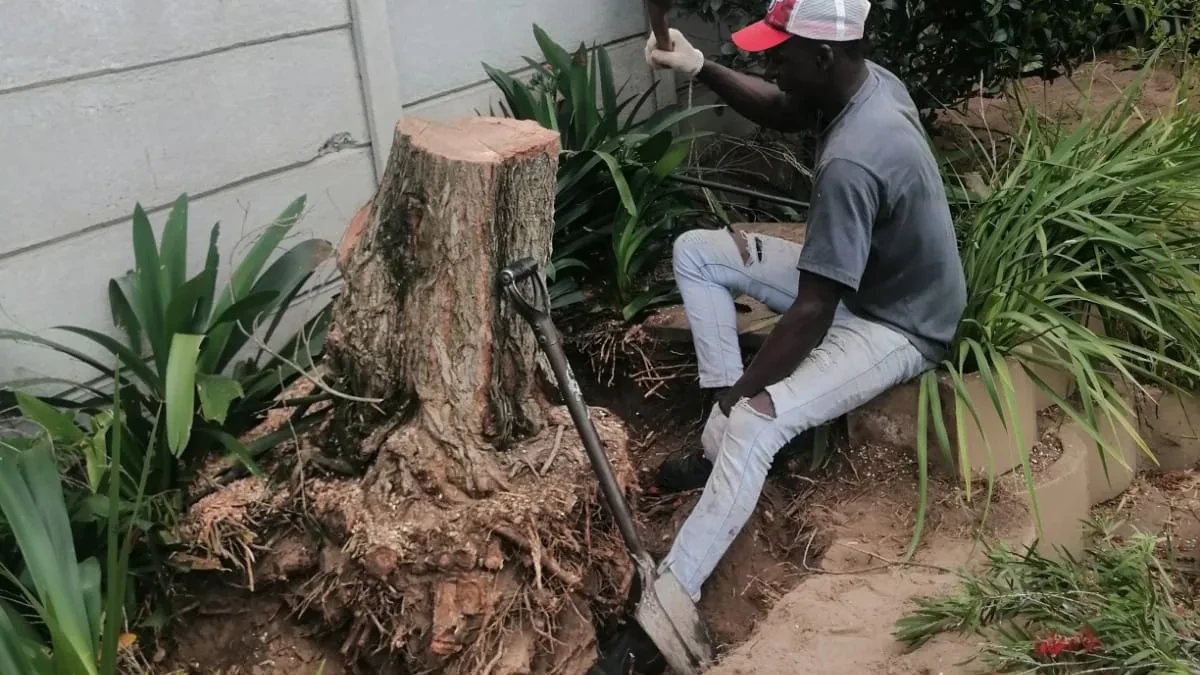
The practical consequence is simple. Fell a gum and walk away and you have solved nothing. Within a season the single tree is a multi-stemmed thicket growing out of a live root plate, fed by considerable stored reserves. That is why we quote the stump as part of the work rather than as an upsell, and why grinding the stump out is the honest end of a gum removal. If you would rather kill a stump in place than grind it, that is a different job with different trade-offs, and we have covered the methods and their failure modes separately.
Fell it and walk away
Shoots come away from the stump and the root collar within a season, feeding off stored reserves. You end up with a dense multi-stemmed clump where the single stem used to be, and it is harder to deal with than the original tree because there is no clean trunk to work from.
Deal with the stump at the time
Grinding takes the stump and the upper root plate below ground level in the same visit, while the machine and the crew are already on site. It is the cheaper moment to do it, and it is the only version that actually ends the job.
How a mature gum actually comes down
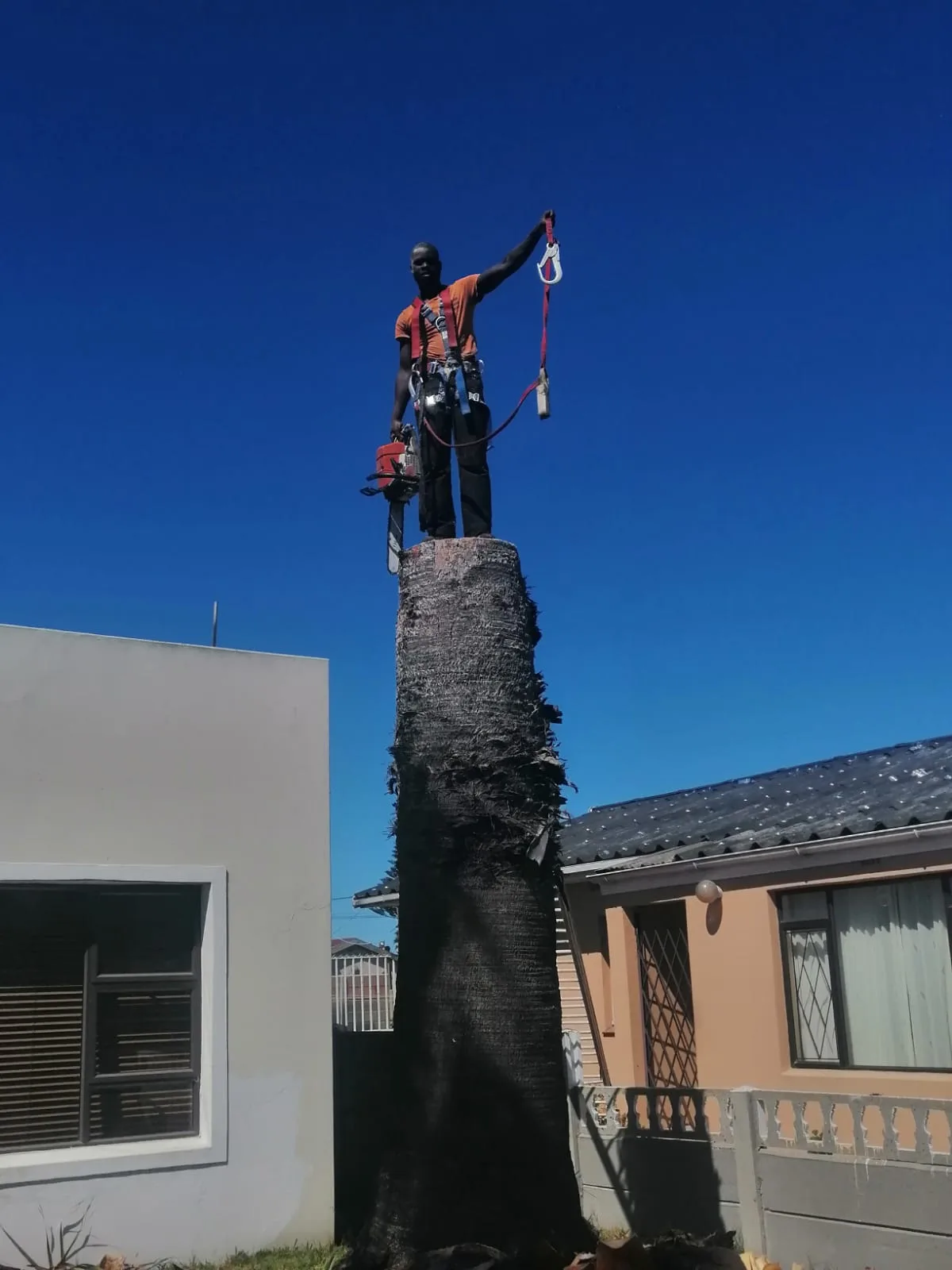
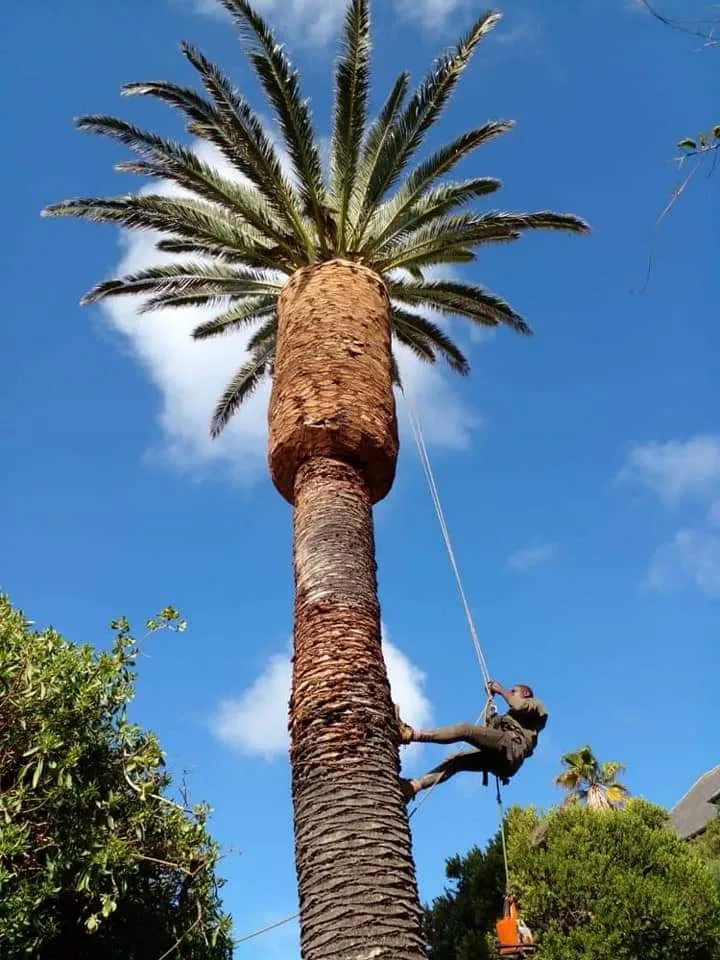
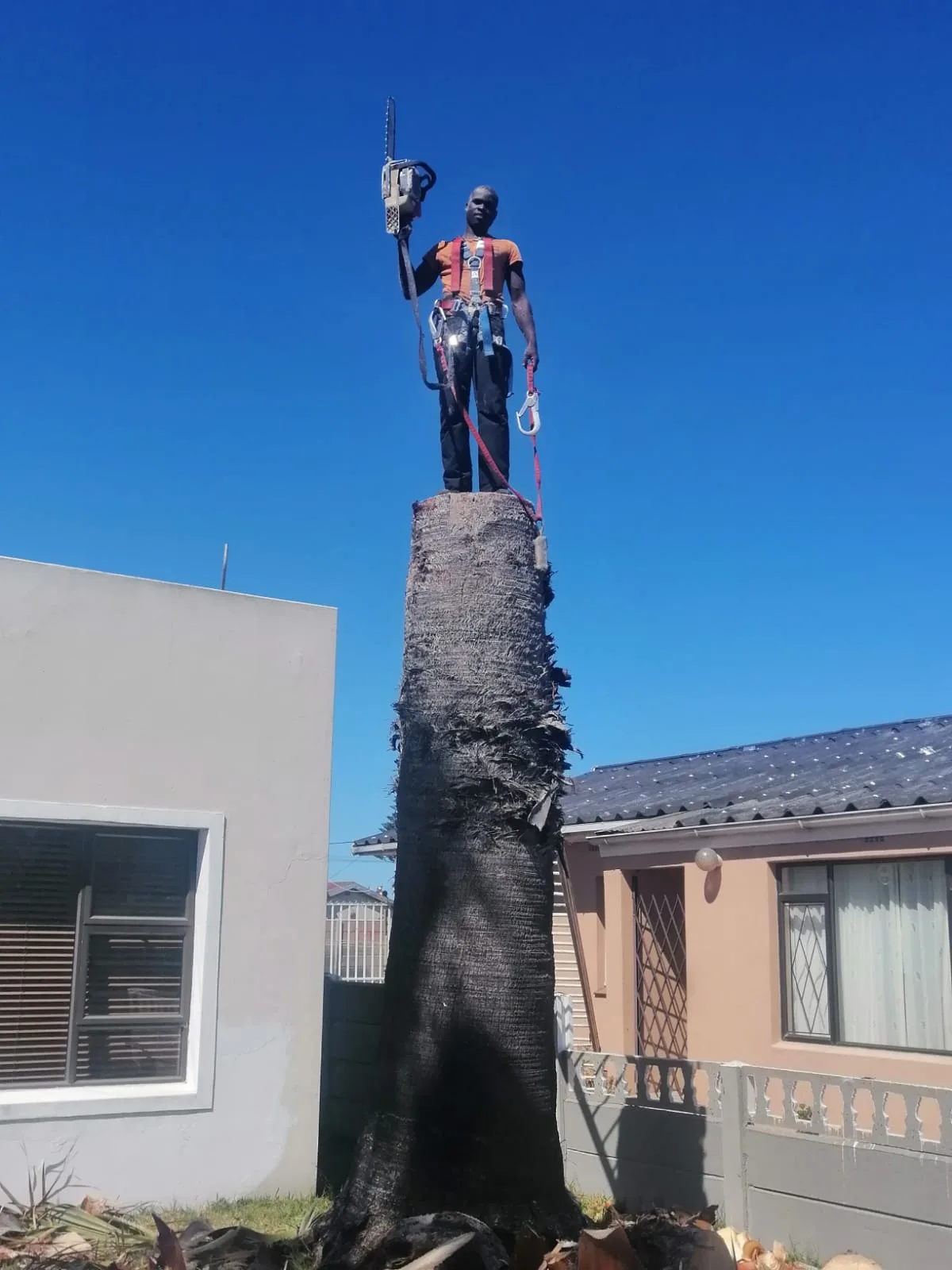
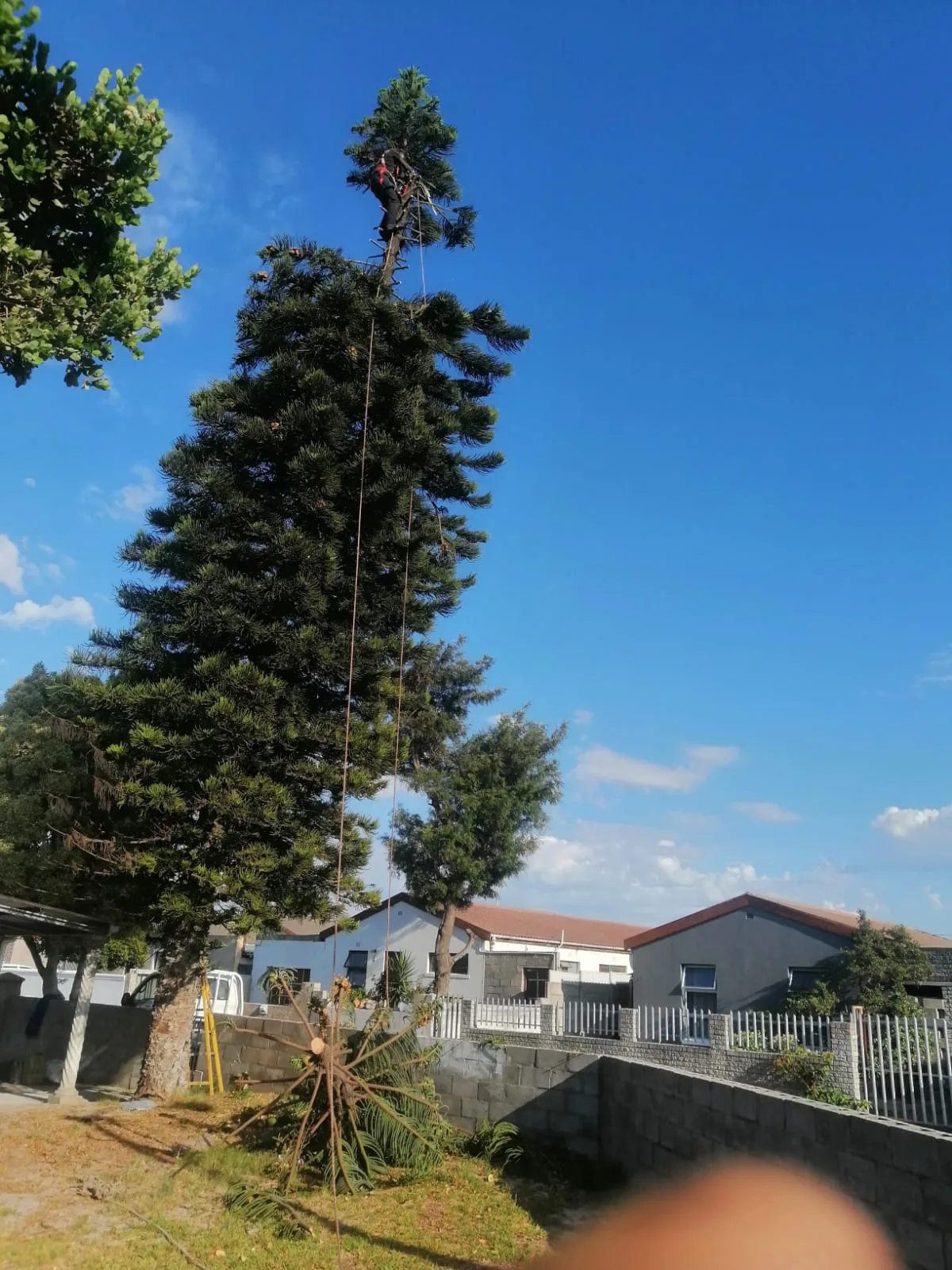
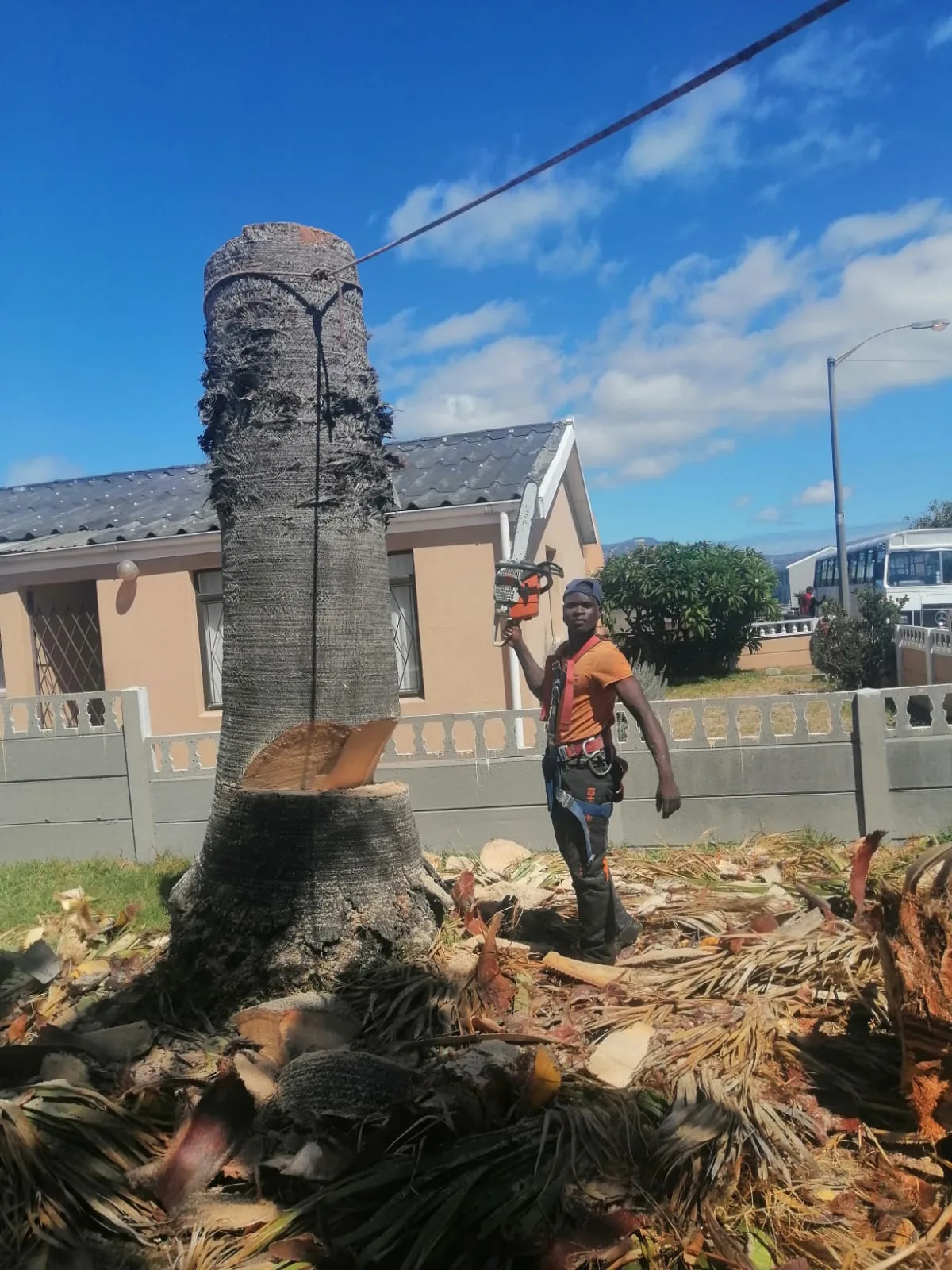
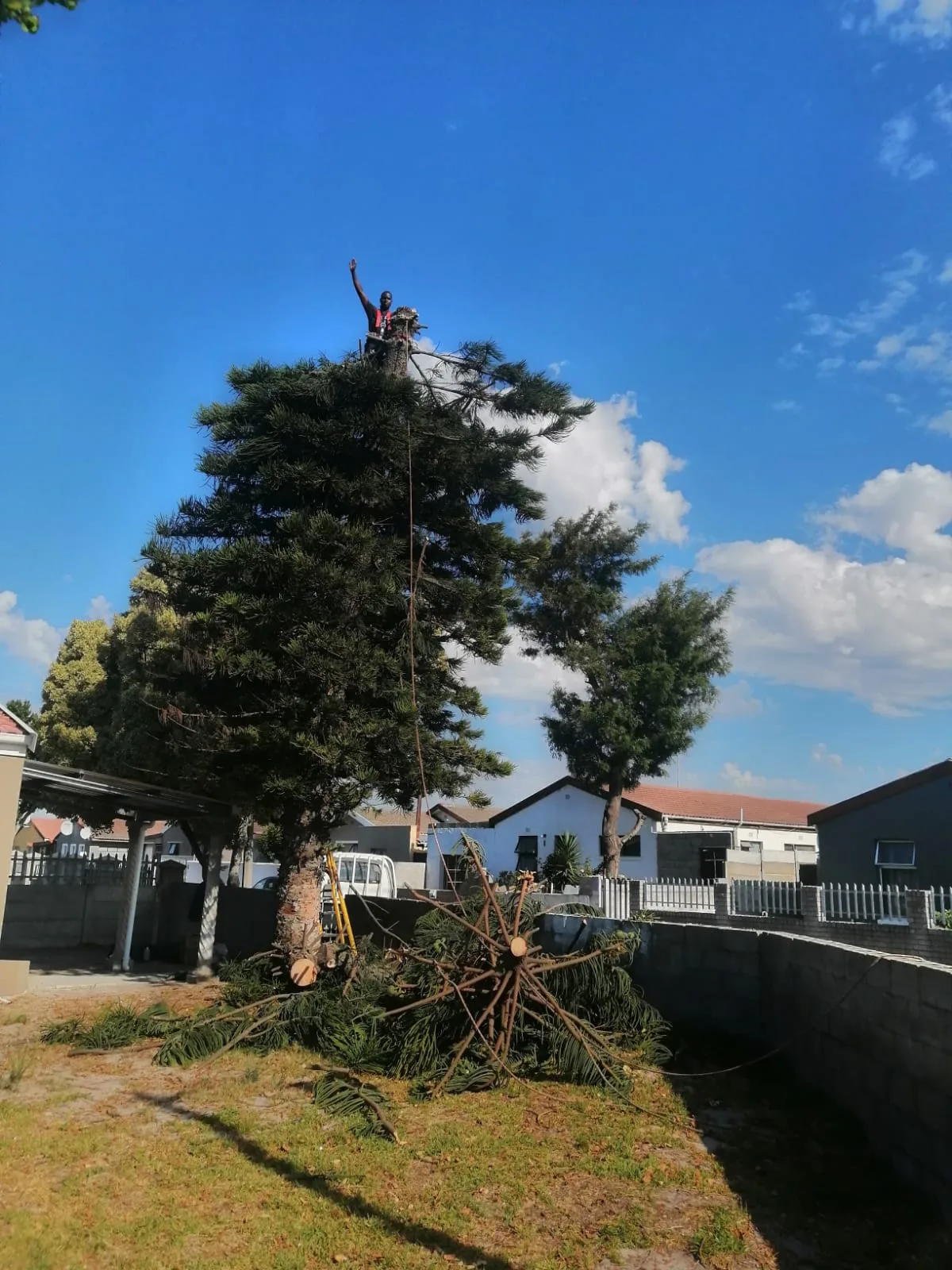
Almost no suburban gum can simply be felled in one piece. There is rarely a fall zone long enough, and a gum is heavy, brittle and unforgiving about where its weight goes. The method is a sectional take-down: a climber works up the stem on rope, removes the crown in manageable pieces, and the trunk comes down in sections that are lowered on rigging rather than dropped. Where a tree overhangs a roof, a pool or a neighbour's boundary, every piece is controlled from the moment it is cut.
This is skilled, dangerous work, and not a job to attempt from a ladder with a hired chainsaw. What makes one gum cost more than another is almost entirely access and risk. How close is the drop zone to a structure? Can a chipper and truck reach the stem? How far must the material be carried, and does the crown have to come off over something breakable? Height matters less than people expect; congestion matters far more. The practical work of bringing a big tree down safely is where the day goes.
This is not a DIY job
A gum limb carries enormous weight and the wood splits unpredictably under tension. Rigging a section wrong drops it somewhere nobody planned for. Use a crew that climbs, rigs and carries public liability cover — and ask to see the cover rather than taking it on trust.
Frequently asked questions
Should I get rid of my eucalyptus tree?
Not automatically. Decide on condition and position, not on species. A sound gum well away from structures, drains and water can stay. One overhanging a roof, lifting paving, or standing in a riparian area is a different conversation.
Do eucalyptus trees grow back after being cut down?
Yes, vigorously. The US Forest Service records that bluegum "coppices readily from stumps of all sizes and ages". Felling alone converts one tree into a multi-stemmed regrowth, so the stump has to be dealt with.
Do gum trees have invasive roots?
They root broadly rather than deeply. Bluegum "generally does not form a taproot" and produces roots throughout the soil profile, which is why they turn up in drains, under paving and against boundary walls.
Can blue gum trees be found in South Africa?
Widely. Eucalypts were planted here for timber, windbreaks and bee forage from the 1800s onward, and many of the biggest garden specimens in Cape Town's older suburbs are the remains of those plantings.
Do I need a permit to cut down a tree on my property in South Africa?
It depends on the species, the site and your municipality — invasive-species listing and municipal tree permission are two separate systems. We have set out the Cape Town position in full in our permit guide.
How long does a blue gum tree live?
Long enough that the question is usually about condition rather than age. Eucalypts are long-lived trees, and a gum planted a century ago can still be structurally sound — or hollow and shedding limbs. An inspection answers it; the calendar does not.
Where to start
Identify the species and measure the trunk before you assume anything about the law. Either way the tree still has to come down safely, and the stump still has to be dealt with or it will come back.
Over 1.26 m around, urban, away from water
The invasive-species duty probably does not bite. The decision becomes an ordinary one about risk, roots and what the tree is doing to the property.
Under that, or anywhere near water
Treat the listing as live and plan the removal properly. Riparian position overrides the size exemption completely.
If you want a straight answer about the gum in your garden, the quickest route is to have someone come and look at it — species, position, access and stump, priced once, in writing.
Keep reading
Tree Roots Damaging Your House, Paving or Drains? What to Do
Lifted paving, a blocked drain or a crack in the boundary wall, and a big tree nearby. Here is what tree roots actually do to a property, what they almost never do, what the law says when the tree is your neighbour's or the City's, and how to decide between cutting a root, fixing a pipe and taking the tree out.
How to Cut Down a Tree Safely (And When to Stop)
Most people searching for how to cut down a tree are really asking a different question: can I do this one myself? Here is the sequence a trained feller works through, what the hinge actually does, and the situations where the honest answer is to put the saw down and phone someone.
10 Signs a Tree Needs to Be Removed (And When It Doesn't)
Most of the trees people ask us to remove don't need removing. This is the honest diagnostic list — what a lean, a bracket fungus, a hollow trunk, a crack or a cut root really tells you, which signs mean act today, and which ones a prune will settle.