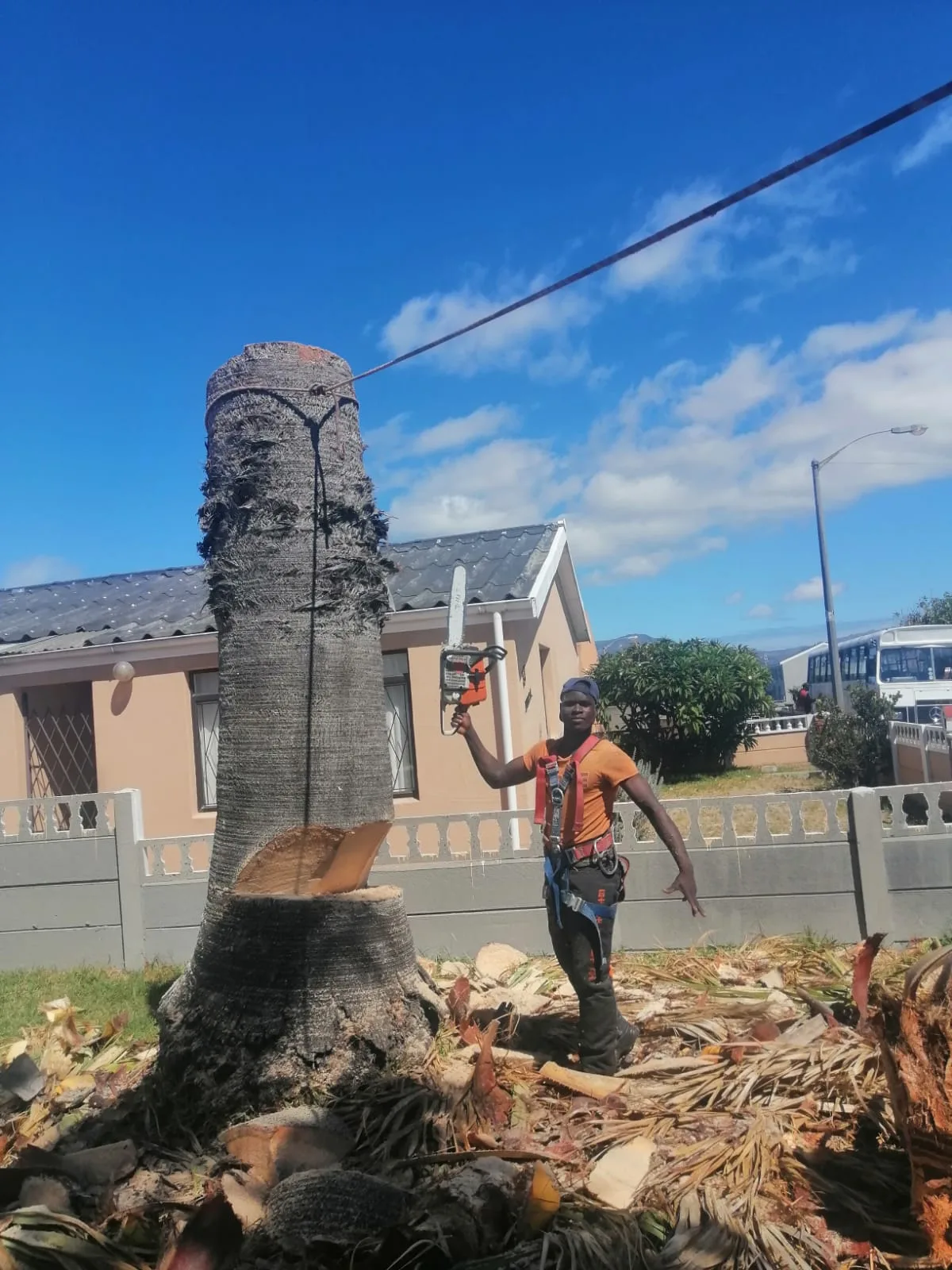
10 Signs a Tree Needs to Be Removed (And When It Doesn't)
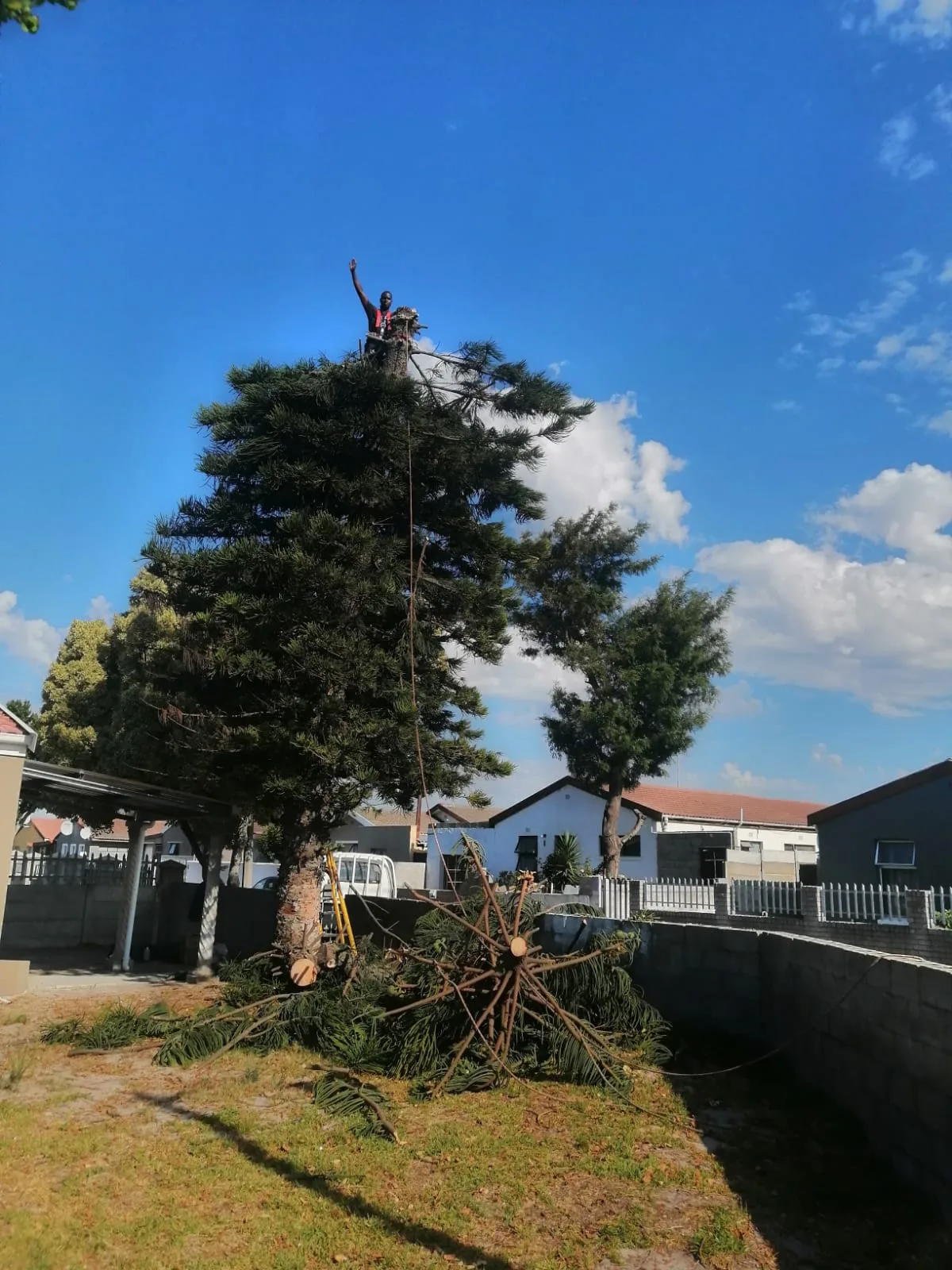
Let's start with the thing most tree companies won't put in writing: the majority of trees we're called out to look at do not need to come down. A tree can be ugly, leaning, half hollow and dropping branches and still be worth keeping, because a tree that has taken sixty years to grow is not something you replace with a nursery sapling and a weekend.
But some trees genuinely are finished, and the difference matters because one of these decisions is irreversible. This is the checklist we work through on the ground: what each warning sign looks like, what it usually means, and whether it's a felling case or a pruning case.
Key takeaways
- A defect on its own isn't a reason to fell. Risk is a defect plus something underneath it worth protecting.
- The urgent signs are a new lean with soil lifting at the base, and a crack running across a trunk or major limb. Both mean call today.
- Hollow does not mean doomed. Plenty of mature trees carry a hollow trunk for decades because the outer shell is what holds them up.
- Deadwood, crossing limbs, an end-heavy branch and most storm damage are pruning problems, not felling problems.
- Roots cut for a pool, a wall or a trench can kill a tree slowly, and the symptoms often only show a season or two later.
First, the thing that decides everything
Arborists don't ask "is this tree defective?" They ask how likely it is to fail, and what it would hit if it did. The International Society of Arboriculture puts it plainly: "While there is no such thing as a completely safe tree, the benefits of trees far outweigh the risks." Every tree has the potential to fall. Only a small number ever hit anything.
That's why the same defect gets two different answers. A gum with a rotten fork at the bottom of a large plot, with nothing under it but grass, can often be left and watched. The same gum overhanging a child's bedroom is a different conversation entirely. Before you read the list below, look up and ask yourself what is actually underneath the tree.
| What you're seeing | What it usually means | Likely answer |
|---|---|---|
| No leaves in season, bark falling off | The tree is dead | Remove |
| New lean, soil lifted on one side | Root plate is moving | Urgent |
| Brackets or conks at the base | Decay in the roots or butt | Assess |
| Hollow trunk, open cavity | Depends on the shell left | Assess |
| Crack across a trunk or limb | Structure already failing | Urgent |
| Tight V-fork with bark pinched in it | Included bark, weak union | Often prune |
| Dead branches through the crown | Stress, or just old growth | Prune |
| Storm damage, under half the crown gone | Recoverable in most species | Prune |
| Roots cut by building work | Slow decline, delayed symptoms | Monitor |
| Trunk hard against a wall or foundation | Wrong tree, wrong place | Usually remove |
1. It's dead, or a whole limb is
The only sign on this list with no argument attached. A tree with no leaves when everything around it has flushed, bark sloughing off in sheets, brittle twigs that snap rather than bend, and fine branch tips gone from the top down: that tree is gone, and it will keep shedding pieces until it comes down on its own terms.
The catch is that dead trees get more dangerous to remove the longer they stand. Wood that's been dead two years won't hold a climber's weight or take a rigging line the way sound timber does, which turns a straightforward job into an awkward one. Dead is the one case where waiting genuinely costs you money.
2. A lean that is new, or ground lifting at the base
Almost every mature tree leans a bit. Trees on the Peninsula lean away from the prevailing wind, they lean towards light, and a tree that has leaned the same way since you moved in is very likely fine. What you're looking for is a change.
The tell is at ground level, not in the crown. Look for soil cracking or lifting in an arc on the opposite side to the lean, a mound of raised earth, or a gap opening between the trunk and the soil. The ISA guidance above describes exactly this under root problems: "Cracks or separations in the soil may indicate soil heaving from excessive movement." That is a root plate on the move, and it means the tree is in the early stage of uprooting.
Probably fine
A long-standing lean, with the trunk curving back upright and no disturbed ground at the base. The tree has grown that way and has laid down extra wood to cope with it.
Call today
A lean that has changed after a storm, cracked or heaved soil on the windward side, exposed roots on one side, or a trunk that goes straight into the ground at an angle with no curve.
This one is worse in a Cape winter than people expect. A north-wester arrives on ground that has been saturated for a fortnight, and soil that would normally hold a root plate simply lets go. If you're going to walk your garden once a year, do it after the first real winter storm.
3. Fungal brackets and conks at the base
Shelf-shaped fungi growing out of the trunk, the root flare or the soil right against the trunk are worth taking seriously. They're the fruiting body of a fungus that has already been working inside the wood for years by the time anything shows on the outside. Guidance from the University of Florida's extension service lists "conks (shelf fungus on a tree) or other fungal fruiting bodies, carpenter ants, and animal nesting holes" as indicators of decay.
Position tells you most of what you need. Brackets on a dead branch stub high in the crown are usually cleaning up wood that's already dead, and pruning solves it. Brackets at the butt, on the root flare, or on buttress roots are the serious version, because that's the part of the tree carrying every bit of load. Toadstools scattered around your lawn are a different thing again and generally harmless.
Fungus on a branch is a pruning job. Fungus on the root flare is a conversation.
4. A hollow trunk or open cavity
This is the sign that panics people most and deserves it least. A hollow trunk is not automatically a dangerous trunk. Trees carry their load in the outer wood, not the middle, which is why hollow oaks and planes stand for a century after the heartwood has gone.
What matters is how much sound wood is left around the outside of the hollow, and how much of the circumference is intact. Arborists have long used a rough guide that a shell thinner than about a third of the trunk's radius is cause for concern, though that has been argued over for decades and published comparisons of the different strength-loss formulae show it is a prompt to look harder rather than a verdict, with big mature trees often carrying far more hollowing than the old rule suggests. An open seam running up the side of the cavity, or a cavity that takes in more than about a third of the circumference, is a much stronger signal than the hollow on its own.
The honest answer is that you cannot judge this from the ground with a torch, and neither can we without getting hands on the tree. What we can tell you is that "it's hollow so it has to go" is wrong often enough that it's worth a second opinion before you commit.
5. Cracks, splits and included bark
A crack is different from a fungus or a hollow, because a crack is not a warning that the tree might fail. It's evidence that part of it already has. The ISA's risk guidance flags "cracks and splits" on trunks, major branches and at branch unions, and singles out codominant stems, two competing trunks of similar size, which "can often be failure points".
The version to know is included bark. Where two stems grow up tight against each other in a narrow V, bark gets trapped in the join instead of wood knitting the two together. From outside it looks like a normal fork. In practice it's two trees leaning on each other, and they let go in a big wind, usually taking half the crown with them.
A strong union
Wide, U-shaped, with a raised ridge of bark in the crotch and no dark seam running down out of it. Wood has grown across the join.
Included bark
Tight V, bark pinched inward, sometimes a dark wet seam or a bulge below it. Two codominant stems of similar diameter is the classic set-up.
Good news: this is very often a pruning job rather than a felling one. Reducing the weight and length of one of the two stems takes the leverage off the union, and on a valuable tree a cable brace can be installed to hold the two stems together. Which route makes sense is exactly the ground covered in our guide to pruning or felling.
6. Deadwood through the crown, or a thinning canopy
Some deadwood is normal. Trees shade out their own lower branches and drop them, and a few dead twigs inside the canopy means nothing. What's worth reading is the pattern. Dieback that starts at the outer tips of the top branches and works inward, leaves that are smaller and paler than they should be, or a canopy that is visibly thinner than the same tree two streets away, all point at something wrong below ground rather than in the branches.
Crown dieback is a symptom, not a diagnosis. Drought stress, a cut root system, a raised soil level over the roots, root rot or a pest can all produce it. On its own it's a reason to find the cause, not to fell.
7. Storm damage: how much of the crown is gone
After a big blow, the instinct is to write the tree off. Extension guidance is a good deal more optimistic than most homeowners are. Purdue's extension forestry team puts it this way: "Branch failure can be easily repaired and not lethal to the tree unless more than half the crown has been destroyed." Branches, in their words, are "flexible and disposable". The tree sheds them under load precisely so the trunk survives.
So the thing that decides it is usually the trunk, not the branch pile on your lawn. Iowa State University Extension gives a usefully concrete threshold: "Severe splitting of the main trunk or any type of injury that results in the removal of more than one-third of the bark around the circumference of the main trunk is usually enough damage to make removal necessary", and adds that large trees whose tops have been broken out "are also likely compromised to the point where removal is needed".
| What the storm did | Typical outlook | What to do |
|---|---|---|
| Branches lost, under half the crown | Usually recoverable | Clean up the torn wood properly, then watch it for two seasons |
| More than half the crown destroyed | Doubtful | Get it assessed before spending money on it |
| Main trunk severely split | Removal usually needed | Structural. How much crown is left is beside the point |
| Over a third of the bark ring stripped off the trunk | Removal usually needed | The tree can't move water past the wound |
| Top broken out of a large tree | Likely compromised | Assess before the next big wind, not after |
8. Roots cut by building work
This is the one that gets missed, because the damage and the symptoms are years apart. A trench for a pool, a new boundary wall, a driveway, a French drain, or a digger parked over the root zone for a month all do real harm to a tree, and the tree carries on looking fine for a season or two before it starts to fail.
The ISA's guidance on trees damaged by construction describes the decline symptoms as smaller and fewer leaves, dieback in the crown, and early autumn colour. Compaction from machinery does as much damage as cutting, because roots need air in the soil as much as water.
Two things follow from that. If you've had work done in the last three years and a tree is now thinning, the builder is the likely answer and it's worth saying so to whoever assesses it. And if a tree has lost a large share of its root plate on one side, it is now less stable than it was even if the crown looks untouched.
9. Pests and disease pressure
Insects and fungi mostly follow stress rather than cause it, so an infested tree is usually a tree that was already struggling. The exception that has changed things in Cape Town is the polyphagous shot hole borer, an invasive beetle confirmed in South Africa in 2017, whose signature is a scatter of round entry holes about a millimetre across in the trunk and branches, often with dark staining, gumming or fine white powder around them. The FABI team at the University of Pretoria tracks it and publishes the host list.
If you find that pattern, don't start cutting and carting wood around. Moving infested material is how the beetle spreads, and reporting it matters as much as treating your own tree. Get it identified before anything is loaded onto a truck.
10. It's simply in the wrong place
Not every removal is about a sick tree. A perfectly healthy one planted two metres from a foundation, under a power line, or hard against a boundary wall will keep being a problem for as long as it stands, and the repeated heavy pruning needed to contain it costs more over ten years than one clean removal and a better tree planted somewhere sensible.
The honest test: if the answer to "what would fix this?" is "cut it back hard every two years forever", the tree is in the wrong spot. That's a planning decision, not a health one, and it's the one case where we'd rather talk about removing it properly and replacing it than keep taking your money to manage a problem that won't go away.
The signs that look alarming and usually aren't
Half of what worries people is normal tree behaviour. Before you spend money, check whether you're looking at one of these.
Surface roots
Roots visible at the surface are normal on mature trees, especially in sandy Cape soils. They matter if they're lifting paving, not because they're showing. Never bury them under new soil to hide them.
Mushrooms in the lawn
Toadstools scattered across grass are breaking down organic matter in the soil. It's brackets attached to the trunk or root flare that mean something.
Burls and bulges
A knobbly swelling on the trunk is usually a growth quirk. A bulge directly below a fork or over an old wound is worth a look, because it can be the tree reinforcing a weak spot.
Ivy and creepers
Ivy doesn't strangle a tree, but it does hide the trunk from inspection and add sail area in wind. Clear a band at the base so you can actually see the wood.
Sap or gum weeping
Some species bleed from any wound and it means little. A dark, foul-smelling ooze from a crack or a fork is the version worth reporting.
One dead branch
A single dead limb on an otherwise full canopy is a pruning job that takes twenty minutes. It is not a sign the tree is dying.
How to check your own tree in five minutes
You don't need equipment for a first pass. Work from the ground up, in this order, and do it after every serious storm.
- The ground. Walk a full circle at about two metres out. Look for cracked, mounded or sunken soil, exposed roots, and anything that has changed since last time.
- The root flare and butt. Pull ivy and mulch back off the trunk base. You want to see the flare where the trunk widens into the roots. Brackets, soft or missing bark and cavities here carry the most weight.
- The trunk. Look up the full height for vertical seams, bulges, old wounds and anywhere the bark looks sunken or discoloured.
- The forks. Check every major union for a tight V and pinched bark, especially on trees with two competing trunks.
- The crown. Step back far enough to see the whole outline. Dead tips at the top, a thin patch on one side, or hanging broken limbs are what you're after.
Take photos while you're at it, including one of the whole tree from far enough back to show its shape. Comparing this year's photo to last year's tells you more about a slow lean than any single inspection can. If you want a sense of what these things look like on real jobs rather than in diagrams, there are photos of the work itself on the site.
Stop reading and phone someone if
- The lean has visibly changed, or soil is cracked and lifting at the base.
- A crack runs across a trunk or major limb, or a fork has started to open.
- A large limb is hanging, broken but caught in the canopy.
- Any part of the tree is touching or near a live power line. Call the utility, not a tree crew.
- The tree is dead and standing over a house, a driveway or a pavement.
Frequently asked questions
How do I know if a tree is dead or just dormant?
Scratch a thin sliver of bark off a small twig with your thumbnail. Green and damp underneath means living tissue. Brown, dry and brittle across several twigs on different branches means that part of the tree is dead.
Does a leaning tree always have to come down?
No. A long-standing lean with undisturbed soil at the base is usually just how the tree grew. It's a lean that has changed, with cracked or heaved ground, that needs attention straight away.
Is a hollow tree dangerous?
Not necessarily. Trees carry load in the outer wood, so a hollow trunk with a good sound shell can stand for decades. What matters is how thick that shell is and whether the cavity has an open seam running out of it.
Do mushrooms on a tree mean it needs removing?
It means decay is present, not that removal is inevitable. Brackets on a dead branch are a pruning job. Brackets on the root flare or buttress roots are the ones that need proper assessment.
How often should I check my trees?
A five-minute walk-round two or three times a year is plenty for most gardens, plus one after any serious storm. Big trees standing over a house are worth having looked at properly every few years.
Can a tree with root damage be saved?
Often, if the damage was recent and limited. Relieving compaction, mulching the root zone, watering through summer and reducing the crown to lighten the load all help. Extensive root loss on one side is a stability question as well as a health one.
If you're still not sure
You genuinely cannot tell from the ground whether a trunk is sound, and nobody should be asking you to. What you can do is spot the signs above, take photos, and get someone up the tree to look at the parts you can't reach.
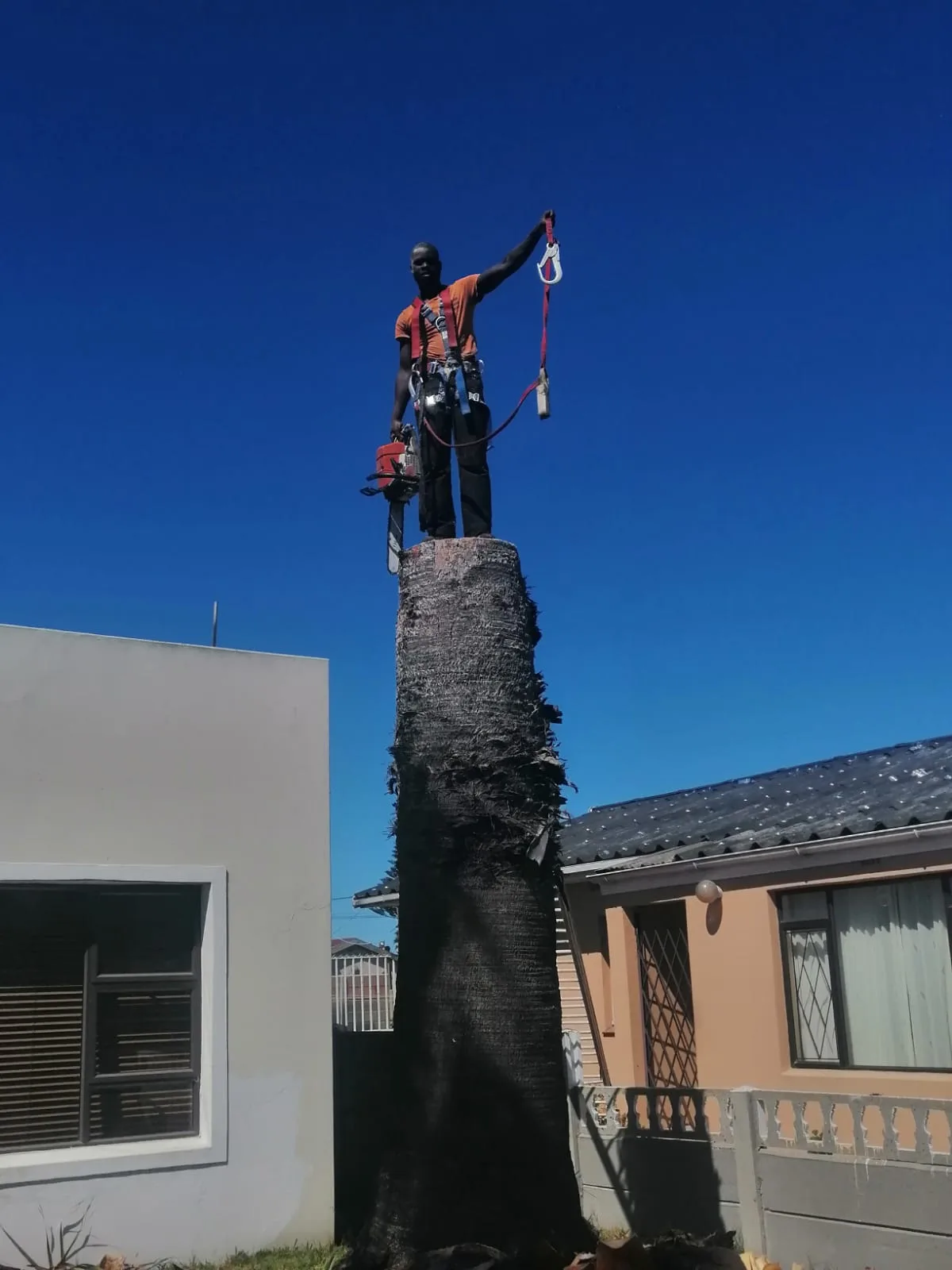
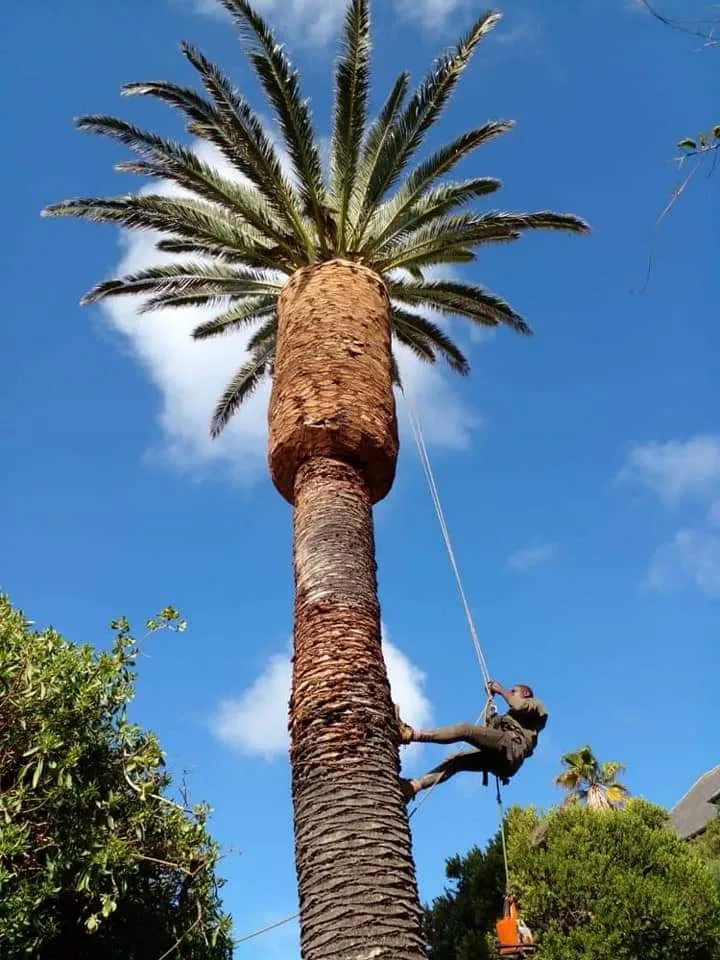
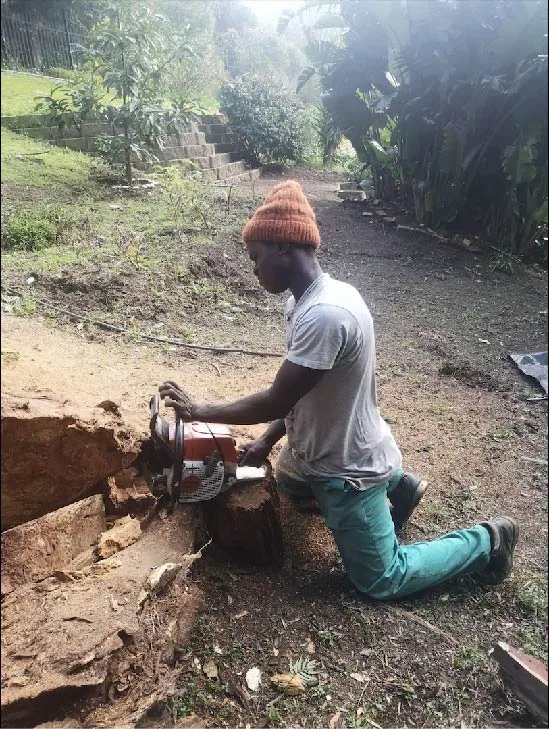
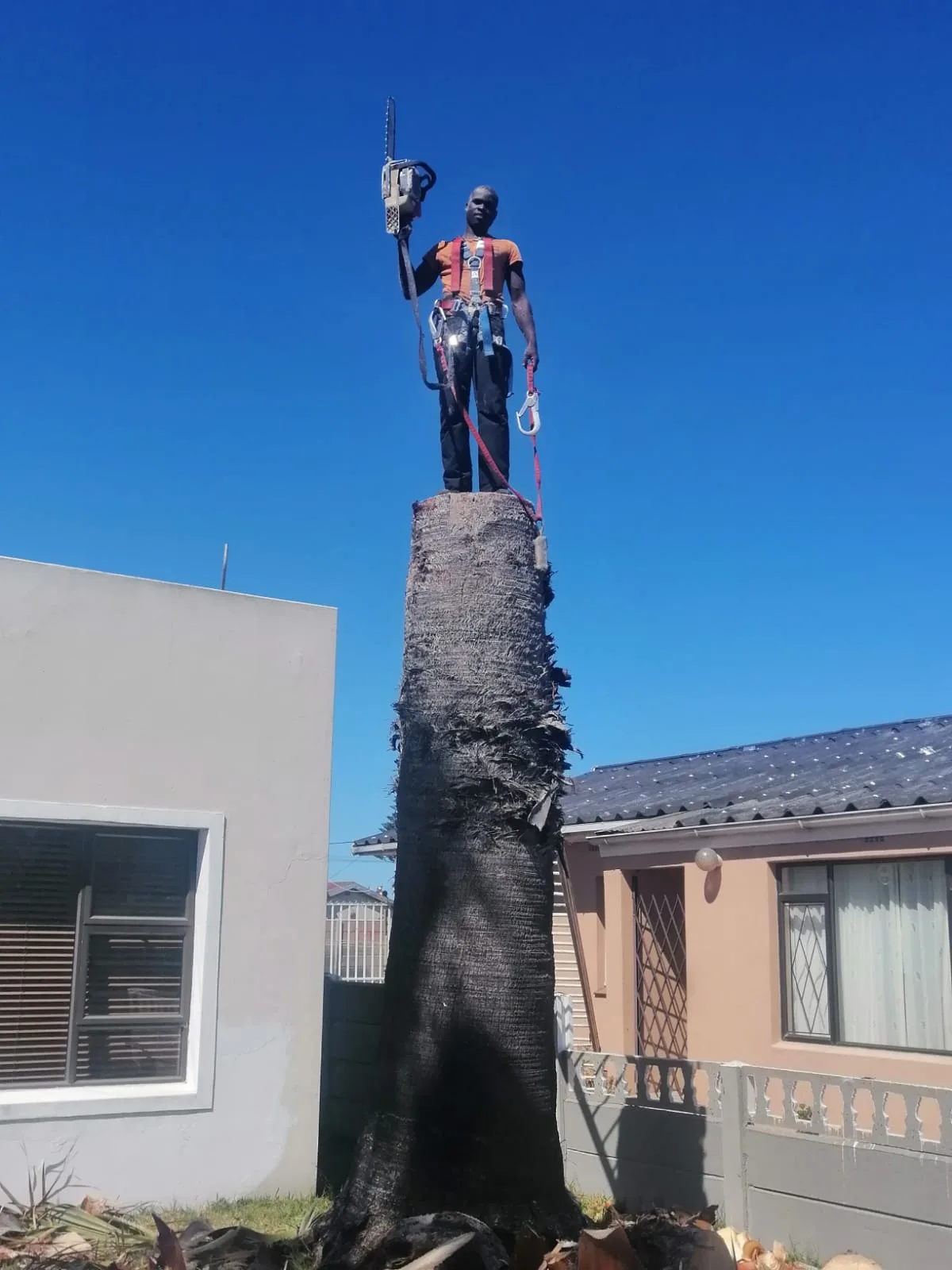
Our crew is based in Muizenberg and works across Cape Town, on ropes and harnesses rather than off ladders, which means we can get eyes on a union or a cavity twelve metres up and tell you what's actually there. We'll give you a straight answer, including "leave it alone", and a fixed written price with the clean-up included if work is needed. Nothing gets sold to you that the tree doesn't need. If you'd like someone to look, phone 084 966 4252 or get someone to look at it and we'll come out at no charge.
Keep reading
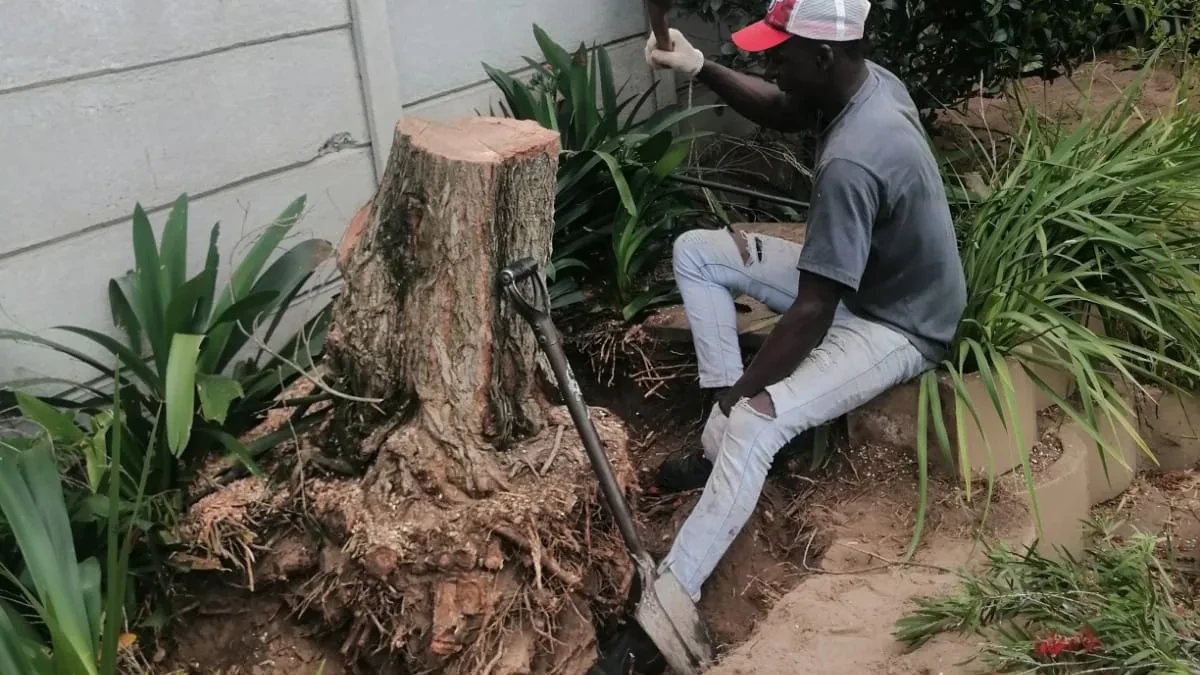
Tree Roots Damaging Your House, Paving or Drains? What to Do
Lifted paving, a blocked drain or a crack in the boundary wall, and a big tree nearby. Here is what tree roots actually do to a property, what they almost never do, what the law says when the tree is your neighbour's or the City's, and how to decide between cutting a root, fixing a pipe and taking the tree out.
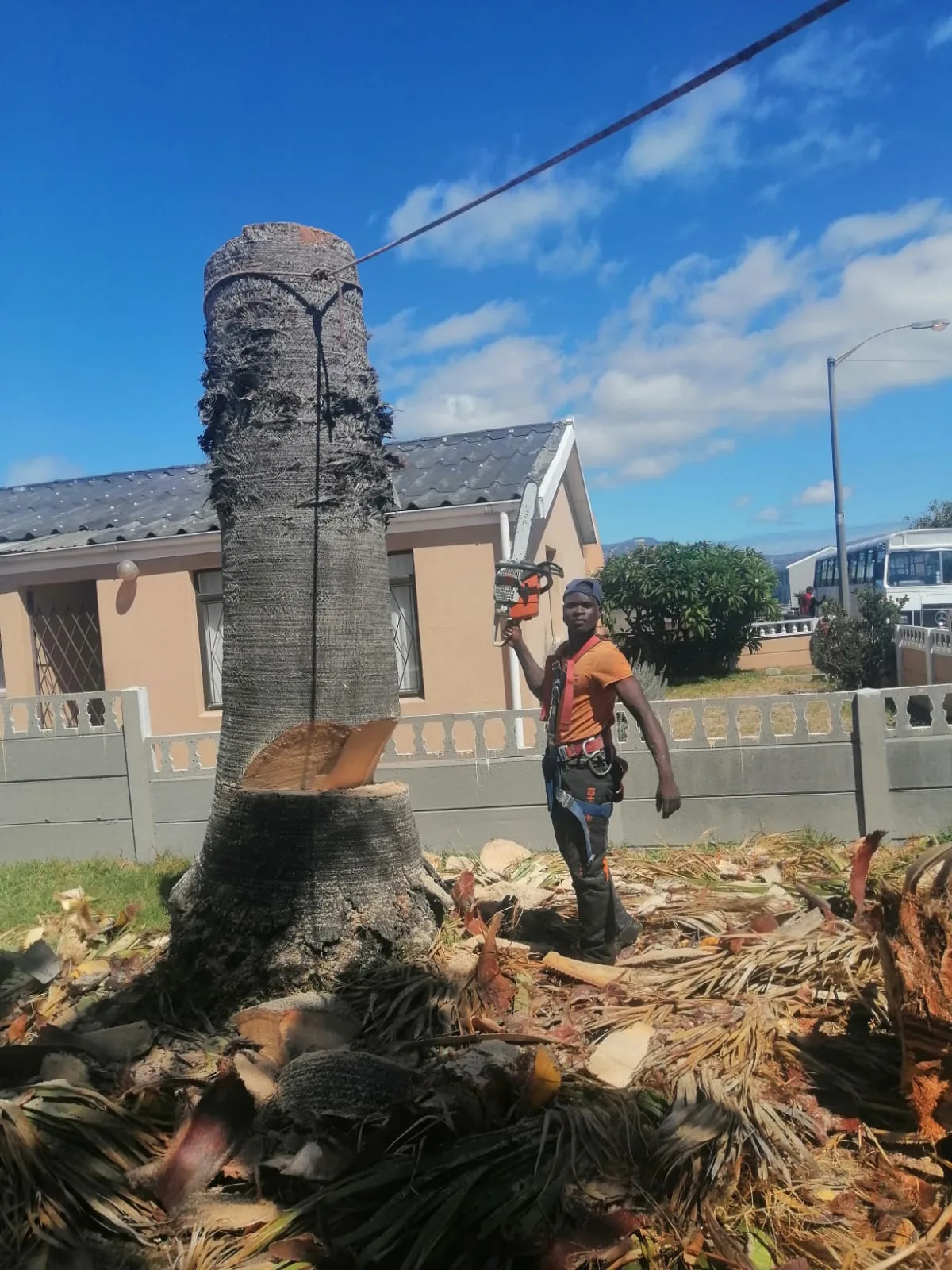
How to Cut Down a Tree Safely (And When to Stop)
Most people searching for how to cut down a tree are really asking a different question: can I do this one myself? Here is the sequence a trained feller works through, what the hinge actually does, and the situations where the honest answer is to put the saw down and phone someone.
Blue Gum Tree Removal in Cape Town
A mature blue gum in a Cape Town garden sits in an odd legal spot: the species is listed as an invasive, but a big urban trunk is often specifically exempt from the duty to remove it. Here is which gums are actually listed, the tape-measure test that decides it, why cutting one down never finishes the job, and what a safe take-down in a suburb actually involves.