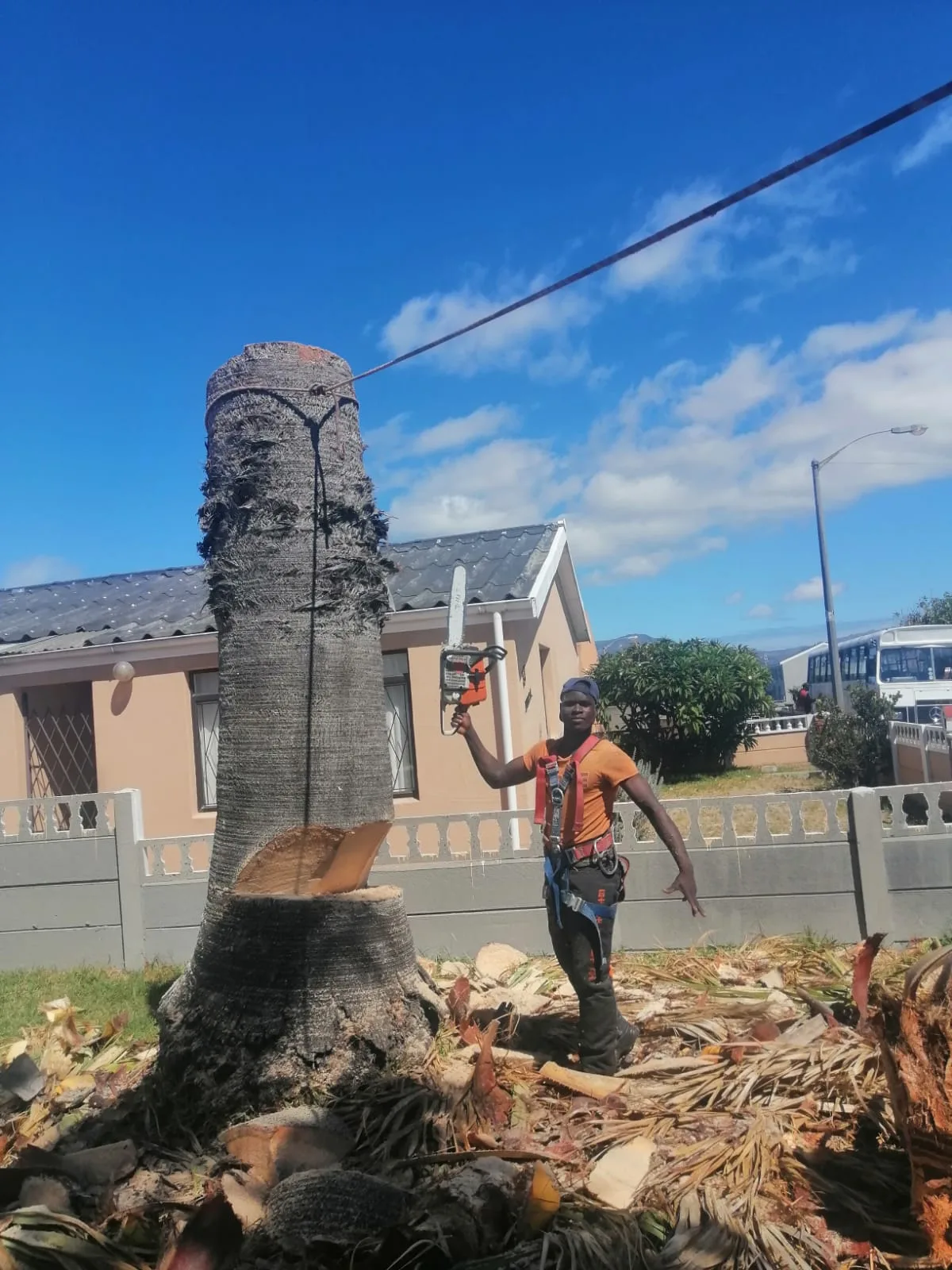
Emergency & Storm-Damage Tree Removal in Cape Town
When a winter storm brings a tree down on your roof, driveway or car — or leaves a split limb hanging — you need it dealt with now, not next week. We run emergency and storm-damage call-outs across Cape Town, day or night. Free quotes, fixed written prices.
What to do right now, before anyone touches the tree
If a tree has just come down, the next ten minutes matter more than the quote does. Work through this list first. Then phone us.
Before you do anything else
- Get people and pets well away. Not just out from under the tree — out of the room below it too, if it's resting on a roof.
- Treat any line the tree is touching as live. Stay at least ten metres back, keep off wet ground near a downed cable, and report it before anything else happens.
- Don't climb it and don't cut it. A half-fallen tree is loaded with tension, and the wrong first cut sends the trunk somewhere nobody expected.
- Move the cars — only if it's safe. If getting to a car means walking under a hanging limb, leave the car.
- Photograph everything before it's moved. Wide shots and close-ups. That's your evidence and you can't recreate it later.
- Then call us. Say it's an emergency and tell us what the tree is sitting on — that's what decides how fast we can be there.
Tree down, split or hanging? Phone us and say it's urgent — don't wait for the form.
Call 084 966 4252If the tree is stable and nobody's in danger, you've got time to read the longer version in our guide to dealing with a storm-damaged tree. If it isn't, phone first and read later.
Why trees come down in Cape Town, and when
Our emergency work runs in two seasons that break trees in two different ways.
Winter is the one that takes whole trees over. The north-westerly cold fronts arrive with days of rain behind them, so by the time the strongest wind hits, the ground is already saturated and no longer gripping the roots. A tree that stood through a dry summer gale goes over in June because the soil let go, not because the wind was worse. It's also why trees keep falling for a day or two after the wind has dropped.
Summer is the one that tears limbs off. The south-easter blows hard and steady for days into a canopy in full leaf. That sustained load snaps branches, splits forks and leaves torn limbs hanging in the crown rather than putting the whole tree down.
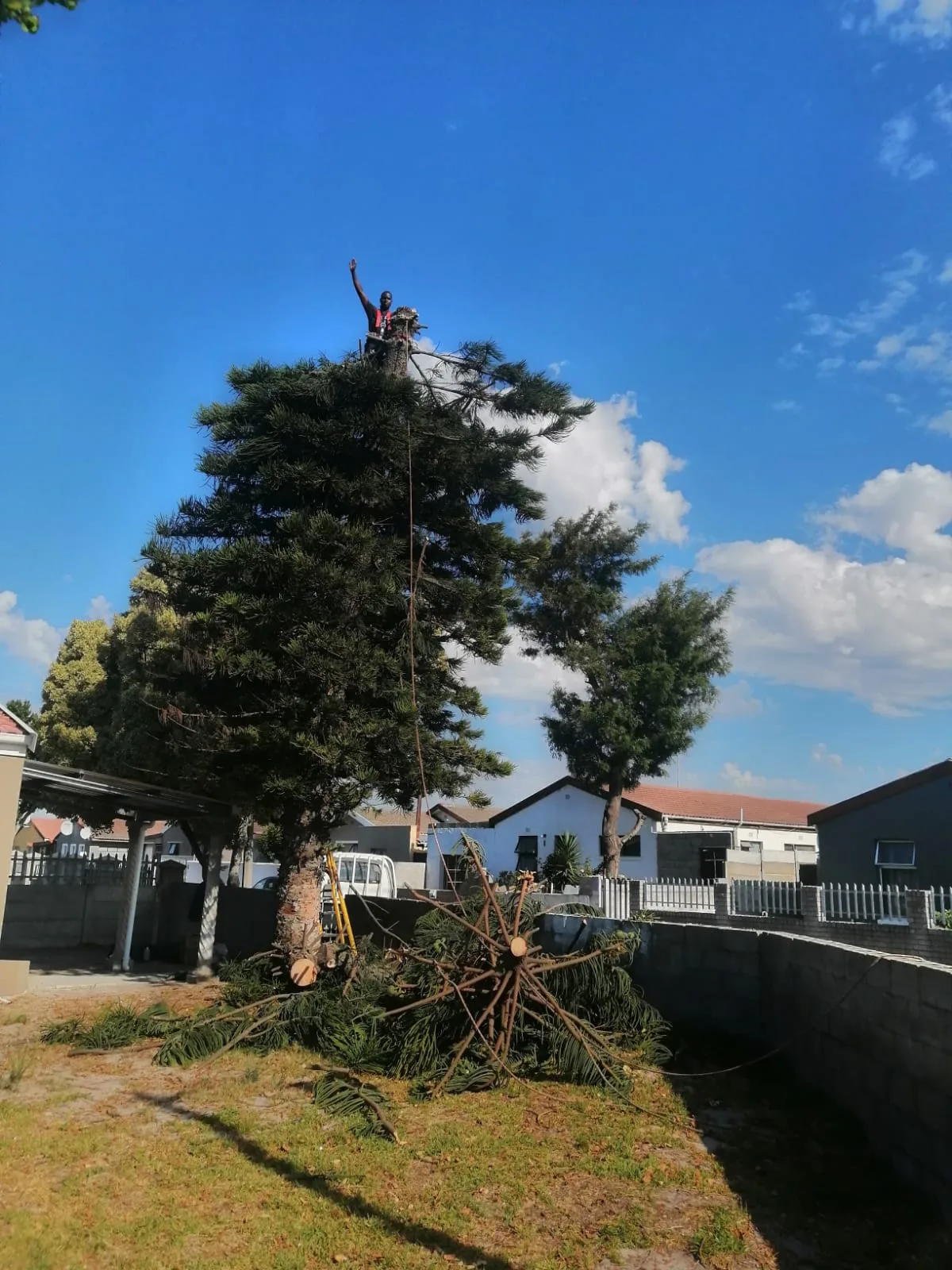
The trees we're called to most are the big fast-growing ones, pines and gums especially. They get tall quickly, they're heavy up top, and in sandy Cape soil the root plate is often wider than it is deep. That doesn't make every pine a hazard — it makes them the ones worth looking at before winter rather than during it.
The three emergencies, and how each one is handled
Nearly every emergency call is one of these three. Knowing which you've got helps us bring the right crew and kit first time.
A tree down on a house, wall or car
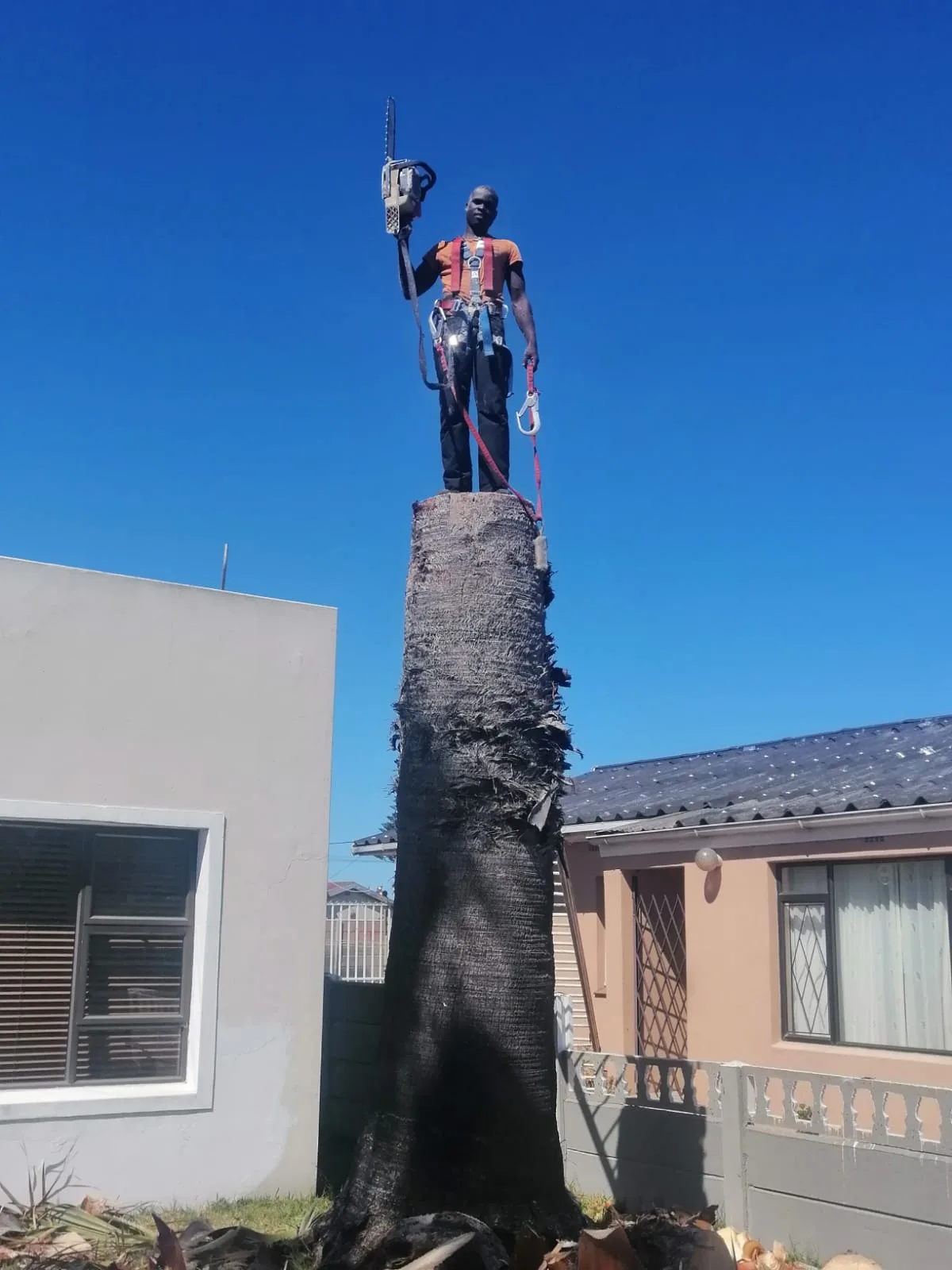
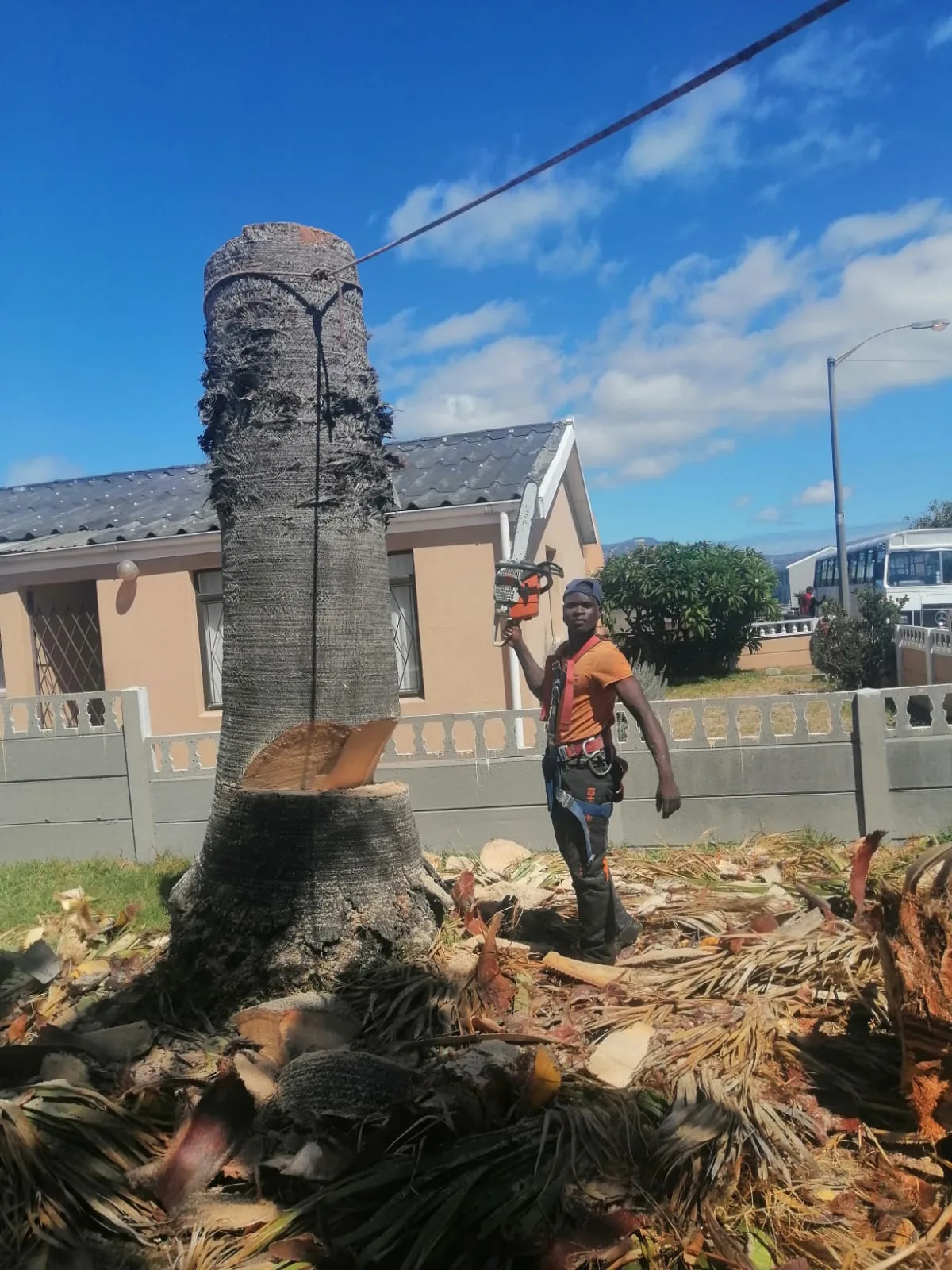
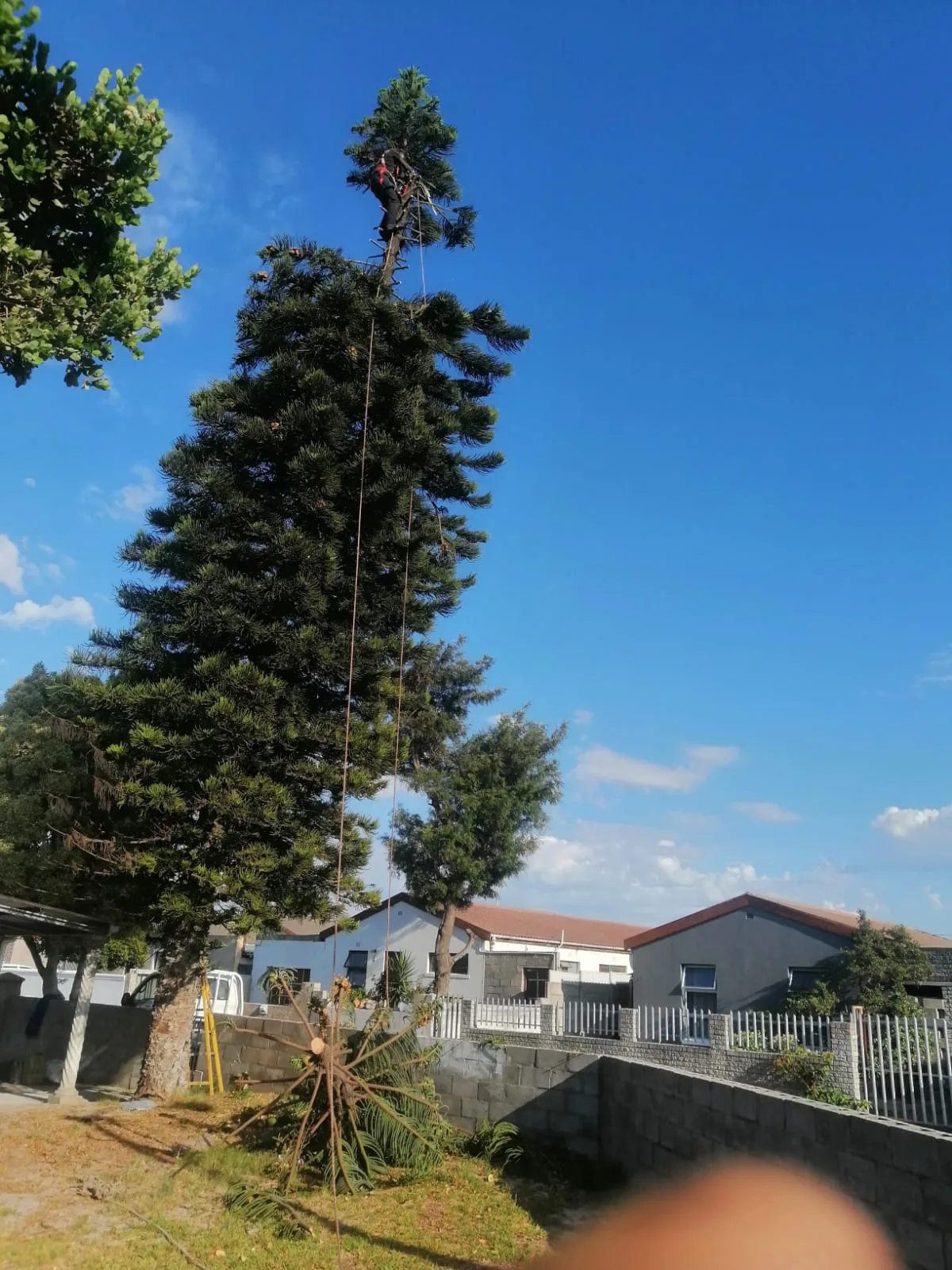
The tree is now holding weight and the structure underneath is holding it back — every piece is either loaded or bracing something else. That's why a tree on a roof gets taken apart in a planned sequence: the top and the far end first to take load out of the trunk, the weight roped and lifted rather than dragged, the last cuts made when there's nothing left to swing. Hacking it free is quicker, and it's how a cracked tile becomes a caved-in ceiling.
A broken limb still hanging in the canopy
This is the dangerous one, and it's the one people leave. A limb that has torn out but hung up in the branches above is called a widowmaker for good reason — nothing is holding it but friction, and it can come down in still air, days later, with no warning. Keep everyone out from under it and get it down. It's usually a quick job next to a tree on a roof, and it's the call we'd most like people to make sooner.
A tree leaning, or ground lifting at the base
Look at the soil around the trunk after heavy rain. Cracked ground, a low mound lifting on one side, or roots showing where there was lawn all mean the root plate is already moving — and that tree doesn't need more wind to finish the job, because saturated soil keeps giving way for hours after the front has passed. A fresh lean that wasn't there last week is an emergency even on a calm morning.
Not sure how bad it is? Send a photo from a safe distance with the whole tree and what it's resting on in frame, and we'll tell you straight whether it can wait until morning.
Trees on power lines: what we will and won't do
We are not electricians and we do not work on live lines. Not municipal lines, not Eskom lines, not the service cable running to your meter. Any company that says it will cut a tree off a live conductor is putting its crew and your property at risk.
If a tree is touching, resting on or tangled in a power line, the line has to be made safe by the people who own it before anyone goes near the tree. If a cable is actually down, on the ground, or anyone is at risk, treat it as an emergency and call 107 from a landline or 021 480 7700 from a mobile. For a fault that isn't putting anyone in danger, the City of Cape Town's electricity call centre runs 24 hours on 0860 103 089. In the areas Eskom supplies directly, report it to Eskom instead, and say whether the tree is also blocking a road.
While you wait: stay at least ten metres back, keep children and pets inside, and don't touch anything metal the tree is also touching — a fence, a gate, a washing line. Assume the cable is live even if your power is off, because your outage tells you nothing about that line.
Once the utility has made the line safe, that's when we come in: tree apart, off the property, driveway cleared, the lot hauled away. Phone us while you're still waiting on them so we're booked in and know what we're walking into.
How fast we can get there, and how we prioritise
We're not going to promise you a fixed number of minutes. Greater Cape Town runs from Melkbos to Simon's Town, and a crew already roped into a tree on one side of the mountain can't be on the other in half an hour. Anyone guaranteeing a city-wide response time in the middle of a winter front is telling you what you want to hear.
Here's what actually happens. Our normal hours are 8am to 7pm, seven days a week, and for genuine storm emergencies we run call-outs outside those hours too, day or night. When you phone, we ask what the tree is on, whether anyone's hurt, whether it's blocking the road, and whether a power line is involved. That's not admin — it's how we rank the queue.
What jumps the queue
- Anything threatening people — a tree on an occupied room, a limb over a walkway.
- Anything blocking a driveway, a road or emergency access.
- A tree on a structure that's still moving, or a lean that's getting worse.
- Damage that's worsening — water coming in through a hole in the roof.
After a big front we work through the worst first, and we'll tell you honestly where you sit — including when that's tomorrow rather than tonight. A fallen tree lying in the back garden on top of nothing is safer to wait than a hung-up limb over a pavement, and we'd rather say so than leave you up all night expecting headlights.
What it costs, and how insurance usually works
We won't price emergency work sight unseen, and be wary of anyone who does over the phone at 9pm — two trees of the same size can be twice the price apart depending on what's underneath them. These are the things that actually move the number:
- Whether it's on a structure. A tree on open lawn is felling. A tree on a roof, a wall or a car is a rigging job, with every piece lifted off rather than dropped.
- Tension in the wood. A trunk under load is cut slowly, in a set order, usually roped first. That's time, and time is most of the cost.
- Access. Whether the truck can reach the base, or everything gets carried out through the house and down a flight of stairs.
- Rope access or a crane. Most jobs are climbed and rigged. A few genuinely need machinery, and that's the biggest single swing in any quote.
- Out of hours. A crew out at night or mid-storm costs more than the same tree on a Tuesday morning.
- Clean-up volume. A mature pine is a lot of material, and hauling it away is a real part of the job.
You get one fixed written price before we start, same as every other job we quote. Where a tree has to be made safe immediately, we stabilise it first and price the full removal properly afterwards.
The insurance side — general guidance, not advice
Household policies in South Africa generally deal with the damage a falling tree does to your buildings and contents, rather than with the tree itself as a garden item. Cover varies between insurers and even between policies from the same insurer, so check your own policy wording or phone your broker — we can't tell you what yours covers.
What we can do is keep the paperwork easy. Photograph the scene before anything moves and again once it's cleared, log the claim early, write down the claim number, and ask us for an itemised written quote and an invoice on completion — both set out clearly enough to submit. We don't bill insurers directly: you pay us and claim it back, so tell your insurer before we start if they want to send an assessor first.
After the emergency: what's left, and what happens next
Clearing the danger is the first visit. Once everyone's calmed down, it's worth a proper look at what's left — a storm rarely damages just one thing.
If part of a tree came out, the rest of it has changed shape — unbalanced, with a bigger sail on the remaining side and a tear wound where the limb ripped out. Sometimes it recovers. Sometimes that's the reason it comes down in the next front. It depends on where the tear is, how much crown is left and whether the trunk is split, which is why we look rather than guess.
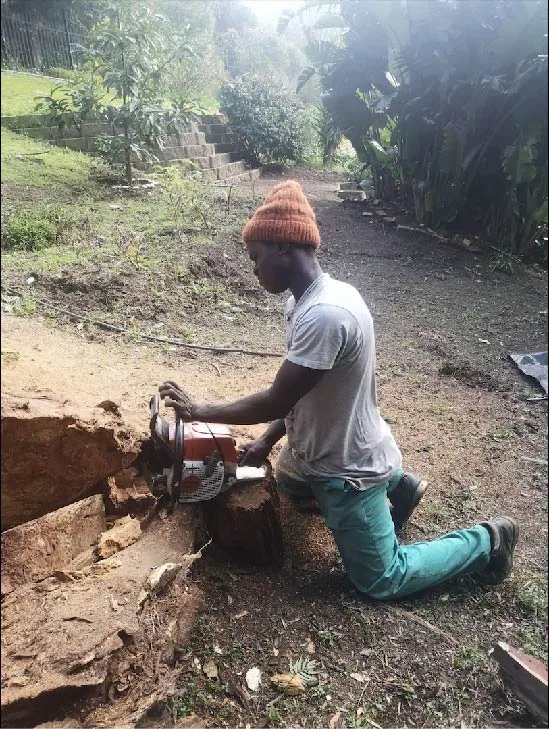
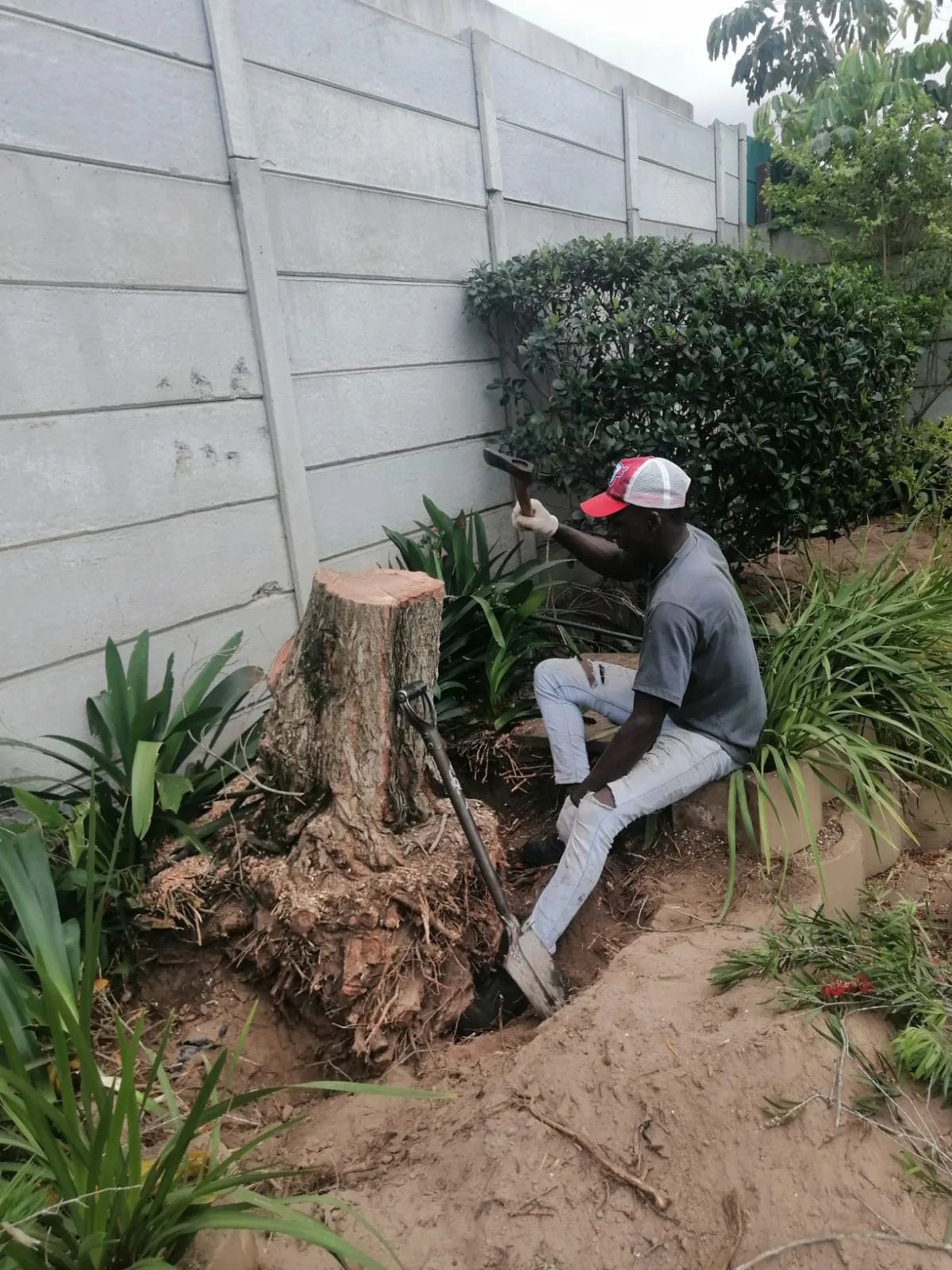
Then there's the stump. An emergency call-out usually leaves one, because grinding a stump at midnight in the rain helps nobody. We come back for it in daylight, or you leave it if it's out of the way — your call, not an upsell.
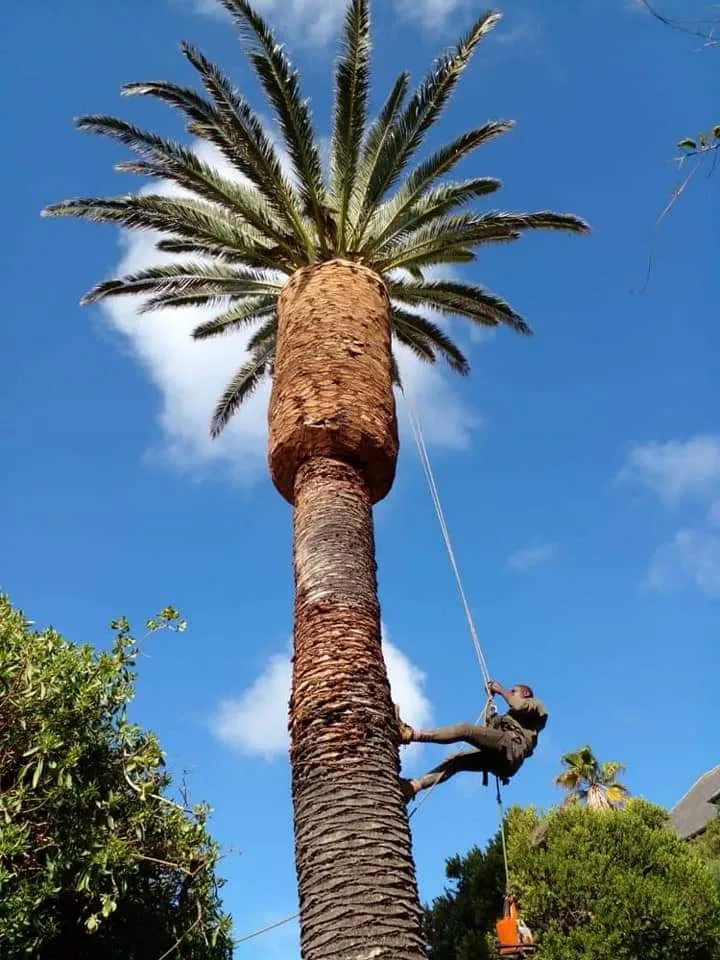
The cheapest storm damage is the kind that doesn't happen. Before the next winter, it's worth having the trees around the house thinned and reduced so the wind passes through the canopy instead of pushing against it, and the dead wood taken out while it's still up there. That's ordinary daytime work at ordinary daytime prices, and a large part of what our crews do across Cape Town between the fronts.
Our emergency removal process
Call us and make it safe
Phone the booking line and tell us what's happened. We prioritise anything blocking access, leaning on a structure, or near power lines.
Rapid on-site response
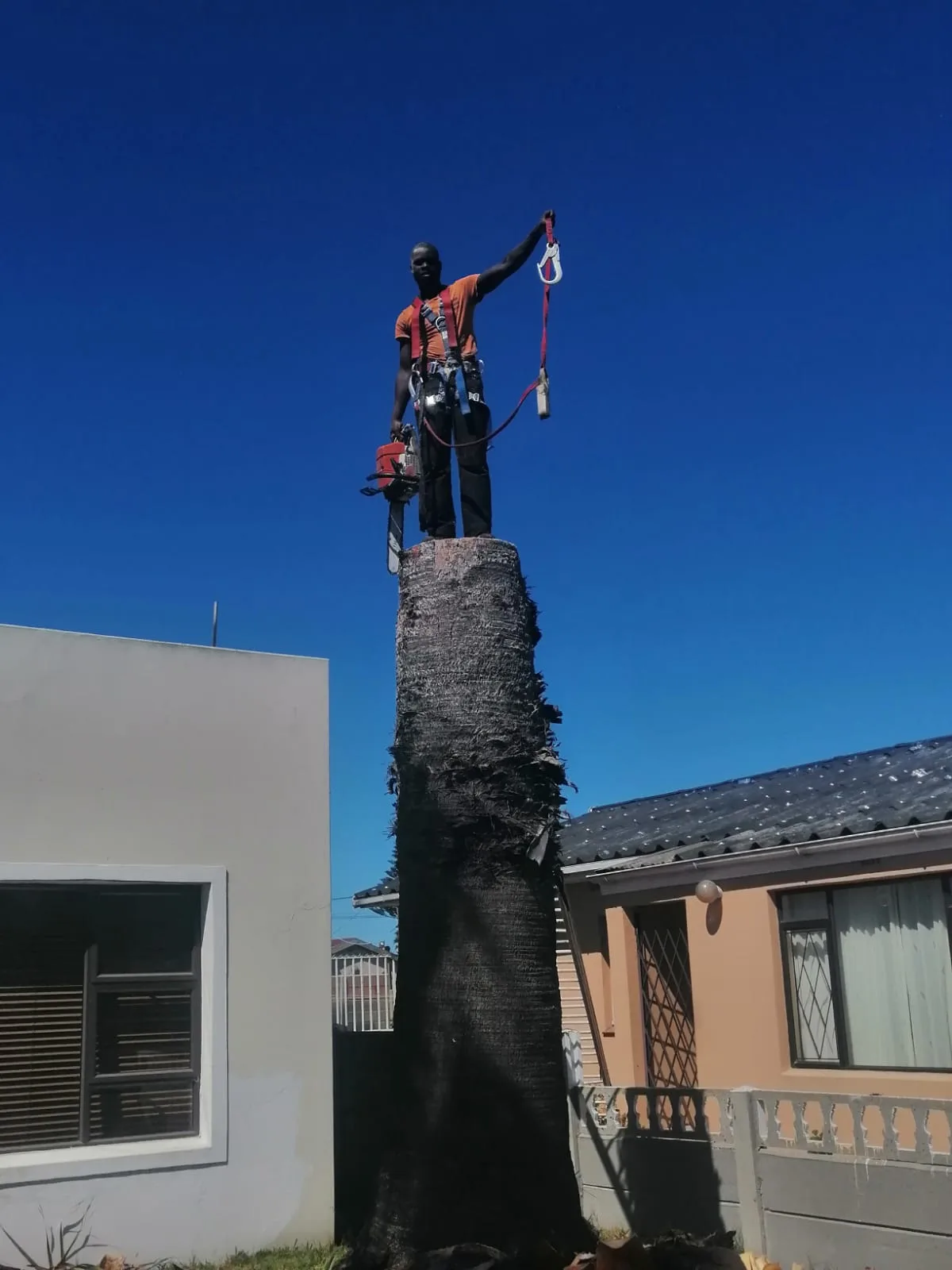
Our crew gets out fast, assesses the hazard, and makes the immediate danger safe — securing or removing what's threatening to fall.
Remove the damaged tree
We dismantle and remove the fallen or split tree in controlled sections, clearing it off roofs, vehicles, driveways and boundary walls.
Clear the site
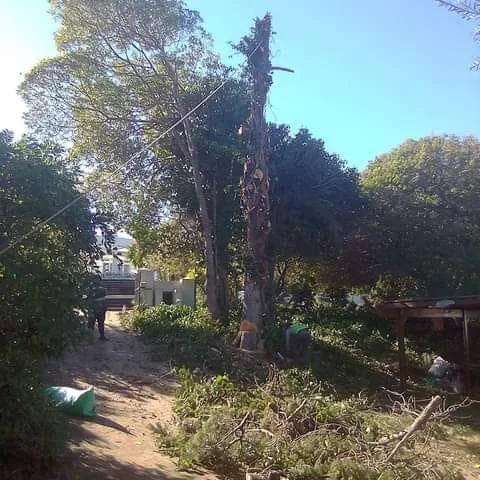
We haul everything away and clear access so you can get your car out and your life back to normal.
Every emergency removal job is quoted up front in writing, and cleaned up afterwards.
Get my free quoteGet a free emergency removal quote
Fill this in and we'll come and look, then give you one fixed written price. No call-out fee.
Emergency & Storm-Damage Tree Removal FAQs
Common questions about this service in Cape Town.
Emergency Removal across Cape Town
We provide emergency & storm-damage tree removal right across the city — including Camps Bay, Sea Point, Constantia, Newlands, Durbanville and Table View. Not on the list? We cover the whole of greater Cape Town.
Other tree services we offer
All across greater Cape Town.
Tree Felling
Safe, controlled felling of large and awkward trees anywhere in Cape Town.
Learn more
Tree Removal
Complete tree removal — felled, cleared, hauled away and the site left tidy.
Learn more
Stump Removal & Grinding
Grind out unsightly stumps below ground level so you can pave, build or replant.
Learn more
Tree Pruning & Trimming
Shape, thin and lift your trees for health, light and a tidy garden.
Learn more