If you're looking up the shot hole borer in Cape Town, it's almost always because a tree in your garden or street has started looking sick — bare branches in summer, weeping bark, tiny holes you can't explain. The polyphagous shot hole borer (PSHB) is a beetle barely 2 mm long that has already killed thousands of trees across the city, and there's no spray that stops it. This guide explains how to recognise it, which trees are most at risk around Cape Town, exactly what to do if you find it, and the one rule that keeps it from spreading to your whole neighbourhood.
Key takeaways
- The PSHB (Euwallacea fornicatus) is a tiny ambrosia beetle that carries a fungus, Fusarium euwallaceae, which blocks the tree's water and nutrient flow and slowly kills it.
- It was first found in South Africa in 2017 and is now confirmed in every province bar one. Cape Town's northern and southern suburbs are badly hit.
- Box elders, English oaks and London planes are top breeding hosts, but it attacks well over a hundred species, indigenous trees included.
- The tell-tale signs are pinhead-sized round holes, pale sawdust (frass), dark weeping stains, and dieback in the canopy.
- There is no registered chemical cure. A heavily infested breeding host usually has to be removed, and the wood must be chipped on site — never moved.
What the shot hole borer actually is
The polyphagous shot hole borer is an ambrosia beetle, originally from Southeast Asia, that bores into a tree and farms a fungus inside it for food. The beetle itself does relatively little physical damage — it's the fungus it carries, Fusarium euwallaceae, that does the killing. As the beetle tunnels, it inoculates the wood with the fungus, which then spreads through the tree's vascular system and chokes off the flow of water and nutrients. According to the Forestry and Agricultural Biotechnology Institute (FABI) at the University of Pretoria, the beetle was first detected in South Africa in 2017 in KwaZulu-Natal and has since been confirmed in all provinces except Limpopo.
1. Bore
The 2 mm beetle tunnels into the trunk and branches, leaving the tell-tale round holes.
2. Farm
It plants its Fusarium fungus in the wood as food, and that fungus is the real killer.
3. Choke
The fungus blocks the tree's vascular system, starving it of water until it dies back.
The reason it's so dangerous is in the name: polyphagous means it eats a huge range of hosts. Researchers have recorded it on well over a hundred tree species in South Africa, and a large subset of those are "reproductive hosts" — trees where the beetle doesn't just feed but successfully breeds, producing the next generation that flies off to infest more trees. Those are the trees that almost always have to come down.
How to spot an infested tree
The earlier you catch it, the more options you have, so it's worth knowing what to look for. The signs vary a little by tree species, but the core symptoms are consistent across Cape Town's infested trees. None of them on their own is proof, but together they're a strong warning.
Entry holes
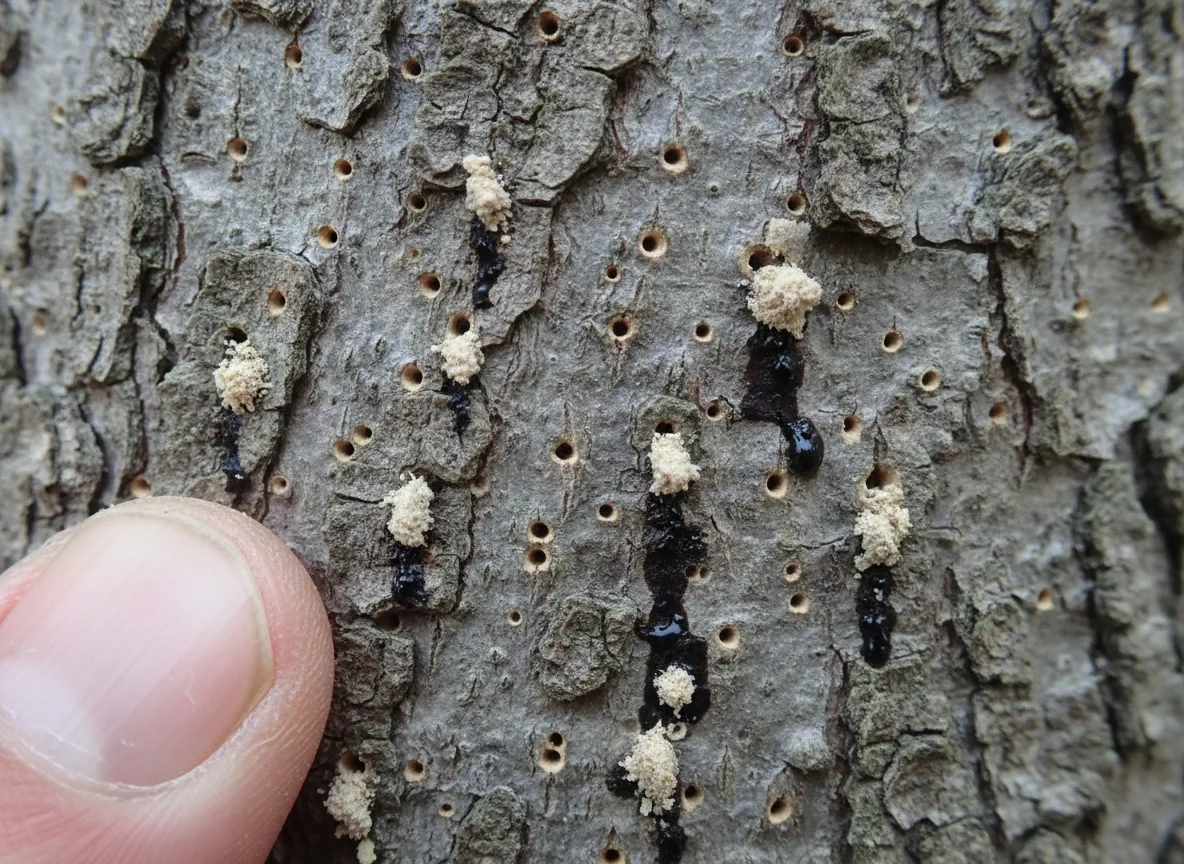
Perfectly round holes about 2 mm across — the size of a ballpoint pen tip — scattered over the trunk and larger branches. They look like someone fired birdshot at the bark, which is where "shot hole" comes from.
Frass & staining
Tiny piles or "sugar volcanoes" of pale sawdust around the holes, often with dark, wet-looking stains or gum weeping down the bark. On planes you'll often see distinct weeping drips.
Dieback
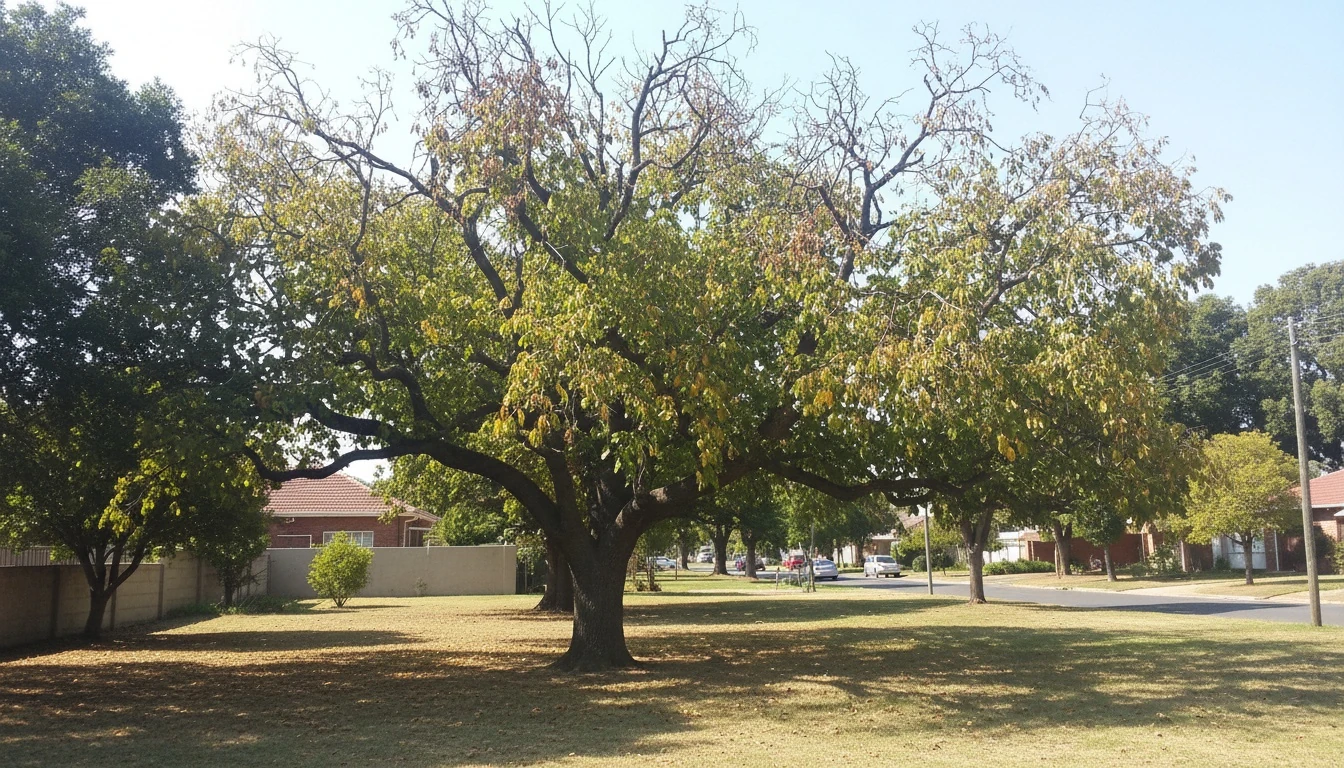
Branches dying back from the tips, wilting or yellowing leaves, and thinning in the upper canopy while the tree should be in full leaf. Brittle, snapping branches follow.
Sudden decline
A previously healthy mature tree going downhill fast over one or two seasons, especially a box elder, oak, plane or maple, should be checked. Heavily infested hosts can become a falling hazard.
If you spot these signs, don't start cutting or pruning straight away — get it confirmed and reported first.
How to report a sighting to the City of Cape Town
- Online: capetown.gov.za/InvasiveSpecies
- Phone: 021 444 2357 (Mon–Fri, 07:30–16:00)
- Email: [email protected]
- CapeNature reserves: [email protected]
Sightings feed the City's monitoring map and help slow the spread.
Which Cape Town trees are most at risk
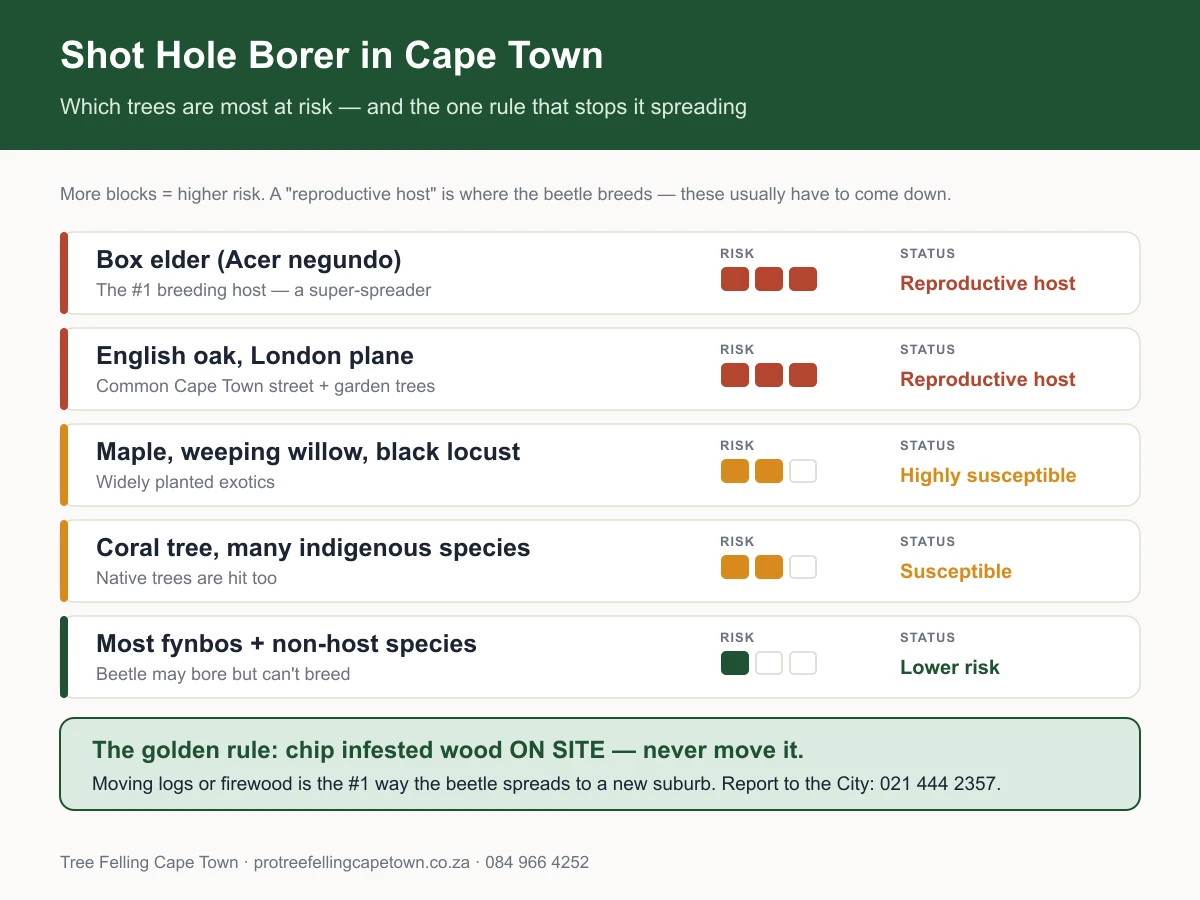
Some trees are far more vulnerable than others. The ones that matter most are the reproductive hosts — the trees where the beetle breeds — because those are both the most likely to die and the most dangerous for spreading the infestation. The box elder (Acer negundo) is the standout: it's been described as a super-spreader with effectively no resistance, and the beetle breeds in it explosively. English oaks and London planes, both extremely common as Cape Town street and garden trees, are also confirmed breeding hosts.
Common myth: "only exotic trees are affected"
Not true. FABI's host list includes a large number of indigenous South African species too, so a native tree isn't automatically safe, and some indigenous trees are legally protected, which changes what you're allowed to do with them. If your at-risk tree might be indigenous, read up first, because indigenous trees are hosts too and removing a protected one without a licence is a separate offence even when it's dying.
What to do if your tree is infested
Here's the hard truth most people don't want to hear: there is currently no chemical product registered in South Africa that cures PSHB, and no peer-reviewed evidence that injecting or spraying an infested tree reliably saves it. For a lightly affected non-breeding host, careful monitoring and pruning of affected limbs can buy time. But for a heavily infested reproductive host — a dying box elder or oak full of holes — FABI's guidance is blunt: the responsible move is to cut it down and chip the wood to reduce the beetle population and protect the trees around it.
Lightly affected, non-host
Monitor closely and prune out affected branches. Clean any cutting tools with 70% ethanol between trees so you don't carry the fungus from one to the next. Get it assessed if it worsens.
Heavily infested breeding host
Removal is usually the only sensible option. Leaving a beetle factory standing means thousands more beetles flying to your neighbours' trees, plus a brittle, dangerous tree over your roof.
Why this isn't a DIY job
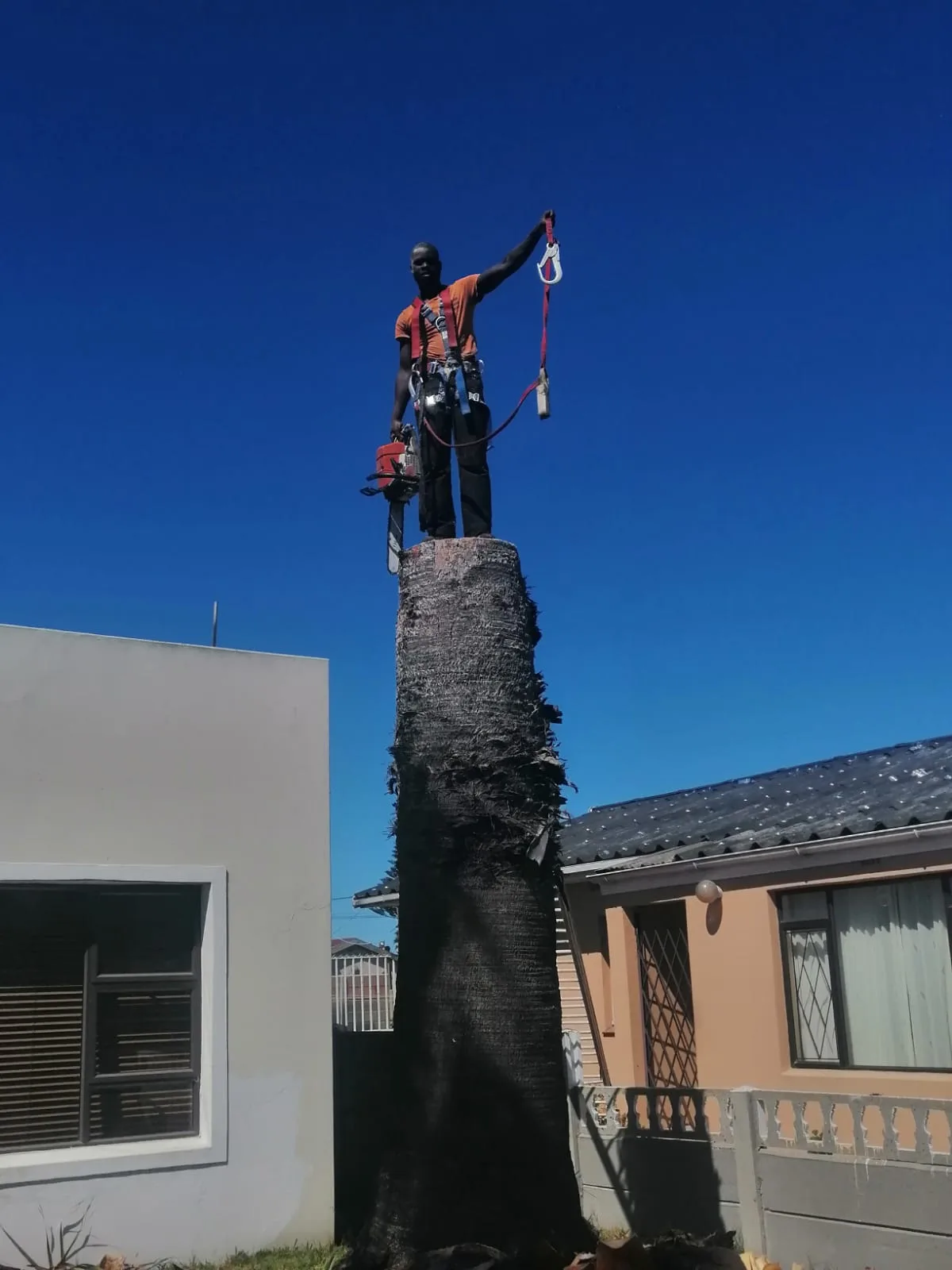
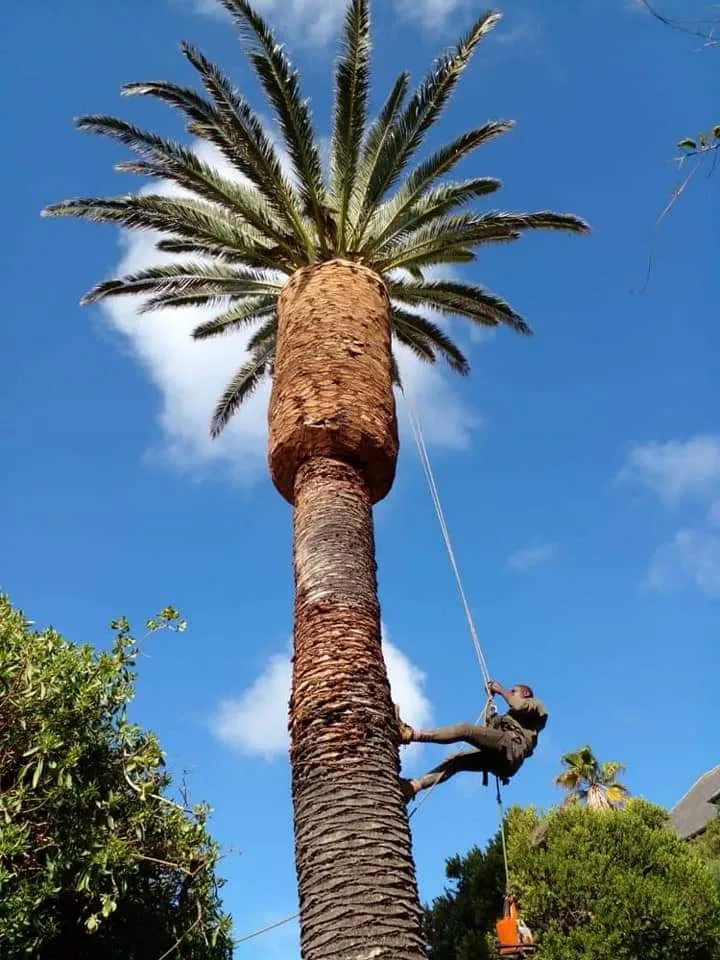
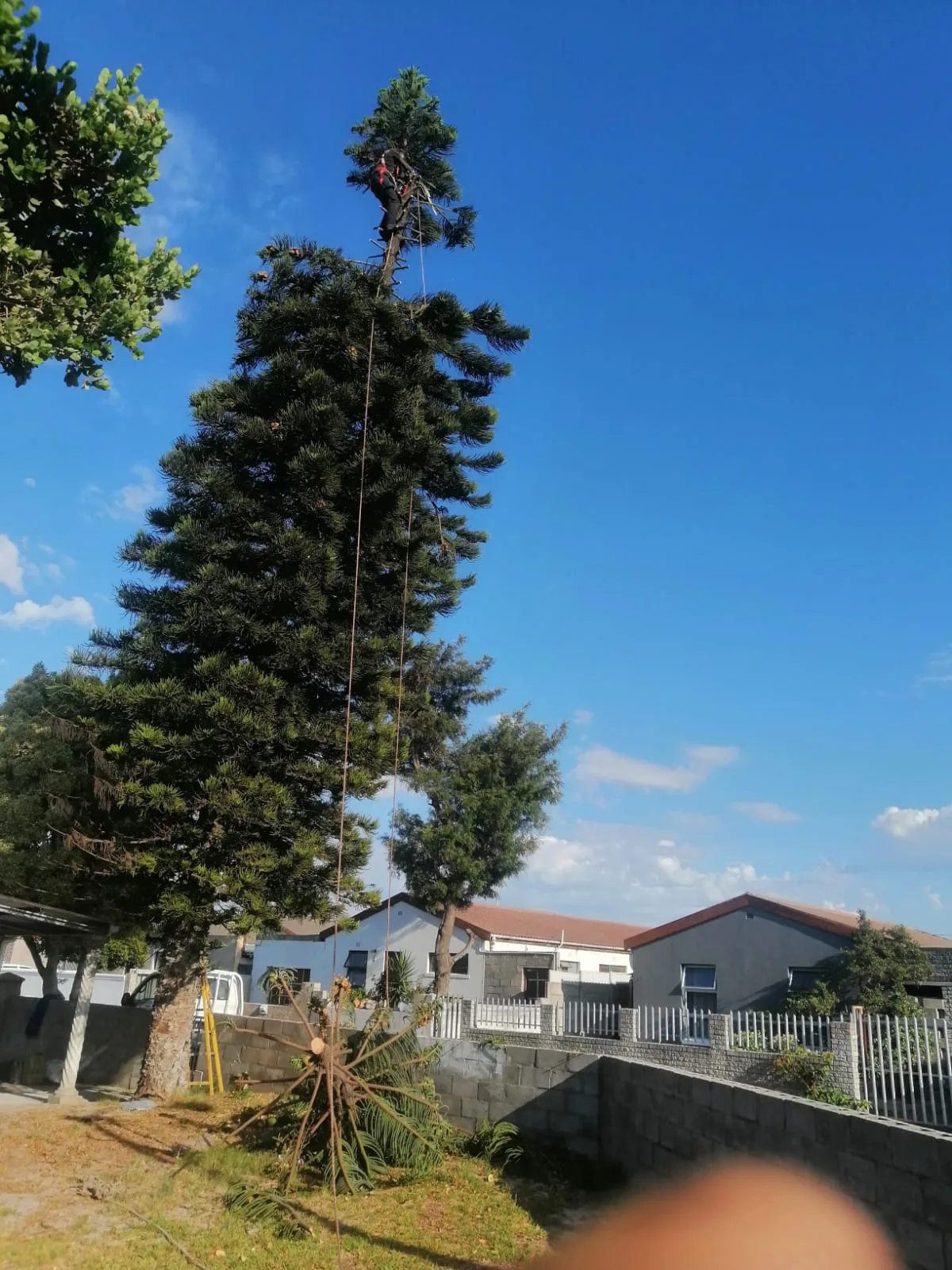
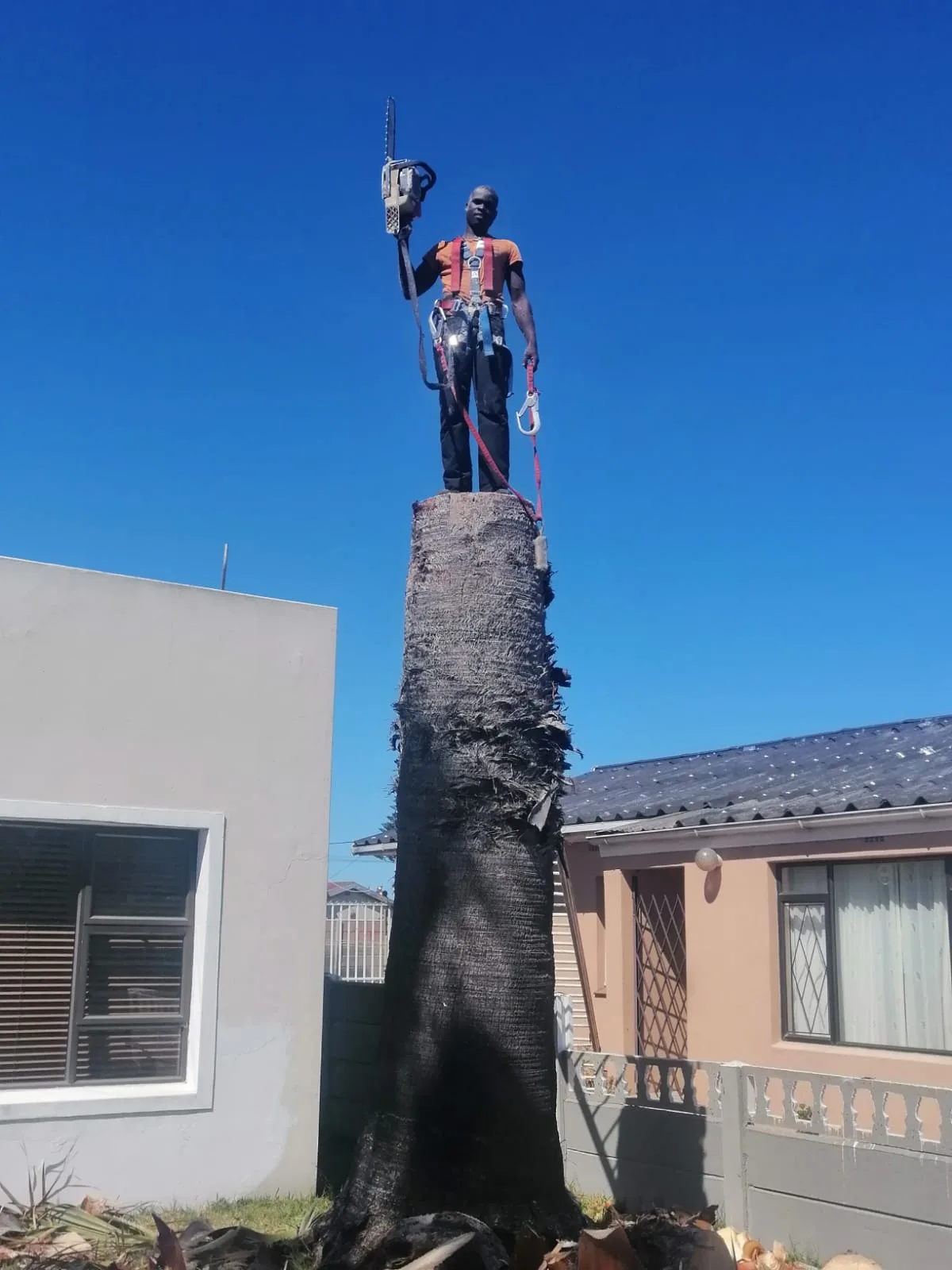
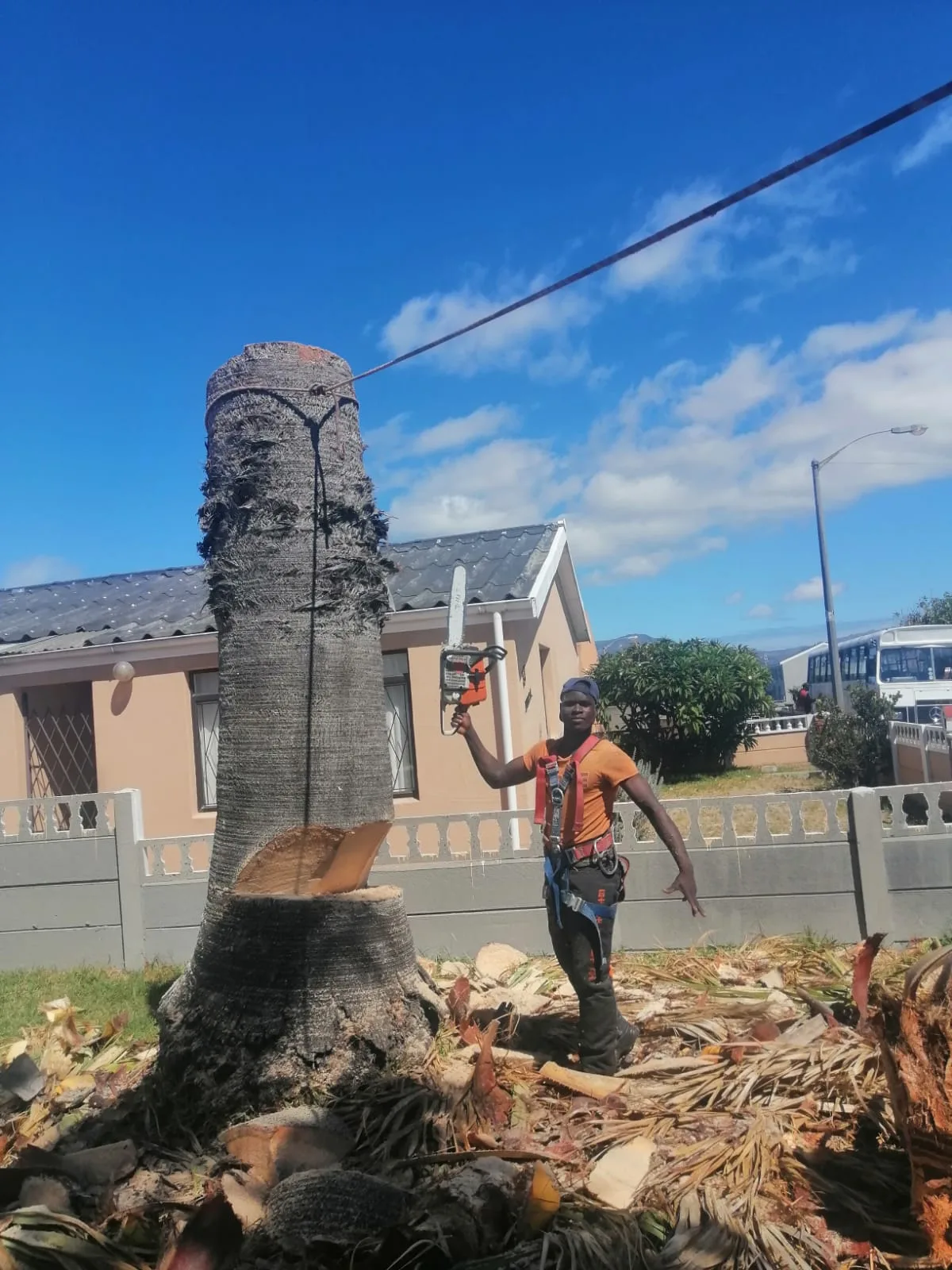
A PSHB-affected tree is often brittle and unpredictable. Sections can fail without warning, and the disposal has to be handled properly or you make the problem worse. An experienced crew can confirm the diagnosis, take the tree down safely, and remove and chip the tree on site in one visit. If you're not sure whether your tree is infested or just stressed, the host list is the quickest way to narrow it down — start with which trees PSHB actually goes for.
The golden rule: never move the wood
If you remember one thing from this guide, make it this. The single biggest way the shot hole borer spreads from suburb to suburb is people moving infested wood — taking logs home for the fireplace, dropping branches at a different green-waste site, or hauling chipped material across town. The beetles and their fungus survive inside the wood and simply start a new colony wherever the wood ends up.
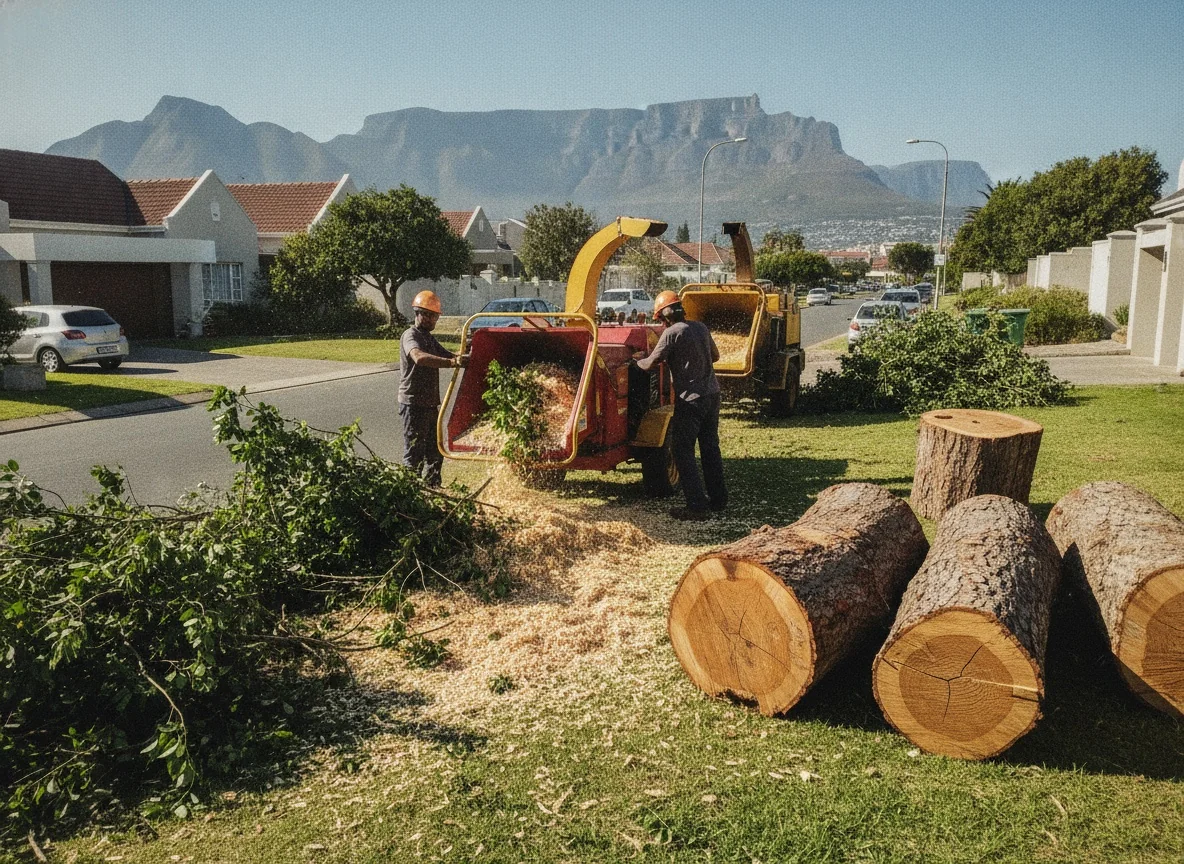
That's why the City of Cape Town's rule is firm: infested trees must be chipped on site and may not be removed from the property. The accepted ways to destroy the beetle in the wood are to chip it finely and then either compost the chips in a kept-wet heap, seal them in heavy refuse bags left in full sun (solarisation) for several weeks, or send the material for incineration. Whatever you do, the wood does not leave the property intact.
Tempting as free firewood from a felled tree is, please don't keep logs from an infested host — a wheelbarrow of borer-riddled wood is how a clean suburb gets its first infestation. Let the crew chip the lot on site.
Why this matters for Cape Town's urban forest
This isn't a distant threat. The beetle has moved through the northern and southern suburbs, and Newlands lost so many trees that the City began a replanting programme in 2025. Cape Town's leafy streets — the oaks of the southern suburbs, the planes lining older roads — are exactly the trees PSHB breeds in best, which is why the City treats it as a serious biodiversity threat rather than a garden nuisance.
Every infested tree that's caught early and disposed of correctly is a few thousand beetles that never reach the next street. With no chemical cure available, that's the whole game — detection, removal and containment, one tree at a time.
Researchers are working on biological controls, but as the Daily Maverick reported in 2025, there's no quick fix coming and the City is fighting this largely by detection, removal and containment — which is why what you do with one sick tree genuinely matters.
Frequently asked questions
Can a tree be saved once it has the shot hole borer?
Sometimes, if it's caught very early on a non-breeding host. There's no registered chemical cure, so a heavily infested reproductive host like a box elder or oak usually has to be removed to protect surrounding trees.
How do I report a shot hole borer infestation in Cape Town?
Report it to the City of Cape Town online at capetown.gov.za/InvasiveSpecies, by phone on 021 444 2357, or by email to [email protected]. Trees in CapeNature reserves go to [email protected].
What do shot hole borer holes look like?
They're perfectly round holes about 2 mm wide, roughly a pen-tip, scattered over the trunk and branches, often with pale sawdust and dark weeping stains around them.
Which trees does the shot hole borer attack?
It breeds best in box elder, English oak, London plane, maple, weeping willow and black locust, but it attacks well over a hundred species — indigenous trees included.
Can I use the wood from an infested tree for firewood?
No. Moving infested wood is the main way the beetle spreads. The City requires infested wood to be chipped on site and not removed from the property — composted, solarised in sealed bags, or incinerated.
Is the shot hole borer dangerous to people?
The beetle doesn't harm people directly, but the trees it kills become brittle and prone to dropping limbs. A dead infested tree near a house or pavement is a genuine safety hazard.
The shot hole borer isn't going away, and pretending a stricken tree will recover on its own usually just costs you a season and risks the trees next door. If a tree on your property is showing the signs, get it looked at properly — we'll confirm whether it's PSHB, deal with it safely if it is, and chip everything on site so the problem stops with you. Book a free on-site assessment and we'll tell you straight what you're dealing with.
Keep reading
How to Cut Down a Tree Safely (And When to Stop)
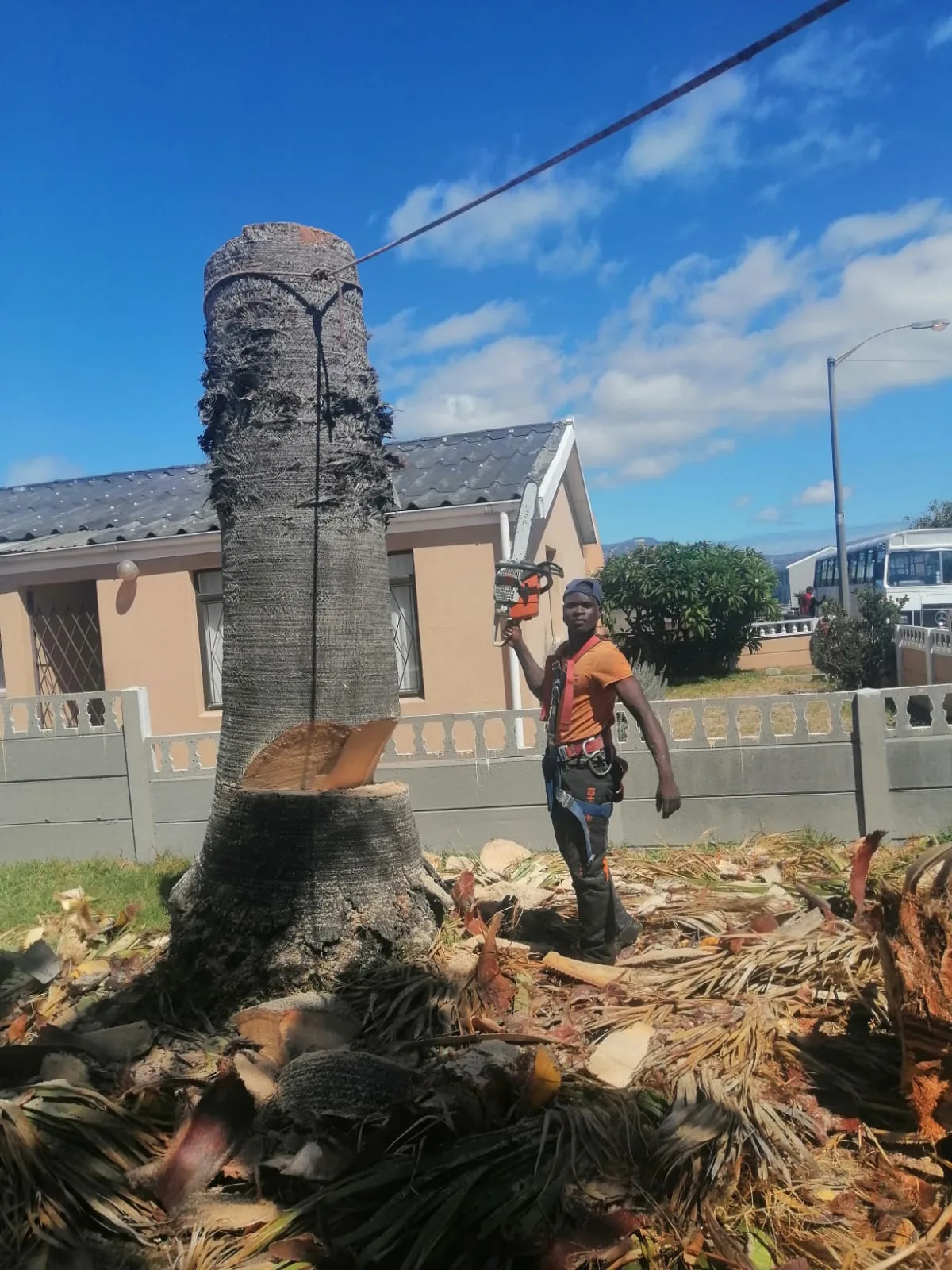
Most people searching for how to cut down a tree are really asking a different question: can I do this one myself? Here is the sequence a trained feller works through, what the hinge actually does, and the situations where the honest answer is to put the saw down and phone someone.
Blue Gum Tree Removal in Cape Town
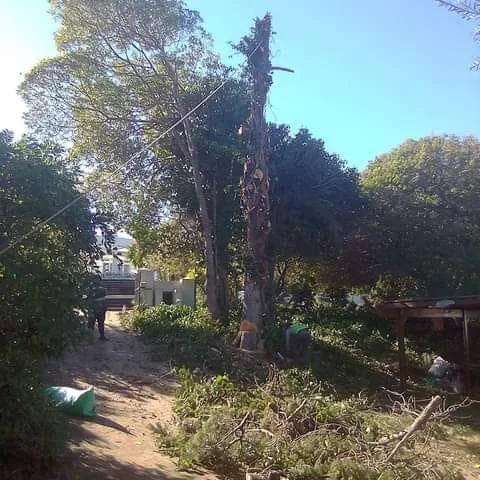
A mature blue gum in a Cape Town garden sits in an odd legal spot: the species is listed as an invasive, but a big urban trunk is often specifically exempt from the duty to remove it. Here is which gums are actually listed, the tape-measure test that decides it, why cutting one down never finishes the job, and what a safe take-down in a suburb actually involves.
10 Signs a Tree Needs to Be Removed (And When It Doesn't)
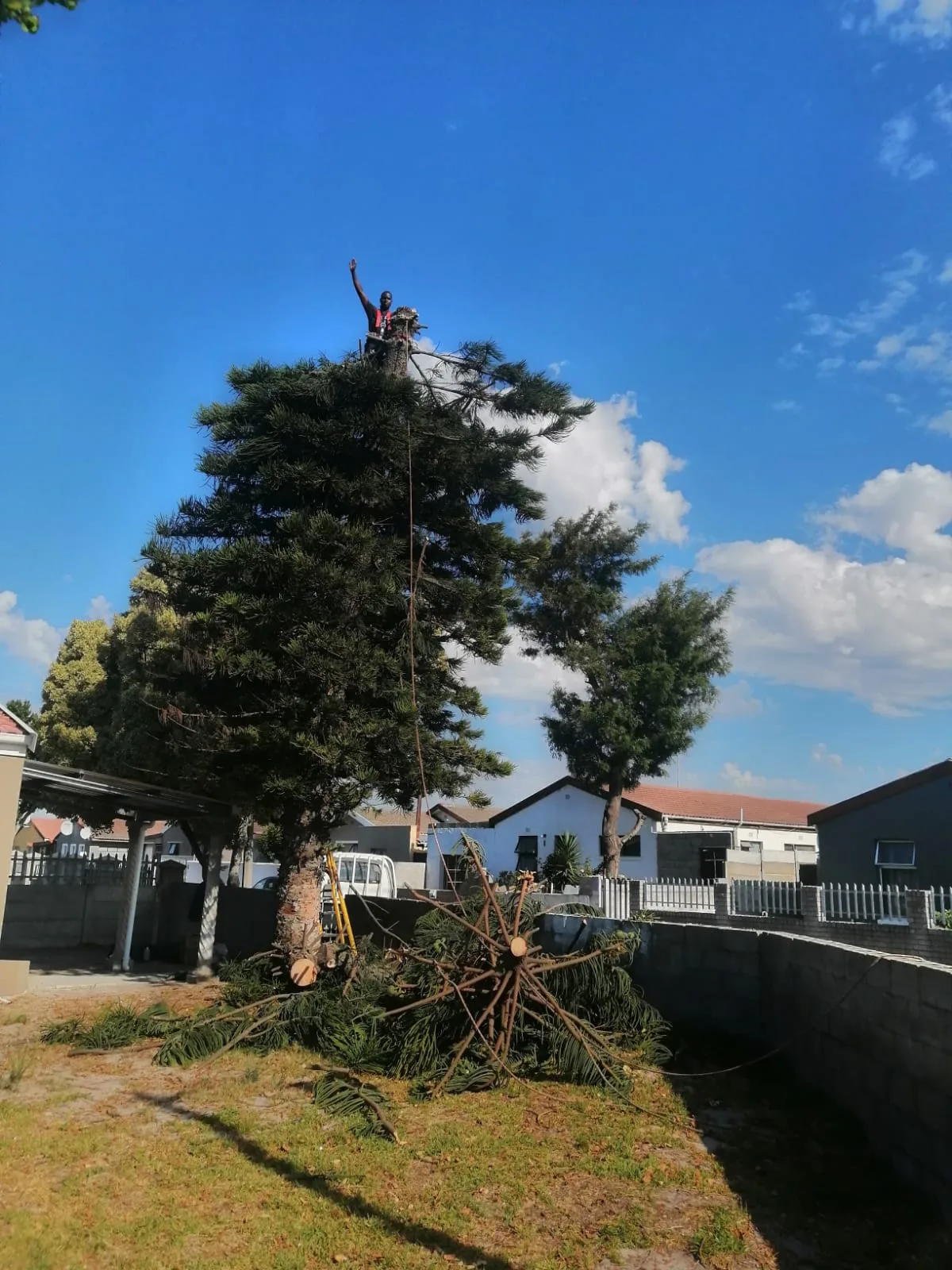
Most of the trees people ask us to remove don't need removing. This is the honest diagnostic list — what a lean, a bracket fungus, a hollow trunk, a crack or a cut root really tells you, which signs mean act today, and which ones a prune will settle.