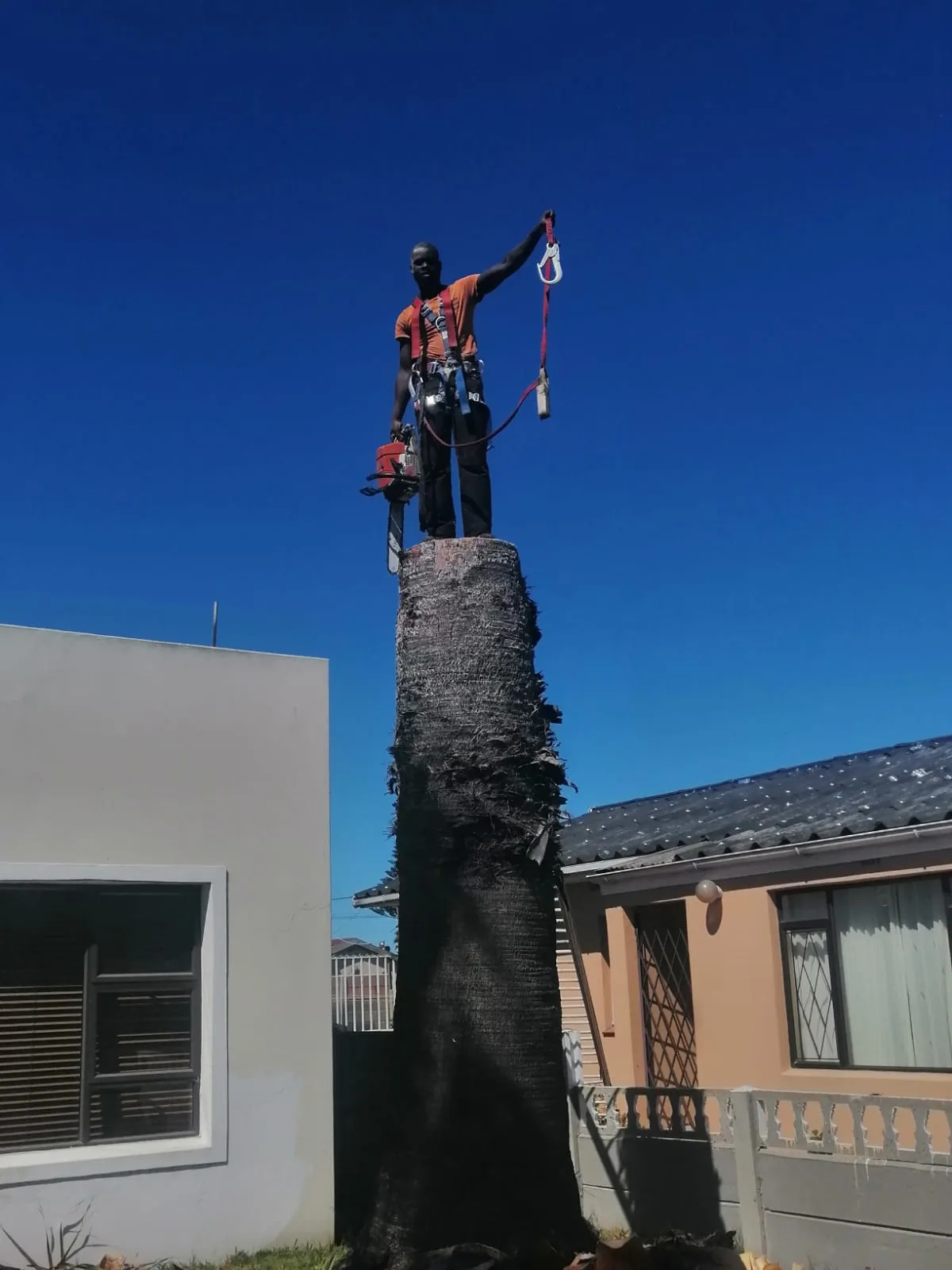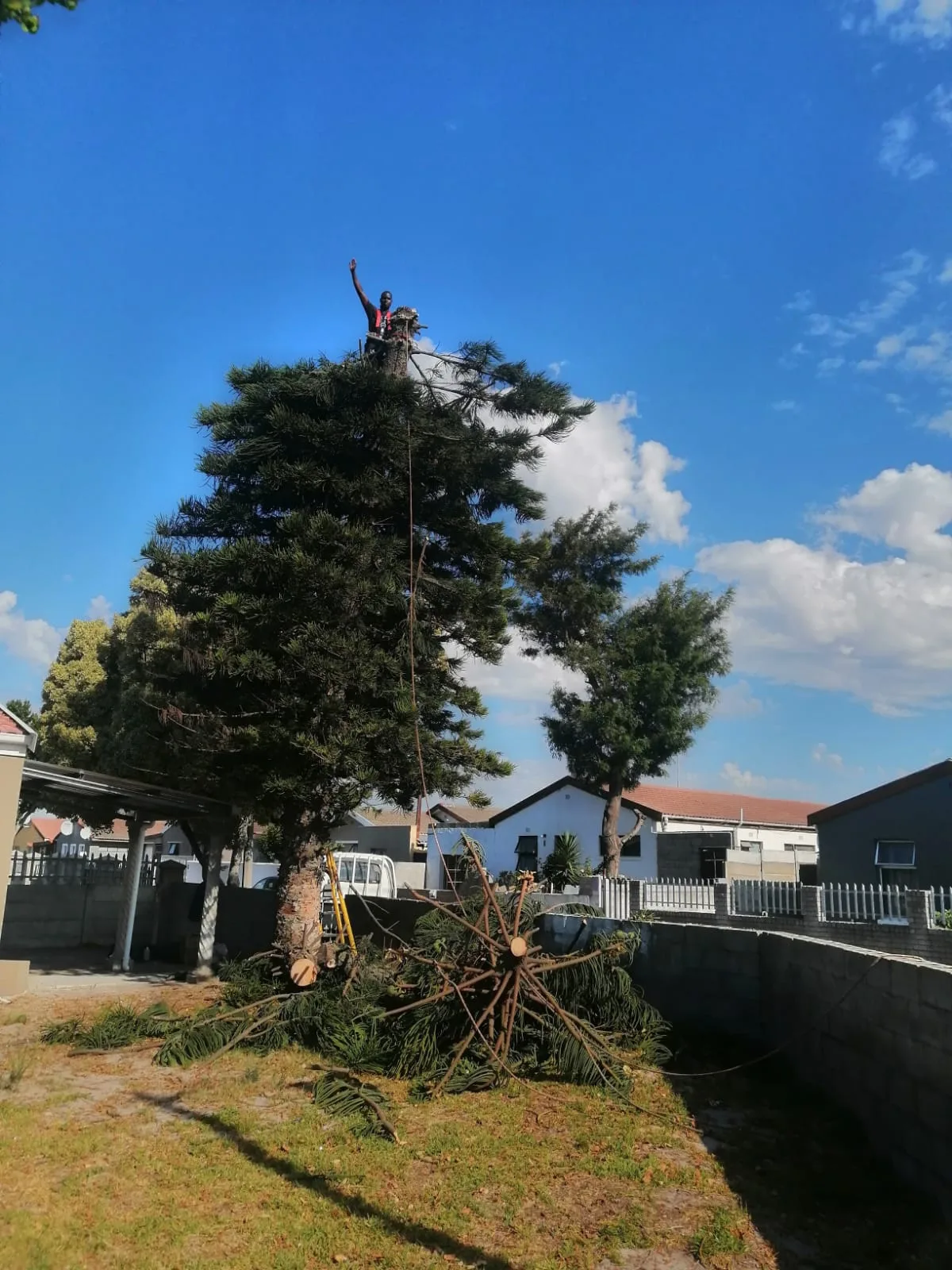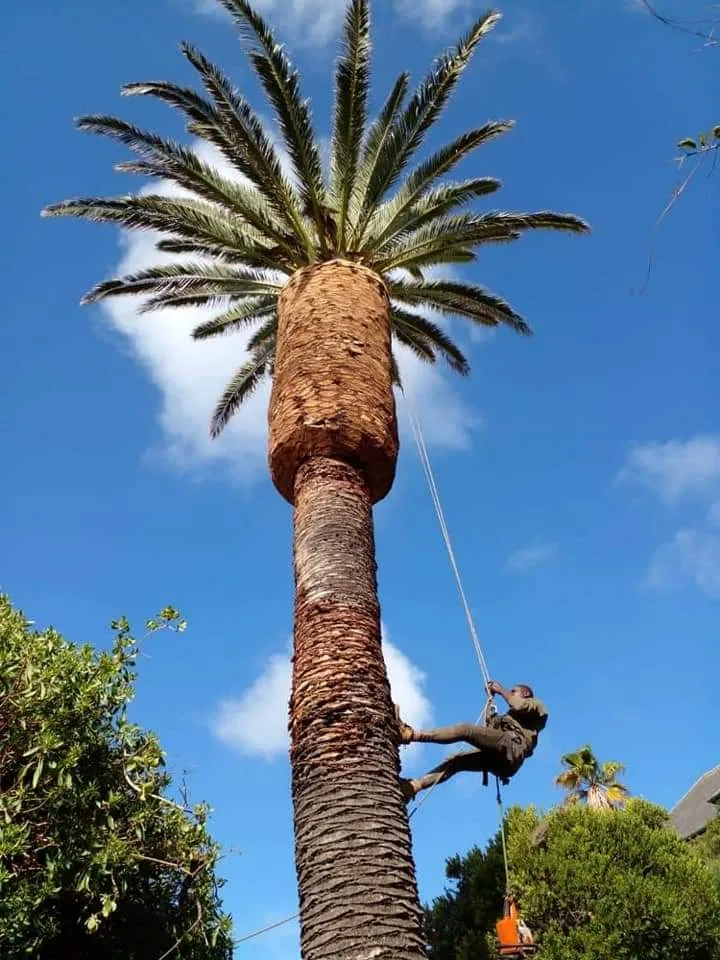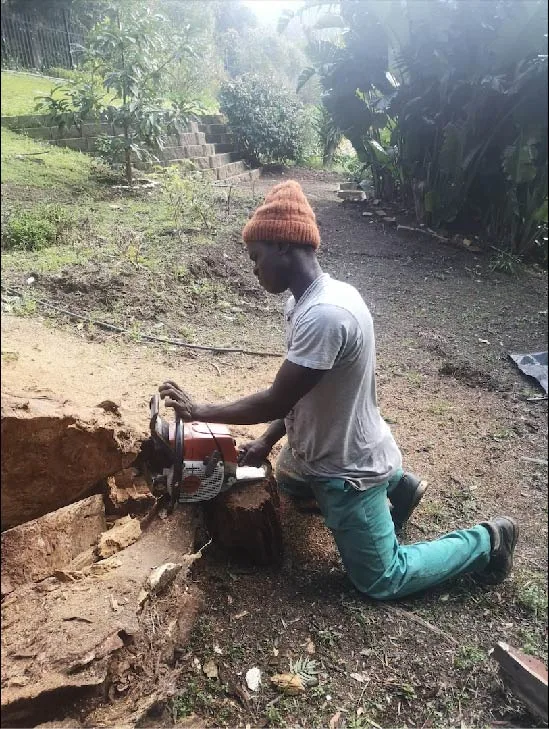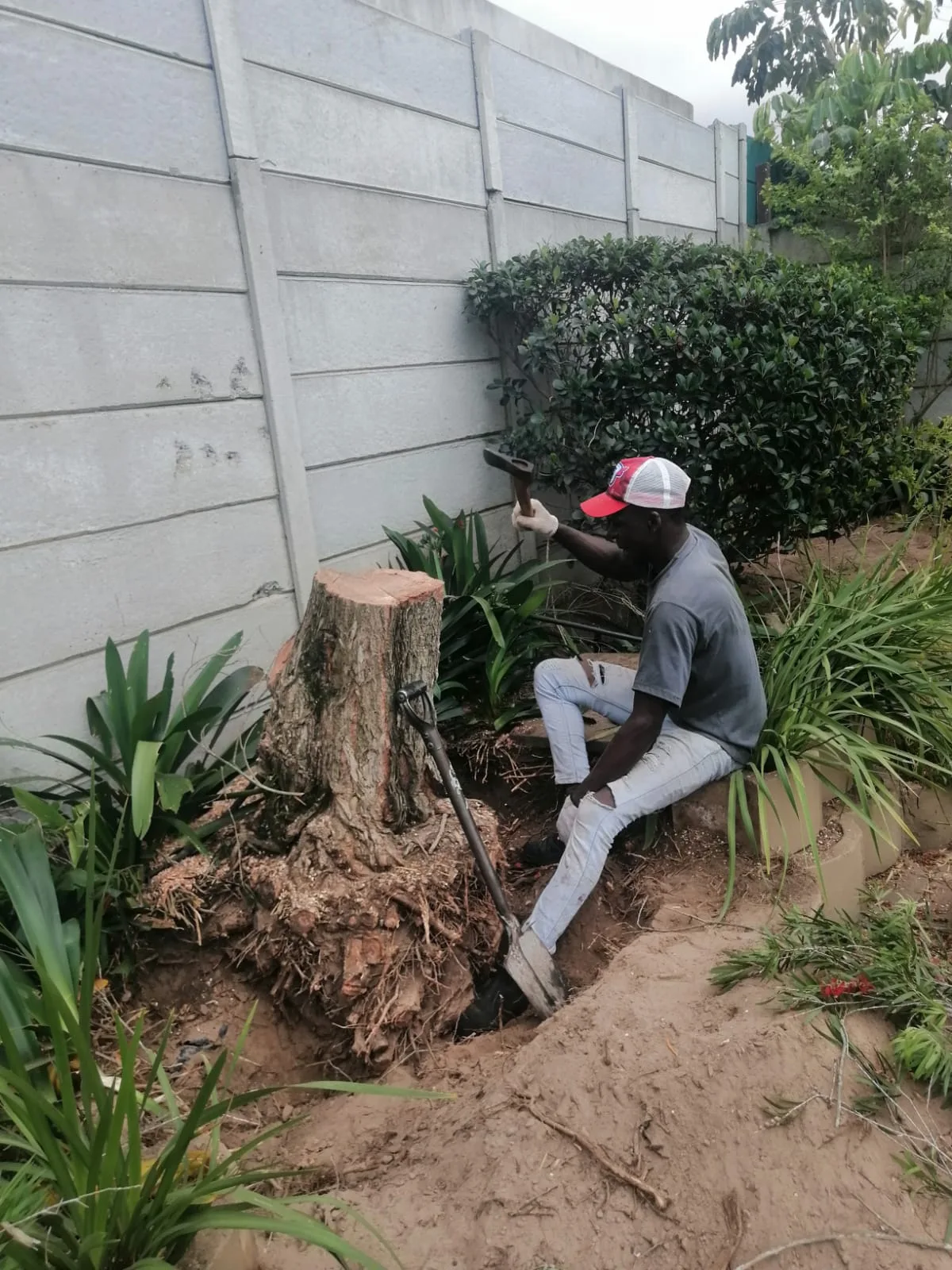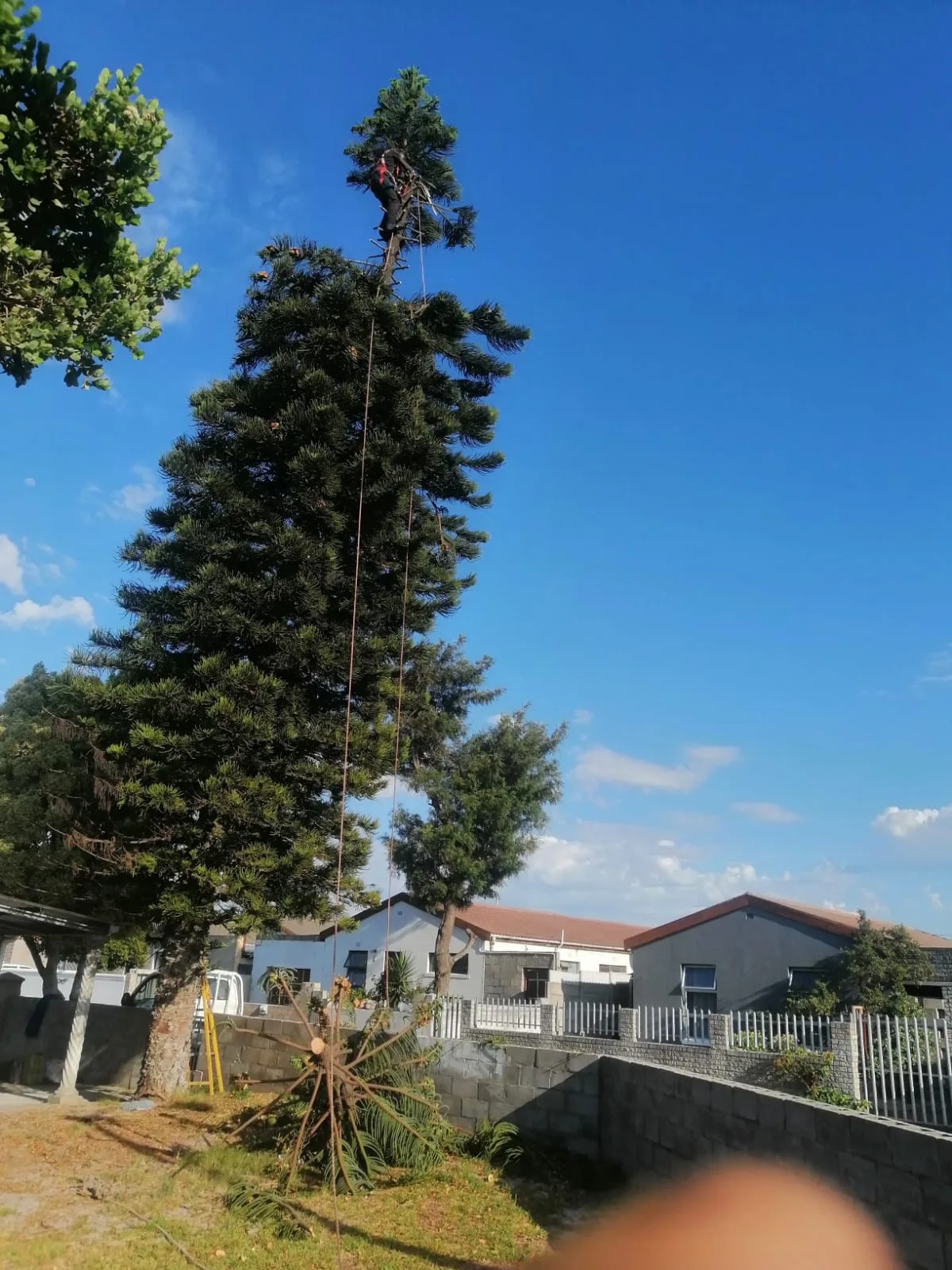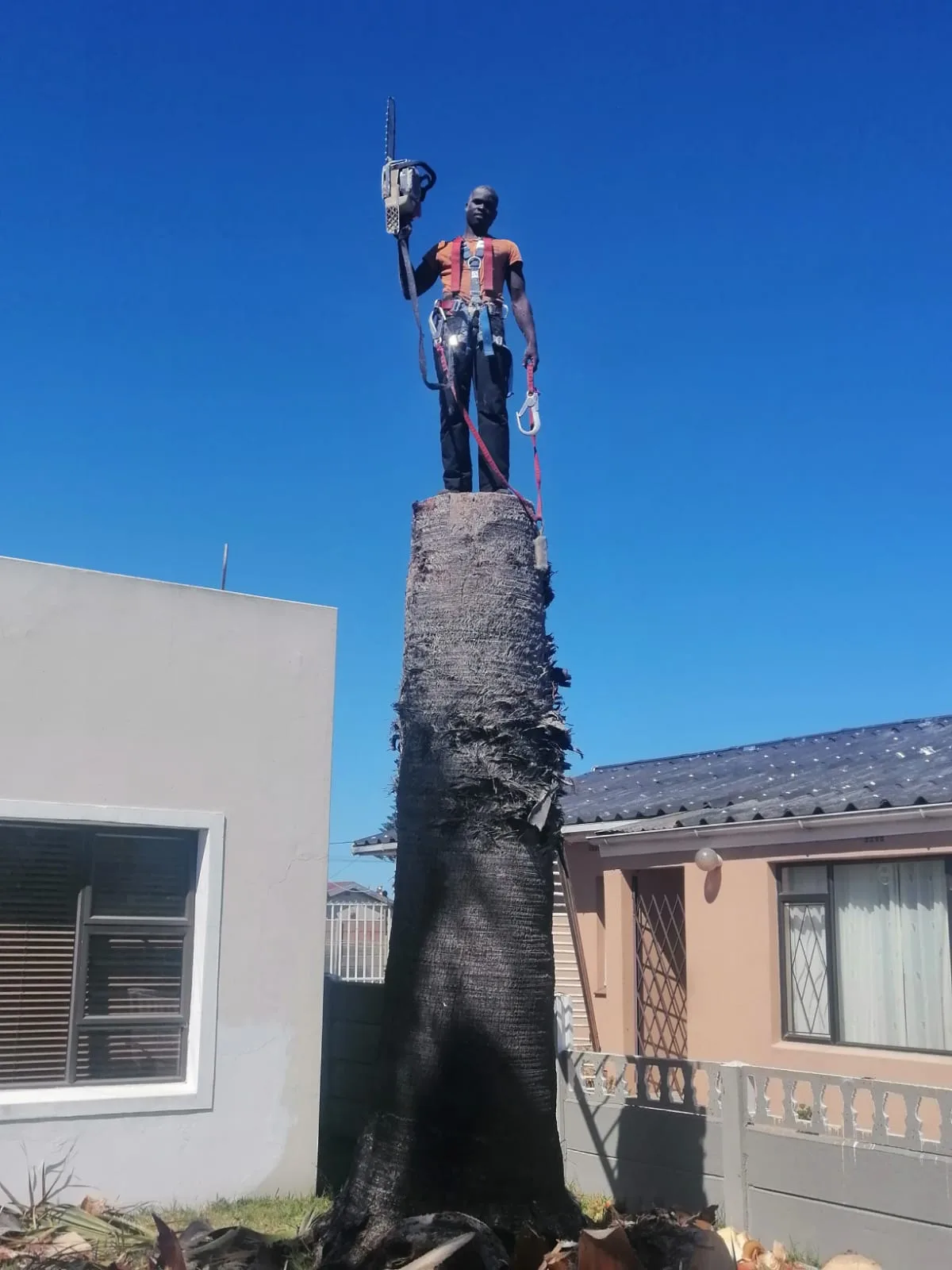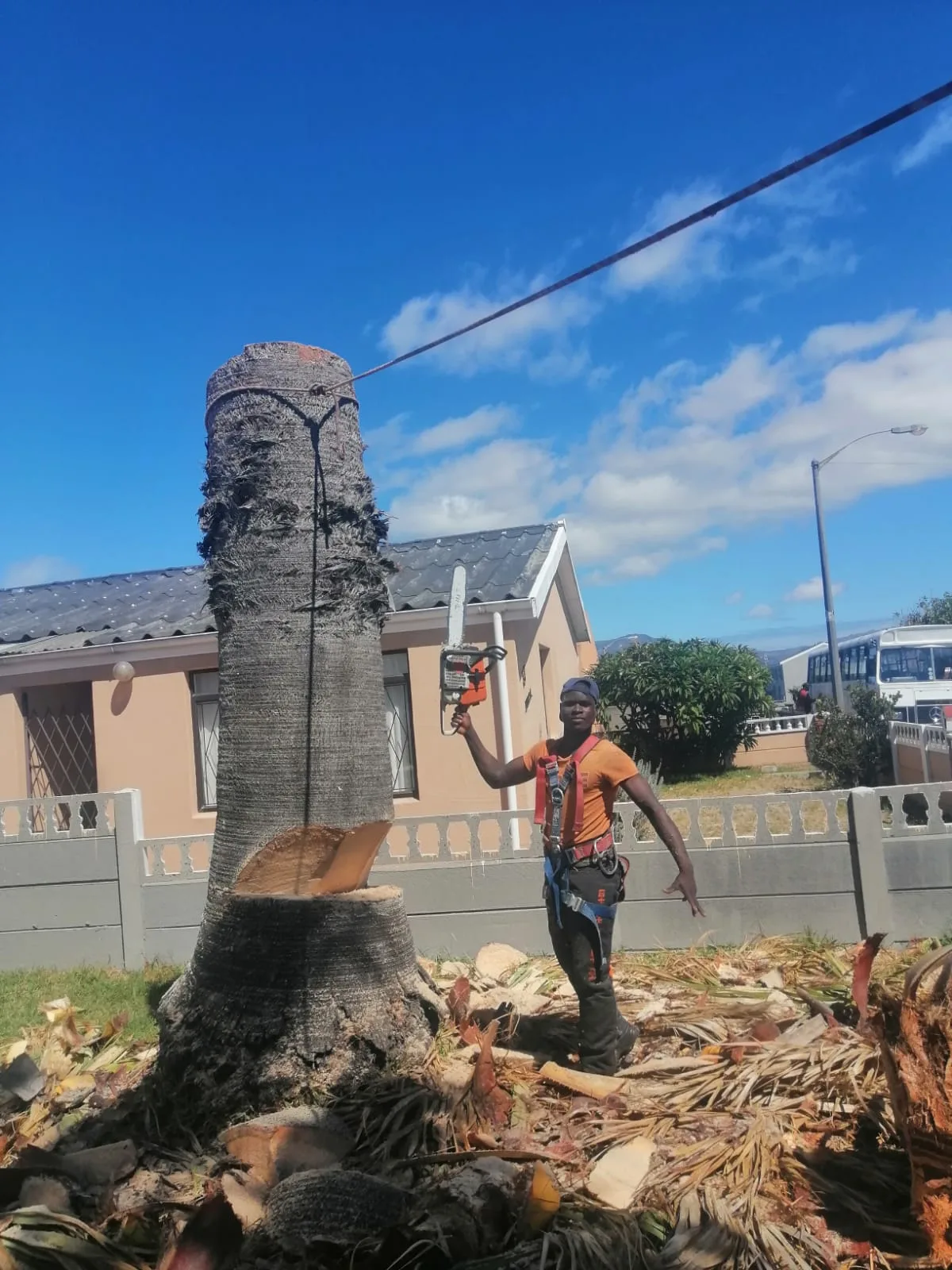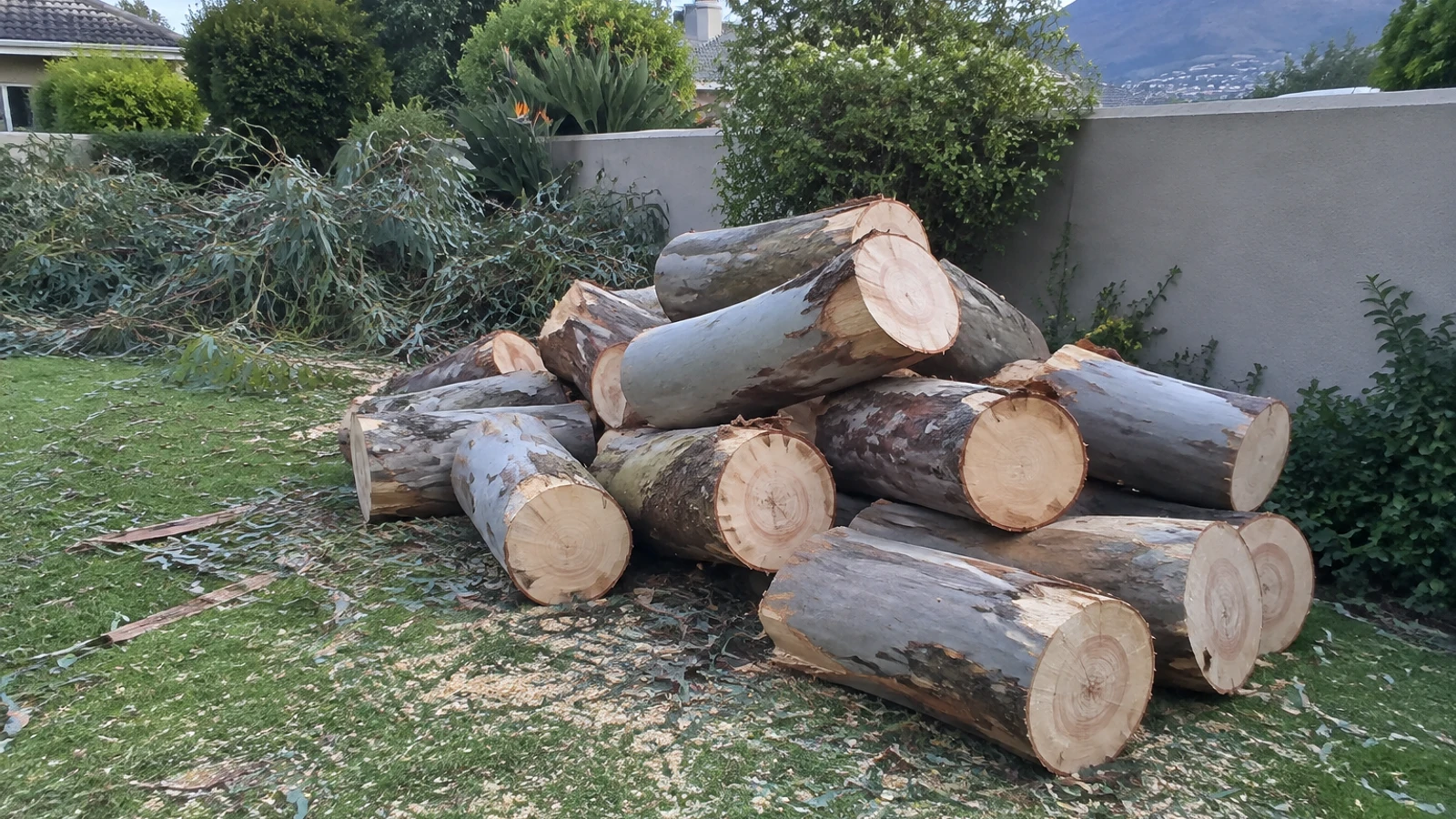
Tree felling in Cape Town leaves you with a lot of wood, and plenty of people would rather burn it next winter than pay to have it carted off. The crew will cut the trunk to firewood lengths and stack it for you if you ask, and keeping the logs saves the loading and the dump fee. But not every tree is worth keeping, green wood will not burn properly for months, and if the tree had shot hole borer the City of Cape Town says the wood may not leave the property at all. Here is how to decide.
Key takeaways
- A healthy gum or wattle trunk is worth keeping. Ask for it cut to short lengths and stacked, and you skip the cost of hauling it away.
- Freshly cut wood is not firewood yet. Plan on at least six months of drying, and a year or more for thick, old trunks.
- Dryness matters more than species. Dry wood of almost any tree carries similar heat per kilogram; wet wood wastes it.
- A tree infested with shot hole borer must be chipped on site. Its logs cannot be kept, moved or given away as firewood.
- Never burn painted, treated or glued timber, or rotten and mouldy wood.
Is the wood from your tree worth keeping?
Most of the timber in a felled tree is in the trunk and the main limbs. That is the part worth keeping. The twigs, leaves and thin brush are not firewood, and they still need to be cleared away whatever you decide about the logs.
Whether the trunk is worth it comes down to three things: how the species burns, whether you have somewhere dry and airy to stack it for months, and whether the tree was healthy. The first two are your call. The third is not, because a City rule covers infested trees (more on that below). Unsure about the tree's health? Raise it at the quote.
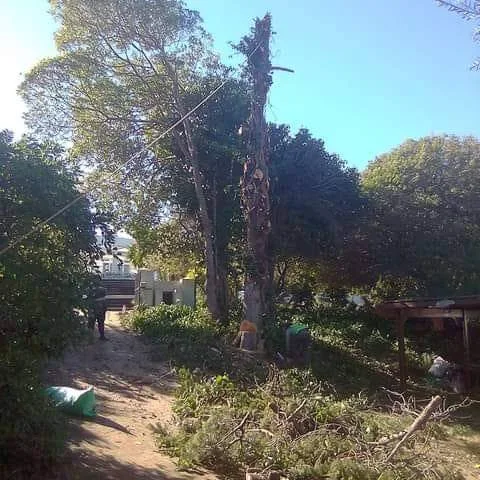
Which felled trees make good firewood?
Several gums and black wattle are among the species South Australia's primary industries department rates in its guide to growing firewood. The table uses its ratings for how easily each wood splits, how readily it lights, how good a bed of coals it leaves and how much it sparks. They describe the species as grown there, not a Cape Town test.
| Tree | Splitting | Lighting | Coals | Sparks |
|---|---|---|---|---|
| Late black wattle (Acacia mearnsii) | Excellent | Excellent | Good | Few |
| Tasmanian bluegum (Eucalyptus globulus) | Fair | Fair | Good | Few |
| Sugar gum (Eucalyptus cladocalyx) | Difficult | Poor | Excellent | Few |
| River red gum (Eucalyptus camaldulensis) | Difficult | Poor | Excellent | Moderate |
Ratings and common names: Primary Industries and Regions South Australia, "Growing firewood". Its "late black wattle" is black wattle and its "Tasmanian bluegum" is blue gum (Eucalyptus globulus).
Blue gum
The US Forest Service notes that bluegum wood "burns freely, leaves little ash, and produces good charcoal". A big one yields a lot of wood, which is worth knowing before taking down a blue gum.
Black wattle
Rated excellent to split and to light, with good coals. It is an Acacia, like the rooikrans and Port Jackson that come out when clearing Port Jackson and rooikrans.
Pine
Fine for kindling, poor as the main fire. A University of Cape Town study found pine "burns too rapidly, and does not make good coals".
Why dry matters more than the type of tree
People argue about which wood burns hottest, but a 1987 study by the University of Cape Town's Energy Research Institute, which tested 108 South African grown species, found that the heat in a kilogram of oven-dry wood "varies surprisingly little" from one species to the next.
108
South African grown species tested (UCT, 1987)
18.7 MJ/kg
Average usable heat in oven-dry wood, falling as moisture rises (UCT)
Under 20%
Moisture content at which wood burns best (US EPA)
Two things make the real difference. The first is density: the same report says a dense wood usually makes "a longer lasting fire which gives off heat at a steadier rate", which is why a light, fast-burning wood like pine disappoints. The second is water. The usable heat in wood "decreases with increased moisture content", because part of the fire's energy goes into driving the water out of the log.
The rule that follows
The US Environmental Protection Agency's Burn Wise guidance is blunt about it: burn only dry, split, well-seasoned wood, and do not burn wet or green wood. A trunk felled this week is green, whatever tree it came from.
How long freshly felled wood takes to dry
The EPA's rule of thumb is to season wood for at least six months, and it says wood burns best at a moisture content of less than 20 percent. South Australia's firewood guide adds the important caveat: small-diameter wood with little heartwood needs at least six months, while older, slower-grown timber with more heartwood "could take 12 months or more to dry". The thick trunk of a big, mature tree belongs in the second group.
Speeds drying up
- Short lengths. The SA guide recommends billets of about 30 cm.
- Small stacks exposed to airflow.
- A stack raised off the ground.
- A cover over the top only.
Slows it down
- Thick, old timber with a lot of heartwood.
- Logs lying directly on soil or lawn.
- A tarp wrapped down the sides, which traps moisture.
- One big heap instead of small, airy stacks.
How to tell it is ready
According to the EPA, properly seasoned wood is darker, weighs less, and sounds hollow when knocked against another piece. It also suggests checking with a wood moisture meter before you burn.
Cut it to length while it is fresh
The SA guide notes that crosscutting green wood is easier than cutting dry wood, which is a good reason to have the crew cut the trunk to length on the day.
How to stack it so it actually dries
The EPA's advice is to store wood outdoors, off the ground, with only the top covered, because covering the sides traps moisture. South Australia's guide says much the same and adds why: dry firewood in small, partly covered stacks, raised off the ground and exposed to airflow, to minimise fungal growth. Old pallets work well as a base, and a sheet of corrugated iron or a fixed lid keeps the winter rain off the top.
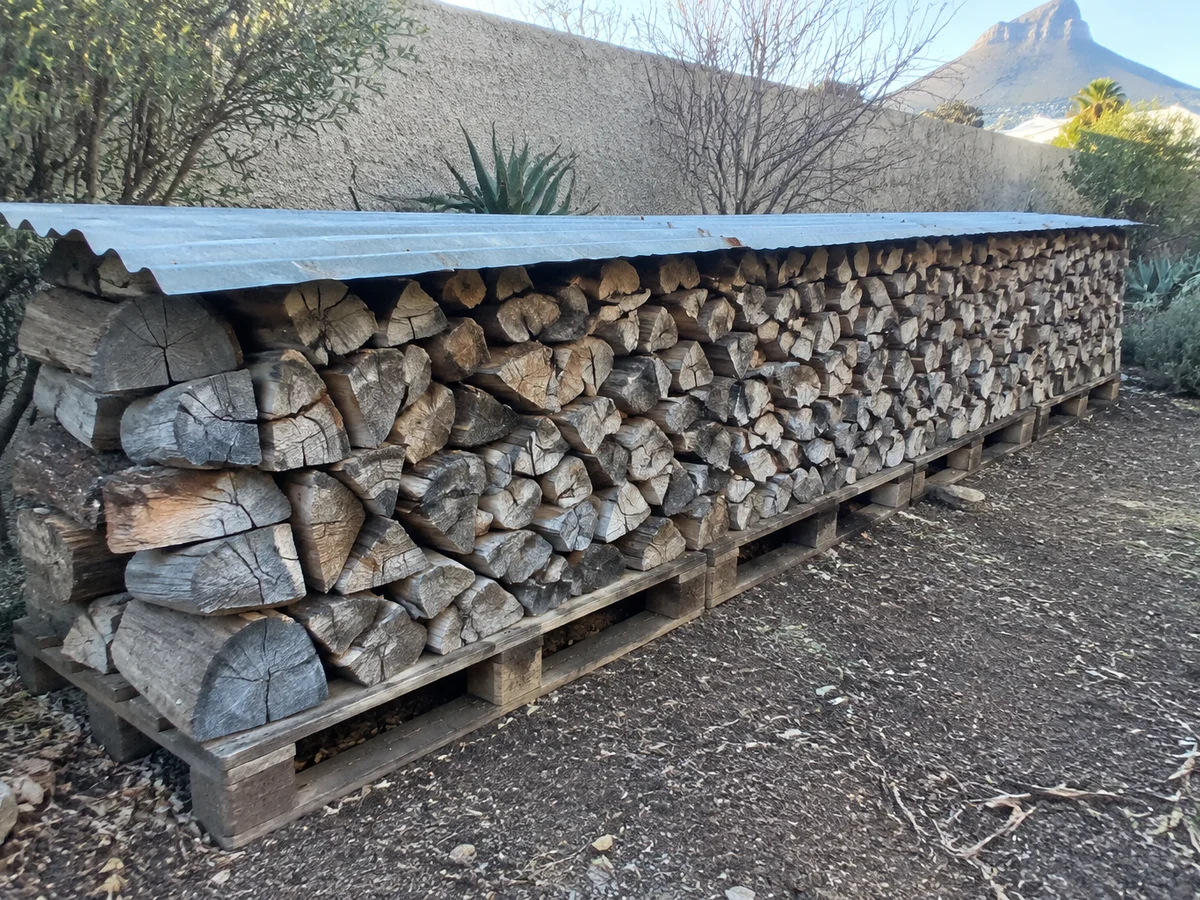
Choose the spot before the logs arrive
A stack takes up more room than most people expect. Keep it clear of walls and gates you need to get at, and tell the crew where it should go before they start cutting.
When the wood cannot be kept: shot hole borer
This is the one situation where the decision is made for you. The City of Cape Town states that "Infested trees must be chipped on site and may not be removed from the property as the removal of the chipped wood will spread the pest to other areas." It also says pesticides and fungicides are not effective, and that the only way to get rid of the beetle is to chip the infected material.
The City's advice to residents goes further: do not buy and move firewood from areas where there are confirmed cases of PSHB, and buy firewood where you are going to use it. The beetle travels in infected wood, and the City adds that it can also spread on clothing, in vehicle crevices and on unclean garden tools. So logs from an infested tree cannot be stacked for later, handed to a neighbour or taken to a holiday house.
What happens to an infested tree instead
It is chipped on the property. One method the City gives is to seal the chipped material in refuse bags and leave them in direct sunlight for at least six weeks. If you are not sure whether your tree is a host, start with the trees the beetle attacks, and our guide to polyphagous shot hole borer covers the signs.
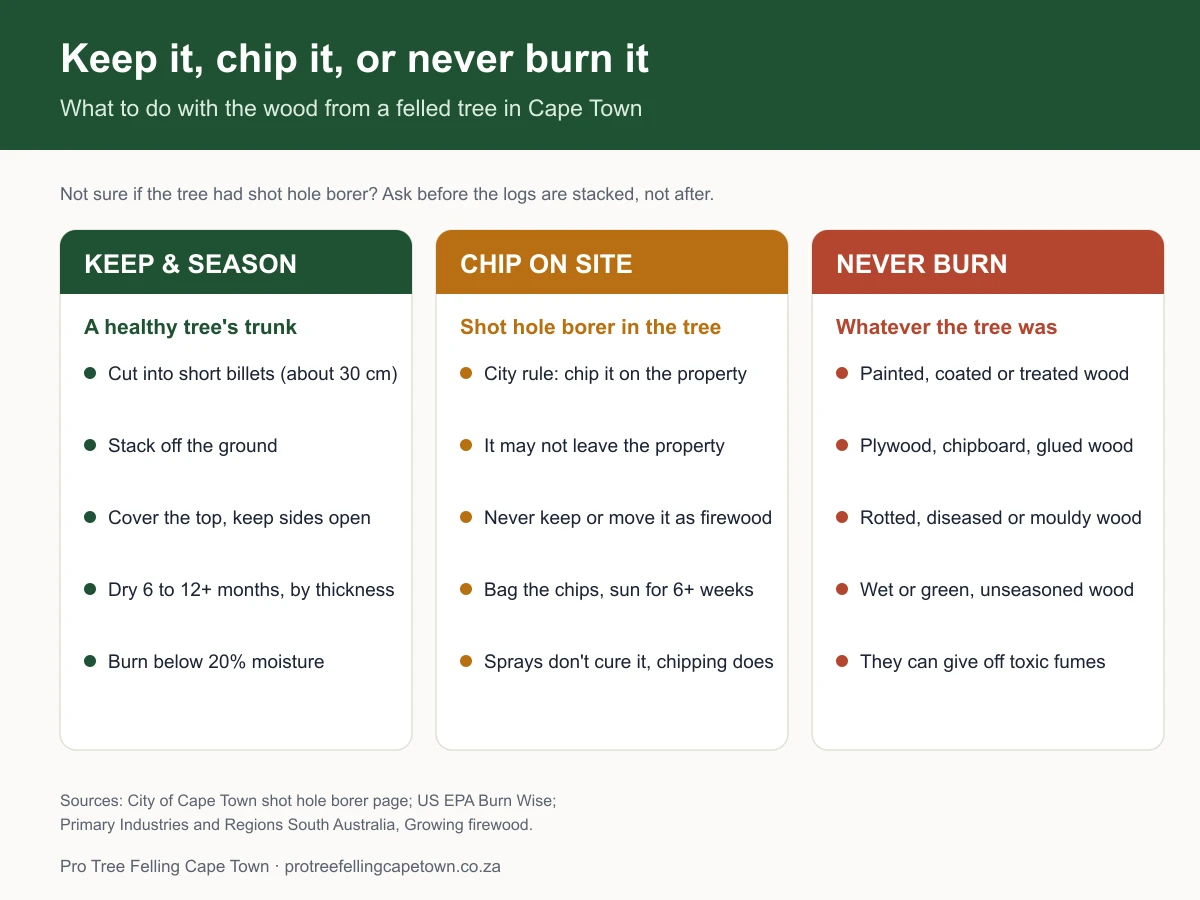
What never to burn
A felling job sometimes turns up more than the tree: old fence boards, a rotten treehouse, offcuts of decking. Keep those out of the firewood pile. The EPA lists materials that can release toxic or harmful chemicals when burned, and may damage your fireplace or stove.
Building timber
Coated, painted and pressure-treated wood, plus plywood, particle board or any wood with glue on or in it.
Bad wood from the tree
Wet, rotted, diseased or mouldy wood. If the trunk turned out to be hollow or decayed, have those sections hauled away with the brush.
Asking the crew to leave the logs
Say so when you ask for the quote, not on the day. The crew then plans to cut the trunk and thick limbs into firewood lengths and stack them where you want them, instead of loading the timber for the tip. Because the loading and the dump fee fall away, keeping the logs is one of the few reliable ways to trim what a felling job costs. The leaves, twigs and thin branches still have to go, which is part of clearing the brush and offcuts.
1. At the quote
Say you want the logs, and mention any sign of shot hole borer or rot in the tree.
2. On the day
On a tight site the tree comes down as a sectional take-down, so the trunk lands in manageable pieces. Give the crew the length that suits your fireplace or braai.
3. Afterwards
Split the rounds, stack them off the ground with the top covered, and leave them for at least six months.
Frequently asked questions
Can you use a freshly cut down tree for firewood?
Not straight away. Freshly cut wood is green, and the US EPA advises against burning green wood. Season it for at least six months, until it is below about 20 percent moisture.
How long does it take for wood to dry out after you cut down a tree?
At least six months for small, split wood. Thick, older timber with more heartwood can take 12 months or more, according to South Australia's firewood guide.
What do they do with a tree after they chop it down?
The crew hauls the timber and brush away, unless you ask for the trunk cut to firewood lengths and stacked. A tree with shot hole borer is chipped on site, as the City requires.
What's the worst firewood to burn?
Painted, coated or treated timber, plywood and particle board, and wet, rotted, diseased or mouldy wood. These can release toxic or harmful chemicals when burned.
What can black wattle be used for?
Firewood, for one. South Australia's guide rates it excellent to split and light, and lists tanning bark, fencing posts and poles as its other uses.
What is the cleanest firewood to burn?
Dry, split, well-seasoned wood, whatever the species. Seasoned wood is darker, lighter and sounds hollow when knocked; green wood should not be burned.
Sources
- City of Cape Town, Polyphagous shot hole borer.
- US Environmental Protection Agency, Burn Wise: best wood-burning practices.
- Primary Industries and Regions South Australia, Growing firewood.
- USDA Forest Service, Silvics of North America: bluegum eucalyptus.
- A. A. Eberhard, University of Cape Town Energy Research Institute, Calorific values and combustion characteristics of South African grown fuelwoods (1987).
Having a tree taken down and want to keep the wood? Ask for a free on-site quote and mention the logs, and Pro Tree Felling Cape Town will put you in touch with a crew who can cut and stack them for you.
Keep reading
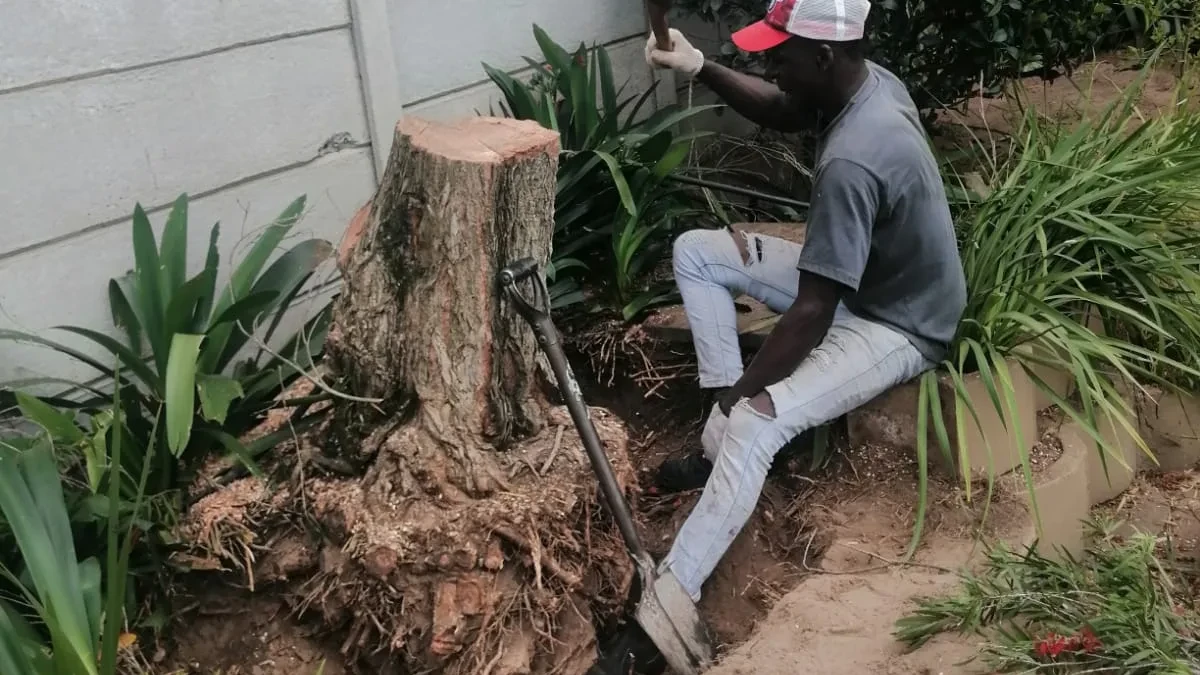
Tree Roots Damaging Your House, Paving or Drains? What to Do
Lifted paving, a blocked drain or a crack in the boundary wall, and a big tree nearby. Here is what tree roots actually do to a property, what they almost never do, what the law says when the tree is your neighbour's or the City's, and how to decide between cutting a root, fixing a pipe and taking the tree out.
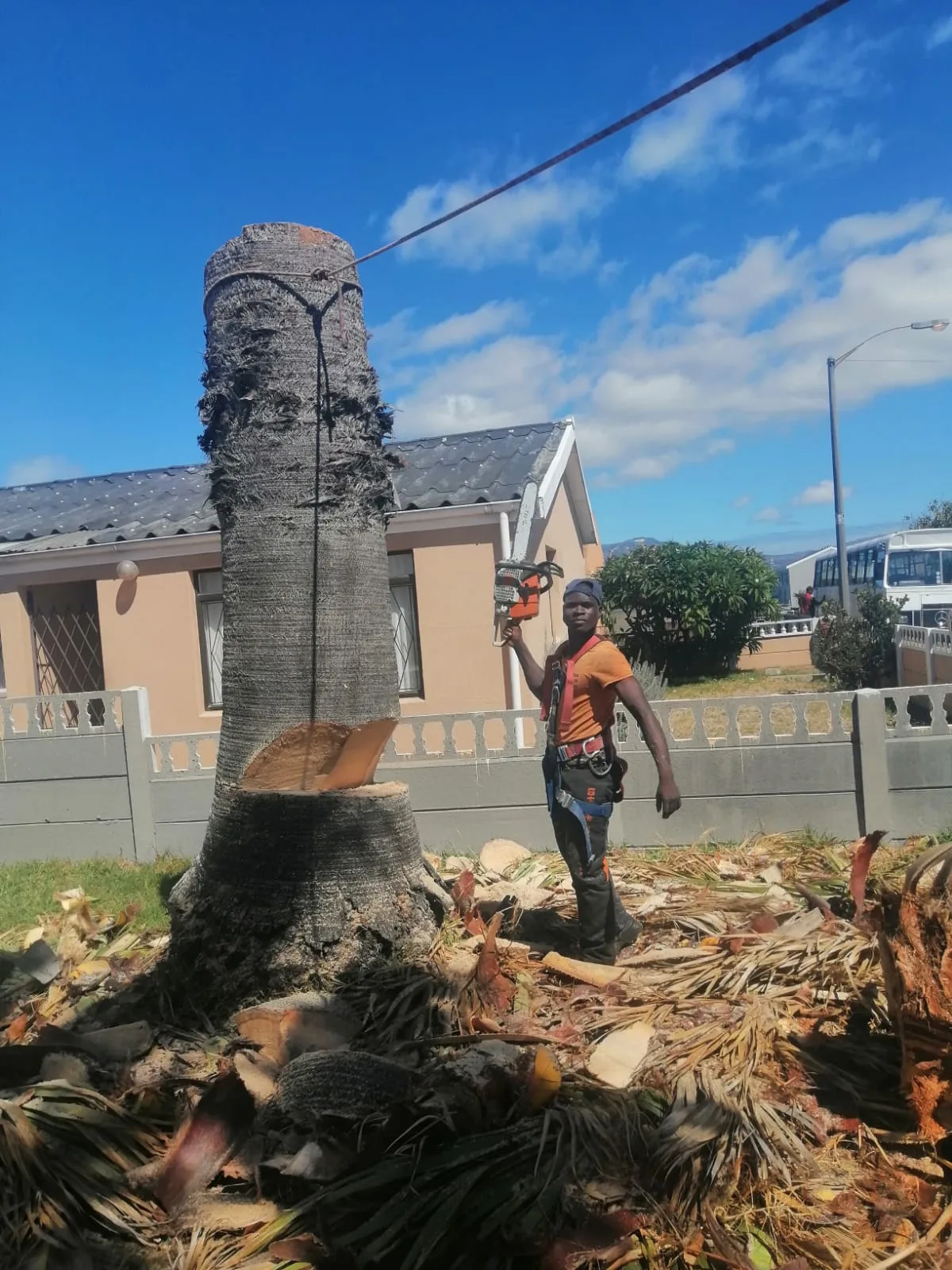
How to Cut Down a Tree Safely (And When to Stop)
Most people searching for how to cut down a tree are really asking a different question: can I do this one myself? Here is the sequence a trained feller works through, what the hinge actually does, and the situations where the honest answer is to put the saw down and phone someone.
Blue Gum Tree Removal in Cape Town
A mature blue gum in a Cape Town garden sits in an odd legal spot: the species is listed as an invasive, but a big urban trunk is often specifically exempt from the duty to remove it. Here is which gums are actually listed, the tape-measure test that decides it, why cutting one down never finishes the job, and what a safe take-down in a suburb actually involves.